
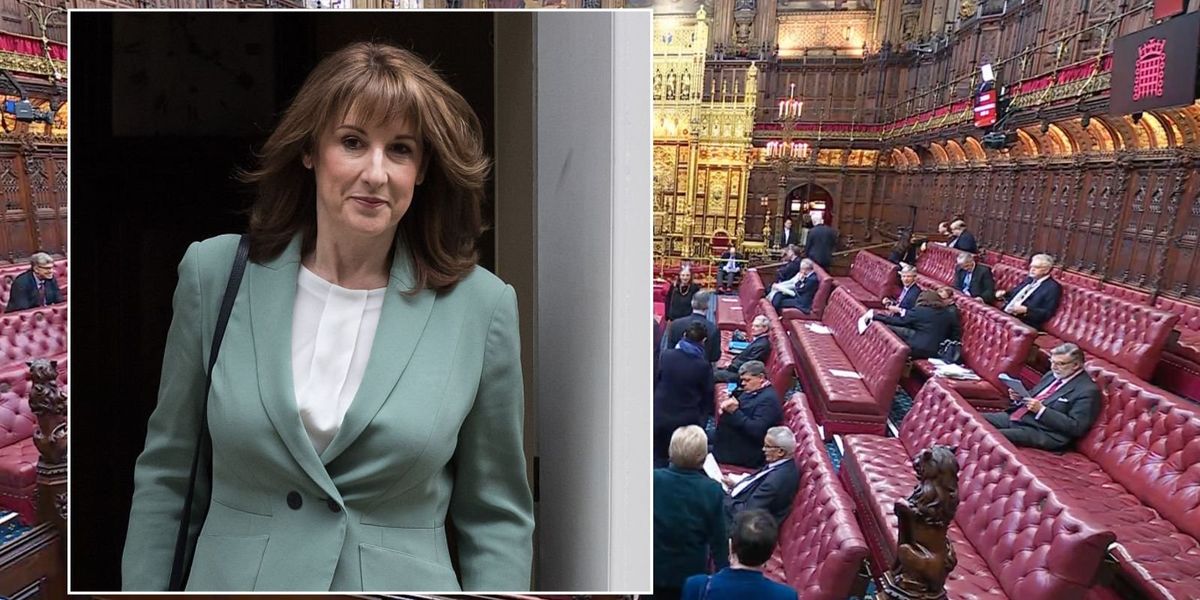
The House of Lords has voted to strip provisions from the Pension Schemes Bill that would have granted ministers authority to dictate how pension funds allocate their assets.
Following today’s decision, the legislation will now return to the House of Commons, where MPs must reassess the scope of these powers.
The contentious clause had prompted widespread concern across the pensions industry over potential Government interference in investment decisions.
Critics warned the measure could compromise trustees’ fiduciary responsibilities to scheme members by exposing decisions to political influence.
Thursday’s vote came during the second day of report stage scrutiny, with peers considering multiple amendments, including those relating to UK asset investment requirements and value for money regulations.
The Bill aims to reform private pensions while encouraging greater investment in the domestic economy.
Last year, the Chancellor said: “The Bill is a game changer, delivering bigger pension pots for savers and driving £50 billion of investment directly into the UK economy– putting more money into people’s pockets through the Plan for Change.”
Zoe Alexander, executive director of policy and advocacy at Pensions UK, said: “The Lords’ amendment to remove the power in the Pension Schemes Bill for Government to direct how retirement savings are invested is a win for savers.”
Peers remove controversial clause allowing ministers to direct pension fund investments
|
GETTY/Parliament
She warned that retaining such powers in legislation could leave millions of workers’ pension pots exposed to changing political priorities.
Ms Alexander said: “Having the power on the statute book would expose millions of workers’ retirement savings to political cycles and undermine the duty of pension trustees to act at all times in the interests of savers.”
The industry body has consistently argued that trustees must remain free to make investment decisions solely in the interests of members.
Prior to the vote, Torsten Bell indicated the Government would seek to narrow the scope of the disputed reserve power.
Speaking at Pensions UK’s Investment Conference, Mr Bell said: “The only purpose of the reserve power in the Pension Schemes Bill is to backstop the accord goals.”
Torsten Bell said the reforms in the Pension Schemes Bill will enable more trustees of pension schemes to share the surplus with employers | PA
He added: “We will ensure that is put beyond doubt.”
Mr Bell said ministers would not be “in the business of taking fiduciary decisions” and that the power could only be used to implement the Mansion House Accord.
Industry bodies responded to the remarks, with Helen Forrest Hall, chief strategy officer at the Pensions Management Institute, describing the move as “a positive step” that reflects concerns raised about trustees’ fiduciary obligations.
The Mansion House Accord represents a voluntary commitment from 17 major UK pension providers to channel funds into unlisted investment opportunities both domestically and globally, provided such investments serve savers’ best interests.
Under the agreement, signatories have pledged to direct 10 per cent of their assets into private markets, with a minimum of five per cent allocated to UK investments.
Pensions UK has consistently advocated for this voluntary model rather than Government-imposed requirements.
Ms Alexander said: “Pensions UK’s preferred method to drive investment in UK markets is a voluntary approach supported by improvements to the investment environment.”
She pointed to the accord as evidence that the industry is already working to increase domestic investment without the need for statutory compulsion.