
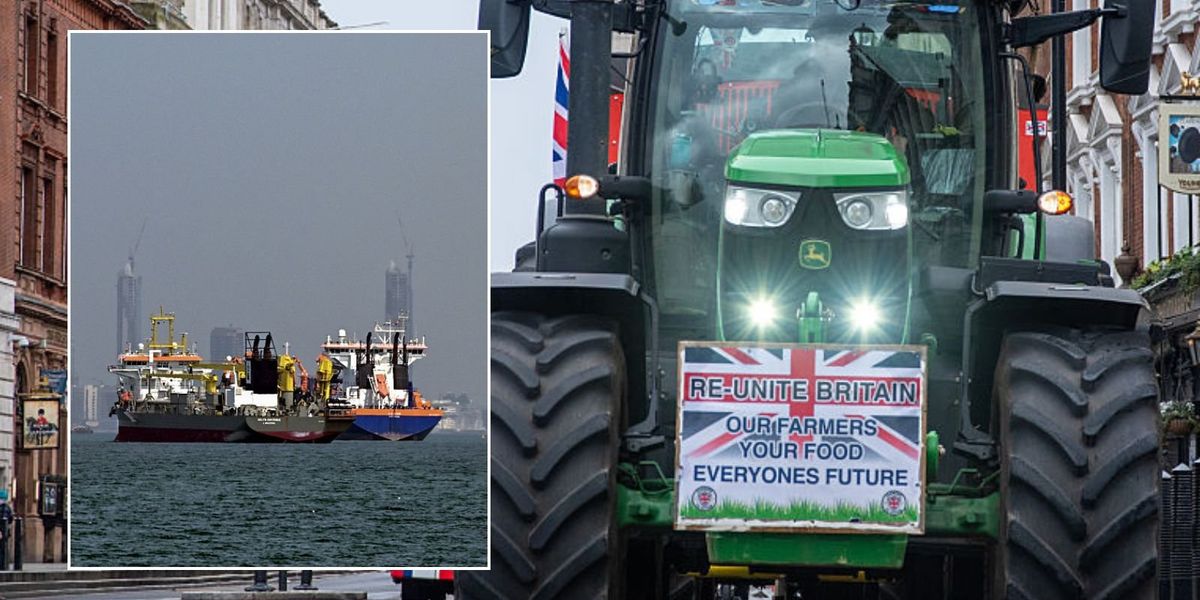
The National Farmer Union (NFU) is warning Britons of looming “volatility in the global energy market” and “huge impact on food supply chains” as a result of the US-Iran war.
NFU President Tom Bradshaw held discussions with Defra Secretary Reynolds this week regarding the mounting pressure on British farmers from escalating fuel and fertiliser expenses.
The meeting addressed how turmoil in international oil and gas markets has driven up costs for essential agricultural inputs at a particularly challenging moment.
Spring planting activities are now underway across the country, making fuel and fertiliser critical for getting crops established and supporting livestock through forage production.
The NFU is sounding the alarm over the US-Iran war
|
GETTY
Following the talks, Mr Bradshaw stated that Ms Reynolds “recognised that volatility in the global energy market has a huge impact on our food supply chains here and they are watching this very closely”.
The surge in oil prices stems primarily from ongoing disruption at the Strait of Hormuz, a critical maritime passage handling approximately one fifth of the world’s oil and gas shipments.
Iranian oil exports represent just 4.5 per cent of global supply, but the strategic waterway’s instability has had far-reaching consequences for energy markets.
Qatar and the United Arab Emirates together account for roughly 20 per cent of global liquefied natural gas production, with much of this supply transported through the Strait to European and Asian markets.
Oil prices are on the rise
|
GETTY
Defra’s stats found that 66 per centg of English farms are over the new £1million inheritance tax relief cap, undermining the Treasury’s claim ’75 per cent of farms won’t be affected’
|
GOV.UKAlthough overall gas and electricity demand may be falling, agricultural requirements for fuel and fertiliser are set to increase as spring planting intensifies.
A central issue raised during the discussions was the absence of clear pricing information for agricultural supplies.
Reports from NFU members indicate that red diesel costs were approaching 110 pence per litre at the beginning of this week, with significant variation between different areas.
The heightened market volatility has worsened an existing problem whereby farmers frequently discover what they must pay only after products arrive at their premises.
The NFU has previously demanded Labour’s plan to scrap the family farm inheritance tax
|
GETTYMr Bradshaw said: “It’s clear that transparency and fairness over fuel and fertiliser prices is critical, and we’ve been asking for this for a long time, regardless of market volatility.”
Mr Bradshaw emphasised that his focus remained on developing lasting solutions to protect British agriculture from international political upheaval.
He said: “While the impact on food production and food price inflation will depend on what happens over the coming weeks, it is yet another sobering reminder of the need to build resilience in UK farming.”
The NFU notes the situation has been compounded by the removal of direct support payments in England, which previously served as farmers’ primary mechanism for weathering such unpredictable circumstances.