
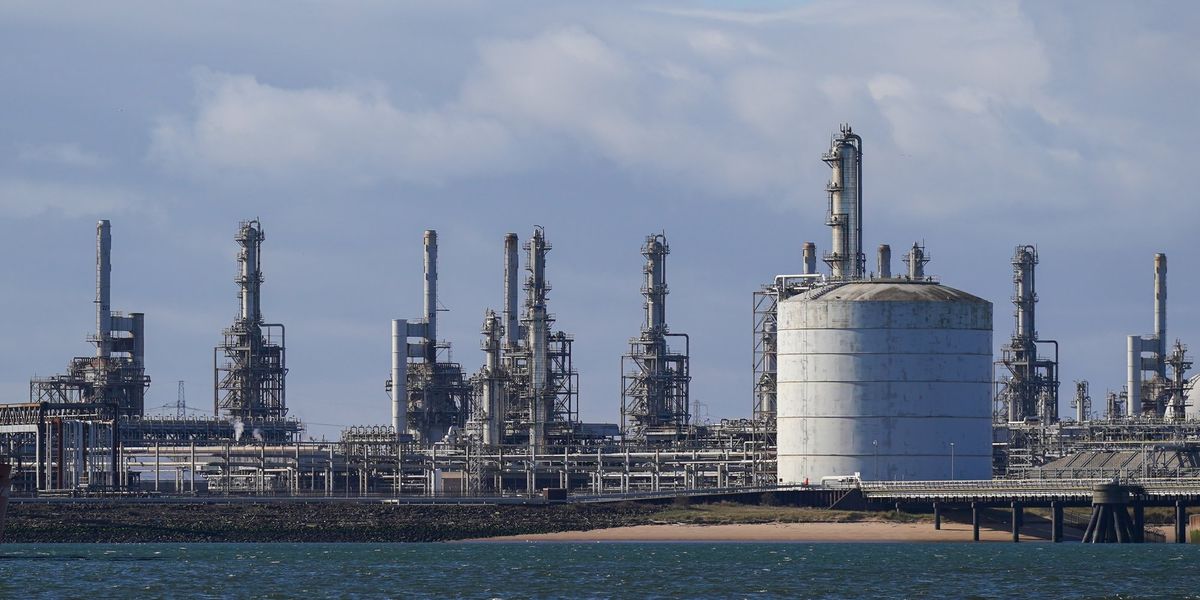
One of Britain’s largest chemical plants could be closed in as little as three months, as the Iran war has seen global energy costs spiralling.
Peter Huntsman, the American industrialist behind Huntsman Corporation, warned the conflict was “another nail in the coffin” for British heavy industry.
The plant, which employs approximately 80 workers in Teesside, produces aniline for use in products ranging from car seats to aircraft components.
It is one of the last surviving operations derived from Imperial Chemical Industries (ICI), Britain’s largest manufacturer throughout much of the twentieth century.
Mr Huntsman admitted: “If today’s economics were to stay in place for the next three months, I would shut down my (UK) facility, and I’d be importing product from China or the United States.
“Four years ago, my lowest cost aniline in the entire world came from the UK. That’s how recently I was competitive.
“Right now, this week, it is the most expensive.”
The chemical magnate laid the blame squarely at the feet of policymakers, characterising the industry’s troubles as “self-inflicted” and accusing successive governments of failing to reduce energy bills.
One of Britain’s largest chemical plants at risk of closure as Iran war puts ‘another nail in the coffin’ for British heavy industry
|
GETTY
“Failed energy policy has made UK industry less resilient. A crisis like this should not impact the chemical industry like this,” he said.
The businessman expressed deep reluctance to commit further capital to Britain, noting his thriving operations in China, the United States and the Middle East.
“Why on earth would I put money in the UK, where there’s neither growth nor a policy to incentivise people like me?”
The Huntsman Corporation acquired ICI’s industrial chemicals division for £1.7billion in 2000, the same year Peter Huntsman took over as chief executive of the family business founded by his father, Jon.
Peter Huntsman said the crisis was ‘self-inflicted’ and accused successive British governments of failing to reduce energy bills
|
GETTY
The Texas-based multinational once invested more heavily in Britain than in North America, but has now reduced its UK presence to a single remaining asset.
It comes as the broader chemicals sector has experienced severe contraction, with production output plummeting by 60 per cent since 2021, according to the Chemicals Industries Association, alongside at least 25 site closures.
Huntsman Corporation itself eliminated roughly 500 positions globally last year, representing nearly 10 per cent of its workforce, with European operations bearing the heaviest losses.
Seven facilities were also shuttered, with high energy costs cited as the primary driver, per The Guardian.
Energy prices have soared since the war with Iran, leaving the vital Strait of Hormuz blocked
|
GB NEWSThe crisis mirrors challenges faced by Jim Ratcliffe’s Ineos group, which secured a £120million Government bailout in December to preserve its Grangemouth ethylene cracker, Britain’s sole remaining plant of that type.
Mr Ratcliffe, ranked as the UK’s seventh wealthiest individual, has characterised conditions for European chemical plants as “unsurvivable” due to escalating carbon costs and inadequate trade protections.
A Government spokesman said: “We know this is a tough time for our chemicals industry, who are paying the fossil fuel penalty. The best way to tackle this is getting on to clean homegrown power which we control, to bring down bills for good.
“Ministers regularly meet with the industry and are working with them to understand the impact of the situation in the Middle East and explore potential solutions.”