
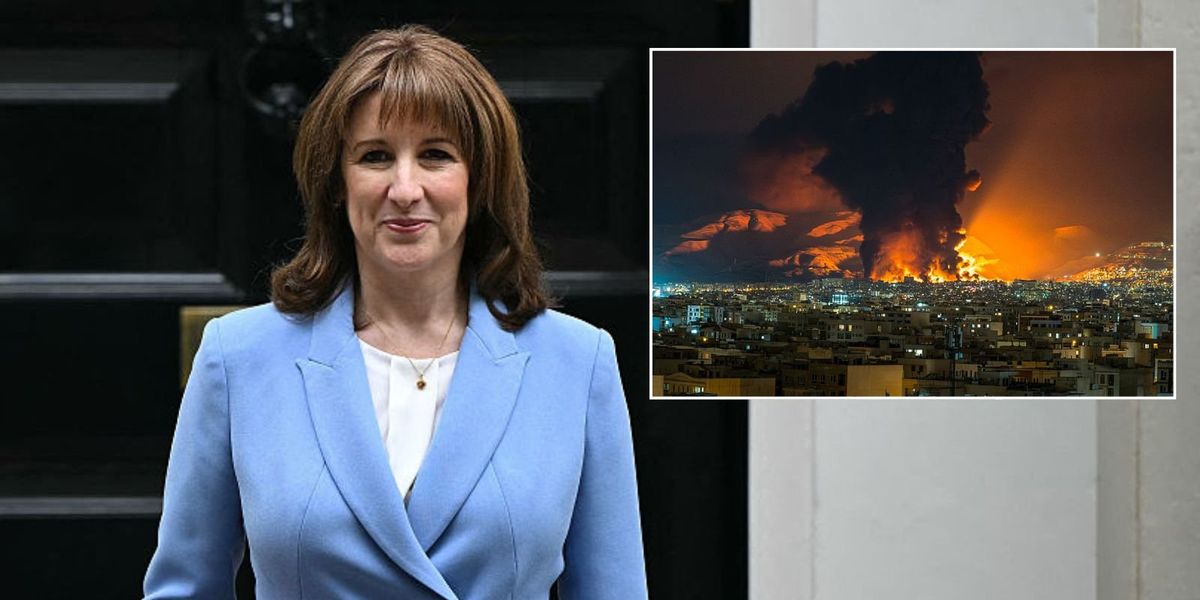
Britain could be pushed into an economic downturn if escalating conflict in the Middle East drives global oil prices sharply higher in the coming months.
The research models a scenario in which Brent crude rises from around $97 per barrel to $140 and remains at that level until May.
Under those conditions the global economy would contract by 0.7 per cent before the end of the year, the consultancy’s projections show.
Average global inflation would also climb to 5.1 per cent in what Oxford Economics describes as a worst-case scenario.
The UK is among the economies most exposed to a prolonged surge in oil prices, with economists warning that sustained energy cost increases could destabilise parts of the global economy.
Researchers from Oxford Economics said Britain’s vulnerability stems partly from how energy prices feed through to consumers, meaning the impact would not be felt immediately by households.
British consumers would likely begin to experience the full effect of higher energy costs later in the year because of the way Ofgem sets household energy tariffs.
However, economists warned that rising inflationary pressure would probably force the Bank of England to respond by tightening monetary policy.
Oxford Economics indicated that the Bank could raise interest rates by 25 basis points if oil-driven inflation intensifies.
The combination of higher inflation and increased borrowing costs would be sufficient to push the UK economy into recession, the consultancy’s economists concluded.
Soaring oil prices driven by Middle East tensions could trigger a downturn in Britain
|
GETTY
They added that any downturn in Britain would likely occur slightly later than in the United States because of the lag between wholesale energy price movements and the point at which those changes are passed on to households.
Oxford Economics also noted that when inflation rises above certain levels it tends to influence how households and businesses view future price increases.
The consultancy said: “Consumers’ short-run inflation expectations are driven by routine expenses like gasoline and food, both of which are expected to escalate due to the shock.”
Economists also outlined a more moderate scenario in which oil prices stabilise at around $100 per barrel rather than rising dramatically.
Brent crude is sat close to $100 per barrel
|
Trading Economics
In that case the global economy would avoid recession, although economic growth would still slow.
Oxford Economics estimated that global growth would be reduced by 0.2 percentage points under this more optimistic outlook.
Chief researchers Ben May and Ryan Sweet said the speed of any recovery would depend on several developments in global energy markets and international trade routes.
Mr May and Mr Sweet said: “The strength of the subsequent recovery will be determined by how quickly shipping through the Strait of Hormuz rebounds and how fast oil prices, supply-chain stresses, and financial market conditions ease.”
The economists added that financial markets have historically recovered relatively quickly after major military conflicts in the Middle East since the 1990s.
However, they cautioned that the recovery following any current disruption could prove slower than in previous periods of regional conflict.
Concerns about the economic impact of the conflict are also being raised by business leaders across the UK.
A survey conducted by an accountancy trade body found that more than half of company directors believe their businesses are exposed to potential economic fallout linked to the conflict.
Alan Vallance, chief executive of the Institute of Chartered Accountants in England and Wales, said rising energy costs and disruption to global trade routes were among the most pressing risks facing companies.
“Our data shows that rising energy costs and supply chain disruption are the biggest threats to businesses right now as the conflict in the Middle East continues to escalate.
“Surging gas prices and interruptions to major energy infrastructure, such as the Strait of Hormuz, means the pressure is only intensifying.”
Mr Vallance said the findings highlight the extent to which the UK economy is connected to developments in the Middle East, leaving businesses and consumers exposed to the effects of regional instability.