
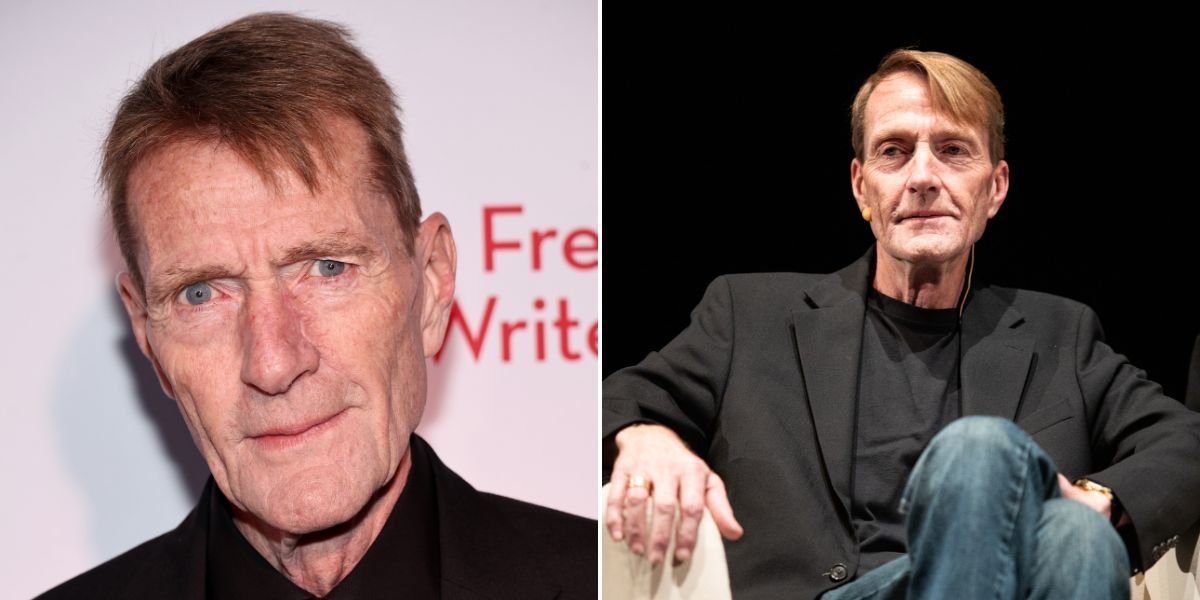
Lee Child, the bestselling author behind the Jack Reacher series, has condemned the practice of forcing writers to remove potentially offensive passages from their earlier works, describing it as “slightly Orwellian.”
The novelist, whose books have sold more than 100 million copies globally, maintains he would refuse to alter even a single word from his previous publications.
Mr Child argued that novels function as historical documents reflecting the values and attitudes of their time, The Times reports.
“A book is something that is a product of the person at the time and the times that surrounded the person. So that it is automatically a historical artefact,” he said.
Lee Child argued that novels function as historical documents reflecting the values and attitudes of their time.
|
GETTY
The author, set to headline the Bloody Scotland crime-writing festival in Stirling, believes such editorial interventions rob future generations of genuine insight into past eras.
He contended that the crime genre inherently involves disturbing content, making sensitivity edits particularly misguided.
“Crime fiction is supposed to be offensive. You expect a certain amount of incivility and cruelty,” he told The Times.
The writer emphasised that contemporary crime novels by authors such as Ian Rankin, Denise Mina and Val McDermid will serve as valuable records for readers a century from now seeking to understand present-day life.
The novelist has sold more than 100 million book copies globally
|
GETTY
This includes capturing the social insensitivities that exist within current society, he argued.
“If it’s a portrait of how actual people operated in a particular era then you have got to keep it in, because that’s true, honest and authentic,” Mr Child explained.
Sanitising such portrayals, he warned, “bowdlerises in a way that is unhelpful to the future.”
Fellow Scottish crime writer Val McDermid has faced similar pressures firsthand.
Some of Roald Dahl’s works have been re-written for a modern audience
|
GETTY
Earlier this year, she revealed that her publisher required her to consult a sensitivity expert before reprinting her novels from the 1980s and 1990s featuring fictional journalist Lindsay Gordon.
Speaking at a festival in Pitlochry, Ms McDermid disclosed she had pushed back against the demands.
“I argued the case that these books were of their time and that it’s dishonest to try to make them read differently. In most instances, I won my point,” she said.
However, she acknowledged losing the argument on certain matters relating to race.
Lee Child labelled the practice of re-working historic books ‘Orwellian’
|
GETTY
While recognising that her characters would behave differently if written today, Ms McDermid questioned the value of retrospectively rewriting earlier work to align with contemporary standards.
The debate over editorial interventions in classic texts extends beyond crime fiction.
In 2023, publisher Puffin implemented hundreds of alterations to Roald Dahl’s beloved children’s books, stripping out many of his vivid descriptions and toning down his famously grotesque characters.
The word “fat” was excised entirely from the collection, affecting Charlie and the Chocolate Factory and its portrayal of the gluttonous Augustus Gloop.
The Oompa-Loompas underwent similar treatment, with descriptions such as “tiny” and “no higher than my knee” replaced with simply “small.”
Gender-neutral language was also introduced, changing references from “small men” to “small people.”
These modifications sparked considerable controversy at the time, with critics arguing that Mr Dahl’s distinctive voice and satirical edge were being diluted to satisfy modern sensibilities.