
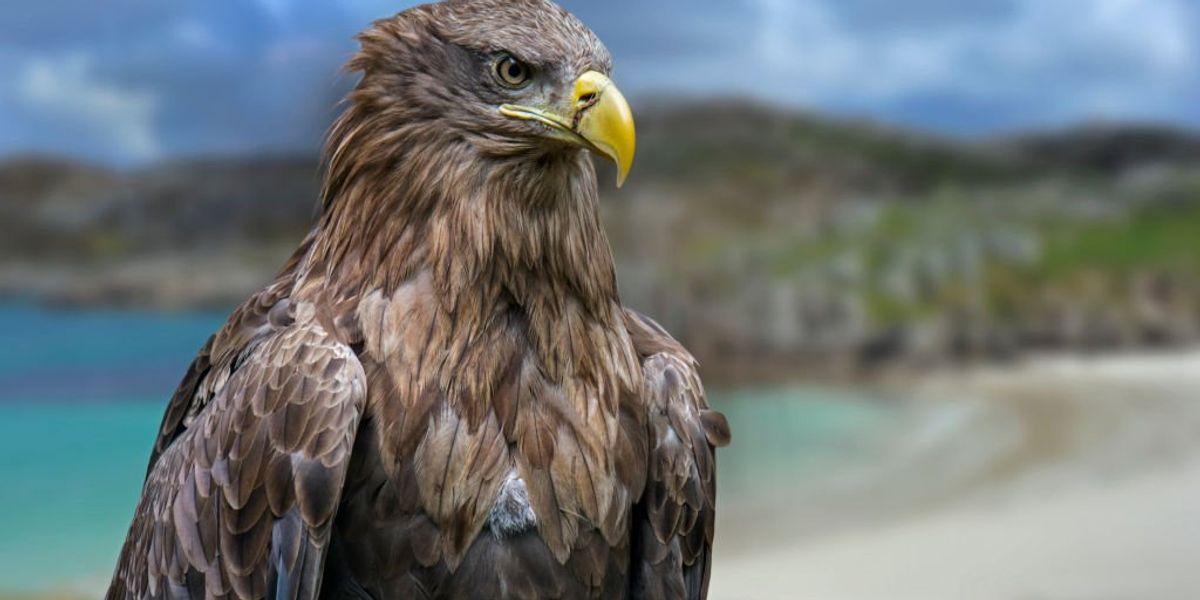
White-tailed eagles are set to soar above Exmoor for the first time in more than two centuries, following approval for a major conservation programme in the national park.
The project will see up to 20 juvenile birds released across a three-year period, marking a significant expansion of efforts to restore Britain’s largest bird of prey to English skies.
Southern England’s last breeding pair of these magnificent raptors was recorded in 1780, with persecution and habitat destruction driving their disappearance from the region.
The Exmoor releases, scheduled to commence this summer, aim to establish a connection between existing populations and the moorland, woodland and coastal habitats straddling west Somerset and north Devon.
The Exmoor initiative builds upon an established reintroduction effort launched on the Isle of Wight in 2019, led by Forestry England and the Roy Dennis Wildlife Foundation.
That programme has already introduced 45 young sea eagles to the wild, with remarkable results now emerging along the south coast.
Four breeding pairs have established territories, and in 2023, the first wild-hatched chick arrived – the first born in England for over 240 years.
Five additional chicks have since fledged in the wild, demonstrating the species’ successful return to English landscapes.
White-tailed eagles are set to soar above Exmoor for the first time in two centuries, following approval for a conservation programme
|
GETTY
Roy Dennis, founder of the wildlife foundation, said: “White-tailed eagles were once a common sight in England but were lost centuries ago. This project is reversing that situation.”
Releases will continue at both locations throughout the summer months.
Despite the conservation milestone, farming groups have voiced significant opposition to the expansion.
The National Farmers’ Union Scotland president Andrew Connon urged any Exmoor release “must learn from Scottish experience and ensure that farmers are supported within their existing farm systems to embed strong safeguards for livestock from the outset”.
The Exmoor releases aim to establish a connection between existing populations and moorland, woodland and coastal habitats
|
GETTY
Whether the enormous raptors – boasting wingspans reaching 2.5 metres – actively hunt lambs or primarily scavenge carcasses remains contested between agricultural and conservation communities.
Peter Delbridge, National Sheep Association chairman and sixth-generation Exmoor farmer, told the BBC: “We don’t want to reach the situation where the genie is out of the bottle and we’re experiencing losses but because they are a protected bird we won’t be able to deal with it ourselves.”
The National Sheep Association has demanded a comprehensive impact assessment examining both farm viability and mental health implications before any further releases proceed.
A spokesman for the organisation confirmed it held “concerns when new white-tailed sea eagle releases are discussed”.
Recent polling conducted by the NFU across Cumbria, North Yorkshire and Durham revealed 85 per cent of farmers and land managers opposed a proposed reintroduction in their region.
Natural England, which granted the licence for the Exmoor programme, has pledged close monitoring of implementation.
Matthew Heard, the authority’s national delivery director, said the approved licence “supports a carefully planned reintroduction, grounded in strong evidence and built on collaboration with local communities and land managers”.
He added: “This moment has been a long time in the planning and shows what can be achieved when ambitious partnerships, good science and positive engagement come together.”