
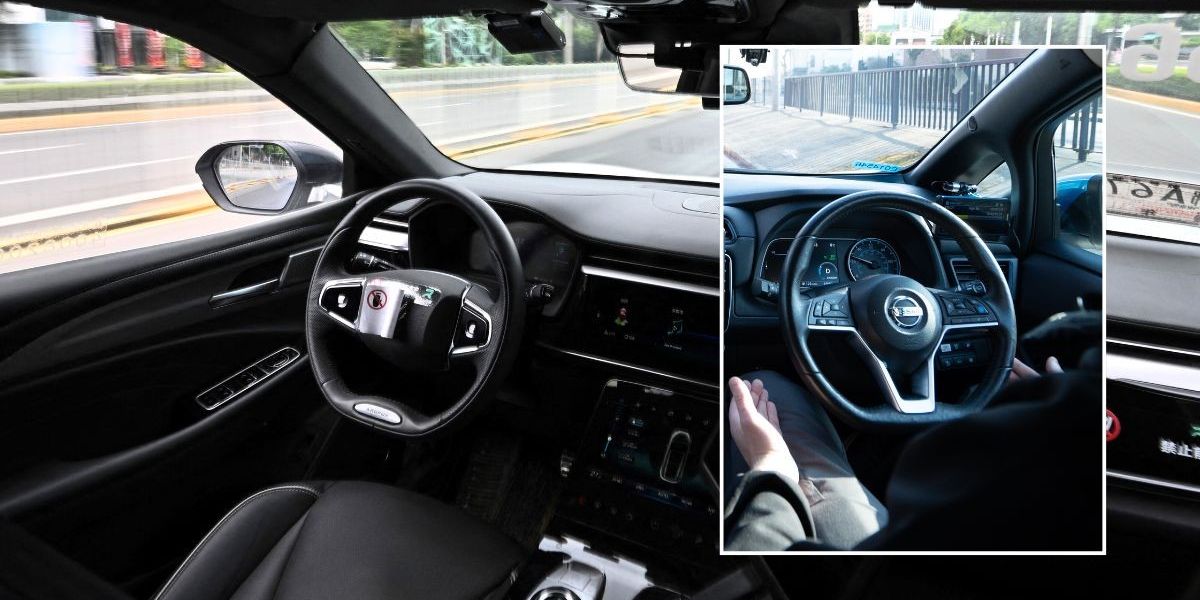
British drivers have thrown their support behind the rollout of self-driving cars on UK roads, as ministers launch a major consultation on the safety rules that will govern the technology.
The Department for Transport has invited members of the public to have their say on new safety principles for self-driving vehicles, with the consultation running until September 9.
The move comes as new Government research found broad support for using a “careful and competent” driver standard to judge whether automated vehicles are safe enough to operate on Britain’s roads.
Participants in the study generally supported the benchmark after learning more about self-driving technology and how it would be regulated. However, many said the phrase was too vague and needed to be explained more clearly.
Under the Automated Vehicles Act 2024, self-driving cars must meet or exceed the safety levels of a “careful and competent” human driver before they can be approved for use.
The Government insisted that the safety bar for automated vehicles will be set higher than the standard achieved by the average motorist.
According to the Department for Transport, human drivers contribute to 88 per cent of reported road collisions, raising hopes that self-driving technology could improve road safety by reducing human error.
The latest consultation follows the launch of the Government’s self-driving vehicle pilot scheme last month, which will allow passengers to experience self-driving taxi, private hire and bus-style services in carefully controlled conditions.
Drivers have called for more transparency and regulation of the self-driving tech
|
GETTY/PASafety remains at the centre of the programme, with operators required to demonstrate that their systems meet strict standards and are protected against cyber threats.
The public opinion research, published alongside the consultation, involved 84 drivers and non-drivers from England, Scotland and Wales taking part in workshops in Leicester, Stirling and rural Norfolk.
Participants were given time to learn about automated vehicle technology, hear evidence from experts and discuss real-world scenarios before sharing their views.
Researchers found that most people thought about safety in terms of driving behaviour rather than statistics.
Participants highlighted qualities such as spotting hazards early, maintaining awareness of surroundings and adjusting speed to suit road conditions.
Self-driving cars could be available for hire in the UK as soon as next year | GETTY
Researchers found support increased once participants understood the standard represented a level of driving above that achieved by the average motorist.
Some suggested alternative wording, with one rural driver arguing that the word “safe” would be easier to understand and measure than “careful“.
Trust also emerged as a major issue. Participants strongly opposed the idea of self-driving vehicle companies setting their own safety standards or assessing their own performance.
One group of rural non-drivers told researchers: “You can’t have one company say they can come and do it – you have to have someone else authorising.”
Drivers had previously raised safety concerns about self-driving cars
|
NISSANMany participants said they would place greater trust in assessments carried out by Government agencies and independent regulators than in information provided directly by manufacturers.
Roads Minister Simon Lightwood said: “Self-driving vehicles will offer new opportunities for Britain, helping to support independent travel for some disabled people and older adults, while unlocking billions of pounds for the economy by 2035, and supporting highly skilled jobs.
“The pilot scheme launched last month means people will experience this technology first-hand in carefully controlled conditions, while today’s consultation launch is a step towards clear and permanent rules on safety.”
He added that safety will always come first, with the trials hoping to set clear expectations to support innovation, protect road users, and “help make Britain a world leader in this technology.”