
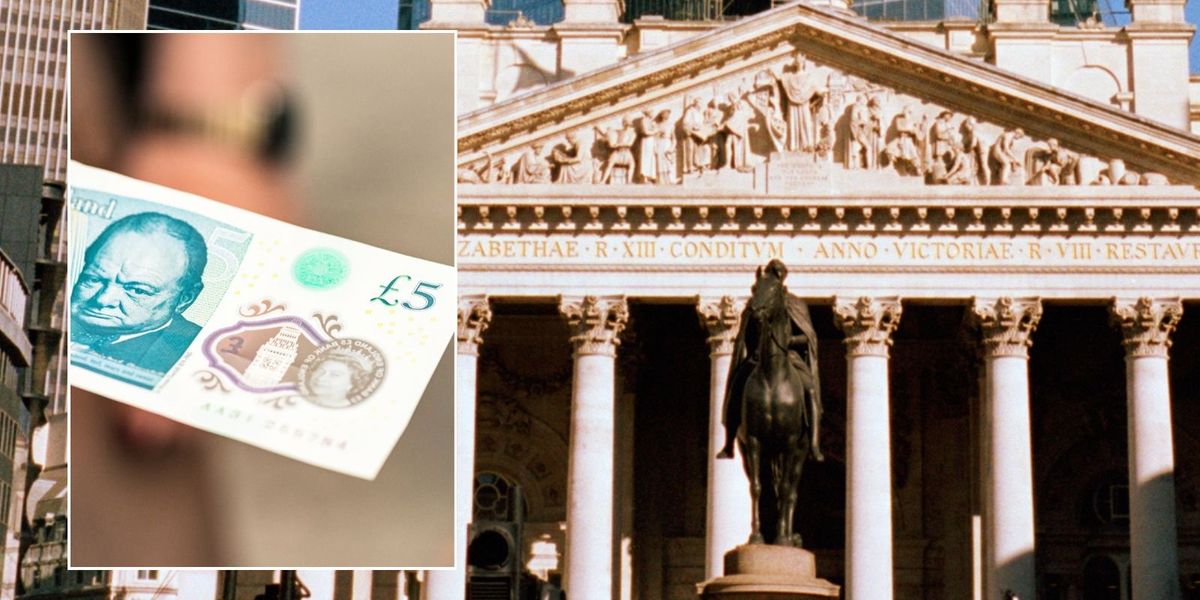
The Bank of England decided to remove Winston Churchill, Alan Turing and Jane Austen from British banknotes after commissioned research concluded these historical figures were “elitist and divisive,” newly obtained documents reveal.
A market research study conducted by Savanta in October 2025 advised central bank officials that such portraits presented “a backward-looking vision of the UK that carries too great a risk of division and controversy”.
Researchers determined that figures including the wartime prime minister, the celebrated codebreaker and the renowned novelist were “contentious and not representative of the UK’s cultural and natural diversity”.
The Savanta study, which gathered views from 119 focus group participants, found that most felt depicting historical figures on currency was “potentially divisive, elitist and disconnected from their own experiences”.
The UK’s central bank is under fire for getting rid of British historical figures from its banknotes
|
GETTY
Younger participants particularly questioned whether current banknote subjects remained relevant, with researchers noting “a clear desire for banknote imagery to evolve and better reflect modern Britain by being more inclusive”.
One focus group member described Alan Turing, the Second World War codebreaker and mathematician, as “imperialistic”, The Telegraph reports,
The participant stated: “It does kind of still feel a little bit imperialistic … Even Alan Turing, who was obviously a famous scientist, is within the context of winning the Second World War.
“It does feel like there is that kind of boomer, imperialistic, ‘we’re the ones who won the Second World War and saved the world’ feeling to the [bank]notes.”
Is the Bank of England cutting interest rates fast enough? | GETTY
Winston Churchill was among the figures declared too ‘divisive’ for bank notes
| File
The Bank has publicly justified the change as a security measure, with Governor Andrew Bailey writing in The Telegraph this week: “The Bank’s foremost objective is the security of our banknotes, which includes tackling the threat from counterfeiting.”
Officials maintain that fraudsters are becoming increasingly skilled at replicating human faces, necessitating the shift to wildlife imagery.
The central bank also points to a public consultation conducted last year, in which 60 per cent of 44,000 respondents selected nature as their preferred theme for future notes—ranking it above architecture, landmarks, and historical figures.
Robert Jenrick, Reform UK’s Treasury spokesman, demanded the central bank “should stop wasting time and money on this” and concentrate on controlling inflation instead.
Bank of England holds interest rates at 3.75 per cent | GETTY/CoPilot
Mr Jenrick said: “If it wasn’t for the likes of Churchill and Turing, we’d be living under a Government that really was divisive and imperialistic. It’s not too late to cancel this nonsense.”
Colonel Richard Kemp, a retired British Army officer, offered a stark warning: “Without great and courageous figures like Churchill and Turing, we may have swastikas on our banknotes today. We owe them so much, and it is right that we should be reminded of our debt to them daily on our banknotes.”
He described the decision as “shameful” and called for it to be reversed, accusing the Bank of succumbing to “the woke desire to erase Britain’s proud and remarkable culture”.
The Bank of England first introduced historical figures on sterling notes more than half a century ago, when William Shakespeare appeared on the £20 note in 1970.