
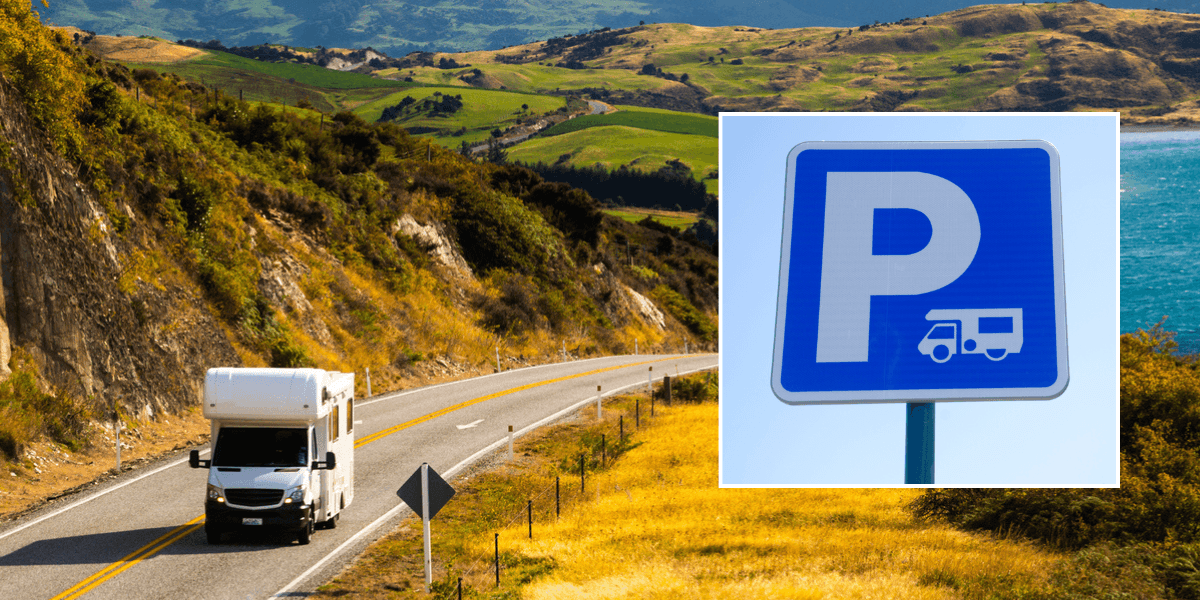
Motorhome and campervan parking restrictions across parts of the UK are facing growing criticism, with campaigners warning that blanket bans could damage coastal tourism and simply push vehicles into less suitable areas.
Local authorities, including councils in North Yorkshire, have introduced or made permanent restrictions on overnight motorhome parking in some seaside locations following complaints from residents about littering, congestion and inappropriate waste disposal.
But Donald McDonald, Founder and President of CAMpRA (Campaign for Real Aires), warned that banning motorhomes outright often fails to solve the underlying problem.
Speaking to GB News, he explained that councils are under increasing pressure from residents but warned that the “knee-jerk reaction from a lot of local people for a lot of things is ‘ban it, ban it'”.
He added that displacement is a key issue when restrictions are introduced in one location.
“If you put a ban in place that‘s actually quite suitable, it just moves the problem somewhere else,“ he said, pointing to examples such as Scarborough, where restrictions on Marine Drive have reportedly pushed motorhomes into surrounding streets.
Earlier this year, North Yorkshire Council moved to make its Experimental Traffic Regulation Order restrictions introduced in 2024 permanent after an initial trial period.
The moves have divided opinion, with some residents welcoming fewer overnight stays, while others in the tourism sector fear a loss of income during peak seasons.
But Mr McDonald argued that properly managed parking sites could offer a better solution than bans.
“We’re not advocating free parking,” he said. “People would be quite delighted to pay for parking, but it‘s got to be reasonable.“
He suggested that well-located overnight motorhome sites could generate significant income for local economies, estimating that visitors typically spend around £50 per night in surrounding businesses.
The organisation has warned that introducing parking bans for larger vehicles can impact tourism in the area
|
GETTY
“If you’ve got the space, accommodate it. Work with us and take advantage of a group of fairly affluent people who have got time to travel off-season and spend money in local businesses,“ he said.
CAMpRA promotes what it calls “positive and proactive” engagement with councils, offering advice on how to create designated motorhome stopovers rather than relying on enforcement alone.
Mr McDonald compared the UK‘s approach with other parts of Europe, particularly France, where motorhomes are often welcomed in small towns with basic overnight parking provision.
“In France, you can just go from village to village,” he said. “If it’s full up, you go to the next one. There’s no big plan, you just travel.”
More campervan parking bans have been introduced in the past few years | NORTH YORKSHIRE COUNCIL
He warned that the UK is missing a tourism opportunity by not providing similar facilities, particularly in coastal areas that rely heavily on seasonal visitors.
“Motorhomes don’t vote in those areas,” he said. “So councils respond to complaints, but there are unintended consequences.”
He pointed to Fleetwood in England as an example where a more structured approach by the Wyre Council has reportedly generated substantial local income, claiming it has brought in around a quarter of a million pounds in visitor spending.
Mr McDonald said CAMpRA has seen increasing engagement from councils in recent years, particularly since the pandemic, as more local authorities explore ways to manage growing motorhome use.
Motorhomes and campervans have faced several parking and road restrictions in the UK this year | PA
“We’ve been working hard since lockdown, and now more councils are coming to us,” he said. “We‘re viewed as a safe pair of hands that can give good advice.“
However, he stressed that enforcement still has a role when rules are broken. “If people don’t pay, they get fined. We’re not saying there shouldn’t be rules,” he said.
Concerns about littering and waste disposal remain a key reason for restrictions in some areas.
But Mr McDonald questioned how widespread the problem really is among fully self-contained motorhomes.
“I’ve just spent seven weeks in the south of France, and I’ve not seen any litter,” he said.
He added that self-contained vehicles are equipped with toilets and waste storage, meaning proper disposal facilities at designated sites would encourage responsible behaviour.