
One of Britain’s leading celebrant trainers has been at the heart of the government’s plans to modernise marriage law after joining Deputy Prime Minister David Lammy at the official launch of a consultation that could transform how weddings are conducted across England and Wales.
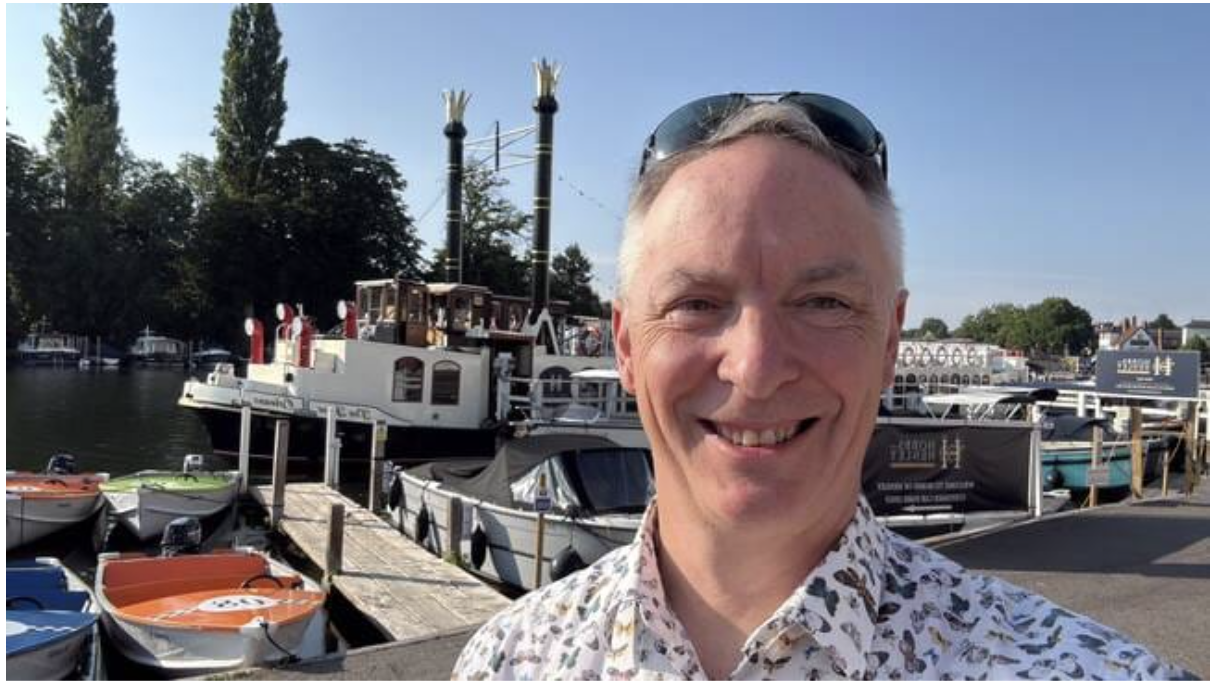
STUART MORRIS, 58, from Malham, North Yorkshire, founded The International College of Professional Celebrants (ICPC), now recognised as the world’s largest training organisation for wedding and funeral celebrants. On 16 July he joined David Lammy on a boat along the Thames, where he interviewed the Deputy Prime Minister during the launch of proposals representing the most significant review of marriage legislation for almost 200 years.
Stuart said: “Marriage law has developed in bits and pieces over many centuries, leaving us with rules that no longer match the lives of modern couples.”
His invitation to the launch followed years of collaboration with the Ministry of Justice through the Wedding Celebrancy Commission, which he co-founded and now serves as an executive board member. During that time he has worked with ministers, including Baroness Levitt, to help shape discussions around reform.
The Commission also commissioned independent research from the Open University to better understand couples’ expectations and to study successful legal frameworks overseas, including Australia’s long-established independent celebrant system. Those findings helped inform the Law Commission’s 2022 recommendations, which now form the basis of the government’s consultation.
Stuart said: “If a British couple gets married in Las Vegas, that marriage is recognised in the UK. Yet the same couple cannot legally marry in their own garden or a Yorkshire barn if they want an independent celebrant to conduct the ceremony. The current system gives registrars and certain religious ministers exclusive legal authority, leaving many couples with very little flexibility.”
He continued: “For LGBTQ+ couples, interfaith families and those whose beliefs are not represented by recognised religions, the choices are often limited to a simple legal ceremony with restricted availability. The emphasis has been on process rather than creating meaningful experiences for couples, but these proposals have the potential to change that.”
“I have spent my career making sure people are treated as individuals during life’s biggest moments. That began with the first funeral I conducted three decades ago and continues with every couple who wants a wedding ceremony that truly represents them. Our laws should support that.”
According to the government, the reforms are intended to provide greater choice over wedding locations, reduce costs, support the hospitality, tourism and wedding industries, particularly smaller venues, and reinforce the importance of marriage. Around 470,000 marriages take place annually in England and Wales under legislation that many believe has fallen behind modern society.
If introduced, the changes would allow legal weddings to be held in a much wider variety of locations, including beaches, woodland, castles, canal boats and cruise ships. Ministers also believe the proposals could help reduce wedding costs. The average wedding currently exceeds £20,000, with venue hire alone averaging around £6,000 before catering, a financial hurdle that discourages many couples from marrying.
Deputy Prime Minister and Justice Secretary David Lammy said:
“They say you can’t put a price on love, but too often the cost of weddings puts this commitment out of reach. That’s why I’m reforming archaic rules so couples have more freedom to say ‘I do’ on their own terms while strengthening safeguards to protect the meaning and permanence of marriage.”
The consultation also proposes a more consistent legal framework for faith and belief ceremonies. Rather than forcing couples to choose between a meaningful ceremony and legal recognition, the reforms would allow greater flexibility, including legally recognised ceremonies that combine multiple faith traditions.
Today Stuart trains celebrants responsible for ceremonies attended by more than one million people every year throughout the UK. ICPC also has around 50 per cent more active members than any other celebrancy organisation.
His forthcoming book, Hello, I Love You, Goodbye, examines why ceremonies remain central to the human experience. The first four chapters are already available at hilyg.uk.
The public consultation is now open at https://www.gov.uk/government/consultations/tying-the-knot-reforming-weddings-law-in-england-and-wales. The consultation will run from July 16 to September 24, lasting 10 weeks.