
The UK is turning to a fund set up nearly 100 years ago to pay off a small slice of its national debt.
The move will see more than £600million of government borrowing quietly wiped from the books early next year.
The Debt Management Office has confirmed it will cancel £607.4million of government debt on January 9, 2026, using money from the National Fund.
The debt being cancelled takes the form of a government bond, known as a gilt, which pays an interest rate of four per cent and was originally due to mature on January 29, 2027.
Unlike most government bonds, this gilt is not held by private investors.
Instead, it sits in the Donations and Bequests Account, a state-run account that holds money donated specifically to help reduce the national debt.
That account is overseen by the Commissioners for the Reduction of the National Debt, a long-standing institution responsible for managing such funds.
By cancelling the gilt, the Government avoids having to repay the £607.4million and no longer needs to make any future interest payments on it.
The National Fund itself dates back to 1927, when an anonymous donor gave around £500,000 in cash and investments.
The ambition was that the money would grow over time and eventually be used, on its own or alongside other funds, to completely clear Britain’s national debt.
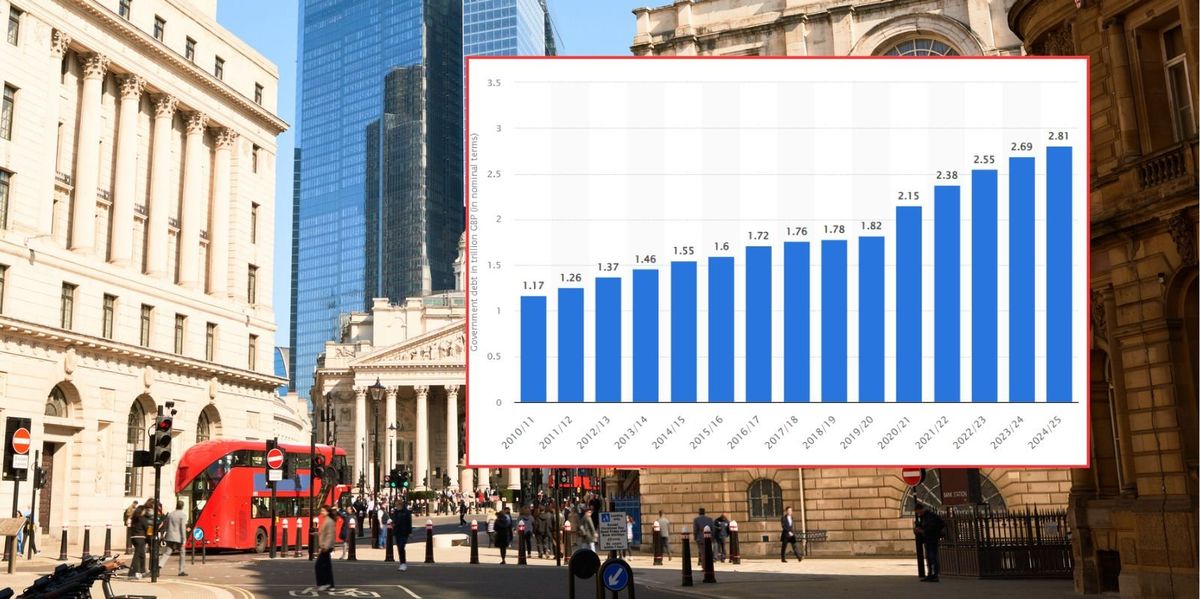
Total UK government debt rose above £2.8trillion in the 2024/25 financial year, up from £2.69 trillion the year before
|
STATISTA
The fund was originally managed by Baring Brothers & Co. Limited, which acted as trustee for the charitable donation. Over time, however, the UK’s national debt grew to levels far beyond anything the fund could realistically clear, making the donor’s original aim impossible to achieve.
As a result, the Attorney General asked the High Court of England and Wales to step in under the cy-près legal principle, which allows charitable funds to be used in a different way when their original purpose can no longer be met.
The court approved a change so the money could be used to reduce part of the national debt, rather than sitting unused indefinitely.
Even so, while £607million is a significant sum in isolation, the cancellation is largely symbolic when set against Britain’s overall borrowing, which runs into the trillions.
Chancellor Rachel Reeves has pledged to reduce debt interest costs, which currently consume around 10 per cent of all public spending
|
PATotal UK government debt rose above £2.8trillion in the 2024/25 financial year, up from £2.69 trillion the year before. Public borrowing now equals 93.5 per cent of GDP and is expected to rise further before it begins to fall later in the decade.
The pressure on the public finances is growing. The cost of servicing the debt is now higher than government spending on defence, transport and public order combined, underlining how expensive borrowing has become.
Debt increased sharply during the pandemic. Between 2019/20 and 2020/21, it jumped from £1.82trillion to £2.15trillion, reflecting emergency spending and lost tax revenues.
With borrowing now close to the size of the entire economy, the UK faces tough choices between cutting spending or raising taxes.
Research from the Adam Smith Institute warns that without policy changes, public debt could climb to 330 per cent of GDP by 2075.
The think tank says rising pension and healthcare costs, driven by an ageing population, combined with a shrinking workforce and weaker tax receipts, are pushing debt onto an unsustainable path.
Chancellor Rachel Reeves has pledged to reduce debt interest costs, which currently consume around 10 per cent of all public spending.
Shadow Chancellor Sir Mel Stride responded: “As a country, we are living beyond our means. Spending and borrowing are too high, and growth is far too low.”
He argued that controlling public expenditure, particularly welfare, was essential to cutting both the deficit and taxes simultaneously.