
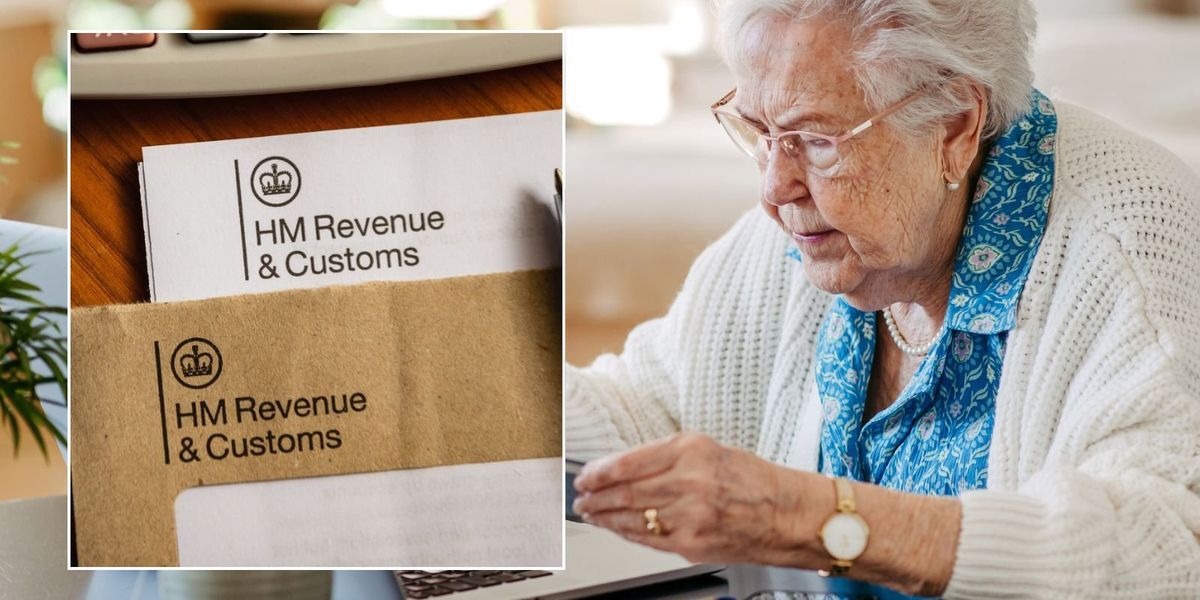
State pensioners face an “unexpected tax bill in the years ahead, as analysts warn HM Revenue and Customs (HMRC) view their payments as “simply income”.
Nearly half of British adults remain unaware that their state pension counts as taxable income, according to recent findings from Royal London.
The financial service firm’s research reveals that 41 per cent of people do not realise the state pension falls within the scope of income tax.
With living costs remaining a pressing concern, the timing could hardly be worse. The root cause of this predicament is a phenomenon known as fiscal drag.
State pensioners are being prepped for ‘unexpected tax bills’
|
GETTY
During the November 2025 budget, the Chancellor confirmed that the personal allowance, the threshold below which no income tax is owed, would stay fixed at £12,570 through to April 2031.
Meanwhile, state pension payments continue to climb. When the new tax year commences in April 2026, the full new state pension will rise to a level that sits less than £30 beneath the tax-free threshold.
As a result, even modest additional earnings, whether from a workplace pension, part-time employment, or savings interest held outside an ISA, will push pensioners over the limit.
Alex Edmans, product director at Saga Money, says: “We often view the state pension as a guaranteed safety net, but in the eyes of the taxman, it is simply income.
How the state pension triple lock has changed over the years | GB NEWS / FIDELITY INTERNATIONAL
Graph projects the number of retirees facing a stealth tax on their state pensions will rise in the coming years | Chat GPT
“No one likes to get an unexpected tax bill. The key is to treat your state pension as the foundation of your taxable income, not a tax-free bonus.”
In the November Budget, ministers pledged that from April 2027, those receiving only the basic or new state pension would be protected from paying small tax amounts through simple assessment.
Between 800,000 and one million pensioners fall into this category, though some receiving additional state pension increments may not qualify for the exemption.
However, a House of Commons Library report has highlighted confusion surrounding the announcement.
How much more will you pay by 2031 due to fiscal drag? | STANDARD LIFE
The Low Incomes Tax Reform Group initially interpreted the pledge as an administrative measure rather than a genuine tax exemption, and has requested further clarity on how the waiver will function and its associated costs.
Exchequer Secretary Dan Tomlinson subsequently clarified in Parliament during January that pensioners whose sole income is the basic or new state pension, without increments, would not face income tax during this parliament.
Senior HMRC official Cerys McDonald told the Treasury select committee that preparations are already underway.
She confirmed legislation would be required, with the measure expected to pass through the autumn Finance Bill.