
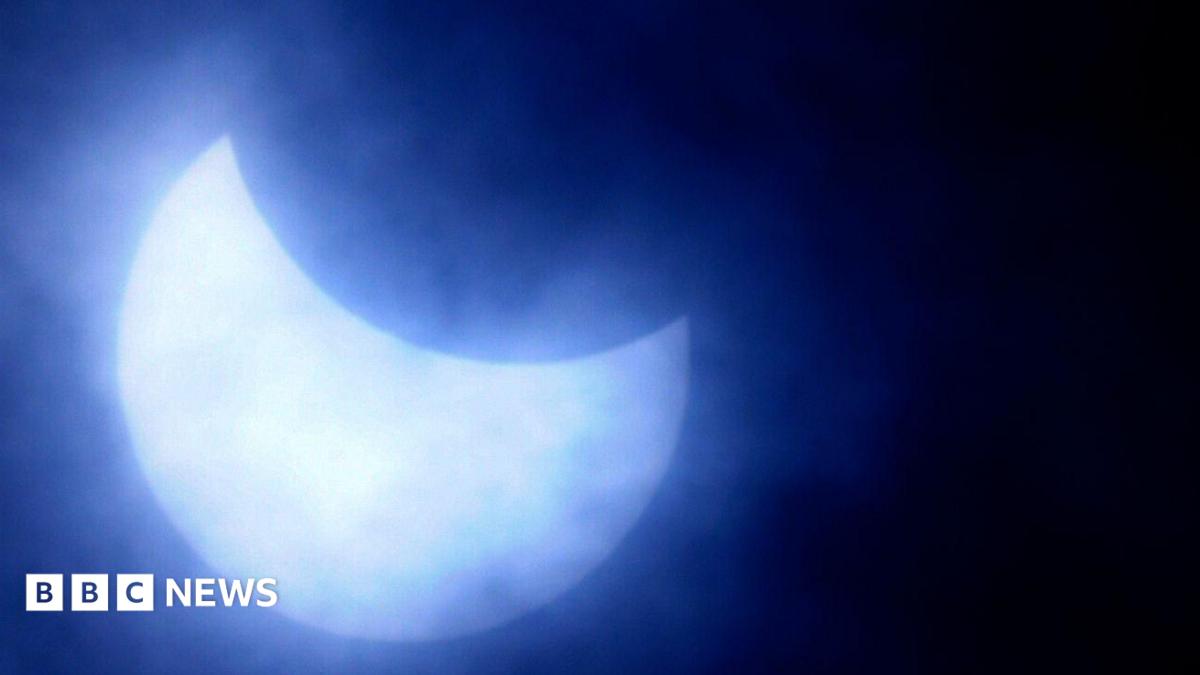
A vital warning from experts is to avoid looking at the sun even when it appears to have dimmed during the eclipse.
Looking with the naked eye could cause severe, permanent damage to eyesight.
Mohamed Elalfy, a consultant ophthalmologist and president of the Royal College of the Royal College of Ophthalmologists, said: “Crucially, the retina has no pain receptors, so people will not feel the damage as it happens.
“Symptoms may only become apparent several hours later and can include blurred vision, a central blind or dark spot, distorted vision, reduced colour perception and increased sensitivity to light.”
But standard sunglasses should also never be used to observe an eclipse, as they will still allow harmful solar rays to reach the retina.
Certified solar eclipse glasses are available, while another option is using a pinhole projector.