
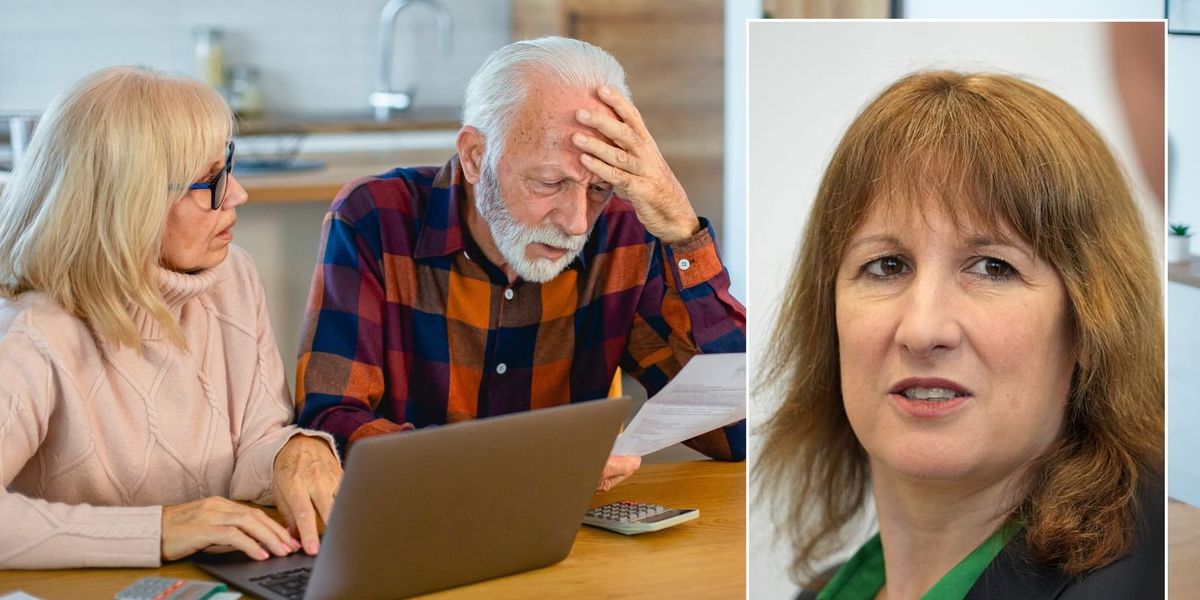
The Office for Budget Responsibility has forecast that an additional one million pensioners will find themselves liable for income tax by 2030-31, according to projections released alongside the Chancellor’s Spring Statement on Tuesday.
Updated modelling from the budget watchdog indicates that 600,000 more pensioners than previously estimated will be pulled into the tax system from the 2026-27 financial year.
The shift stems from the interaction between frozen income tax thresholds and the triple lock mechanism, which guarantees annual state pension increases matching the highest of 2.5 per cent, inflation, or wage growth.
With the personal allowance held at £12,570 until 2031, the full new state pension is set to breach this threshold for the first time in 2027-28.
The OBR noted that most affected individuals would face only modest additional tax liabilities, generating approximately £100million annually by the decade’s end.
The Liberal Democrats have attacked the measure as a hidden tax raid on older people.
Daisy Cooper, the party’s Treasury spokesperson, described the forecast as a “shock stealth grab hitting another one million pensioners” that was “buried in the small print of today’s spring statement”.
She called on the Chancellor to urgently clarify how vulnerable pensioners would be shielded from the changes.
“For poorer pensioners, every penny counts, and these unfair tax hikes could be the final straw,” Ms Cooper said.
The shock stealth grab will be hitting another one million pensioners
|
GETTY
“Pensioners have worked hard all their lives, paid into the system and played by the rules. Poorer pensioners should not be made to pay the price for this Labour Government’s economic failure.”
She demanded Rachel Reeves explain immediately how older people on lower incomes would be protected from what she termed a “stealth tax squeeze”.
David Brooks, Head of Policy at financial services consultancy Broadstone, warned that while the Treasury’s fiscal gains from the measure remain relatively modest, the perception matters considerably.
“The optics are significant – particularly as more pensioners begin to pay Income Tax on what many view as a foundational retirement income over the coming years,” he said.
Rachel Reeves has made economic growth central her her agenda | GETTY
Mr Brooks noted that the updated OBR modelling highlights how the triple lock is pushing state pension payments above the frozen personal allowance threshold.
He also pointed to broader tensions around generational equity, observing that the development “comes at a time of heightened scrutiny around intergenerational fairness, with student loans bursting into the political spotlight while the future of the Triple Lock remains a hotly debated issue”.
The Government has stated its intention to ensure that individuals whose only income source is the state pension will not face income tax during this Parliament, with further details promised before the April 2027 changes take effect.
However, the precise mechanism for delivering this exemption has yet to be announced.
Approximately 8.7 million pensioners already pay income tax
|
GETTYThe OBR indicated it would incorporate any policy adjustments into future forecasts once specifics are confirmed.
At present, approximately 8.7 million pensioners already pay income tax, a figure that could exceed 10 million by 2031 according to previous estimates.
Public opposition to taxing state pension income continues to grow, with a Change.org petition calling for an end to the practice having now attracted more than 200,000 signatures.