
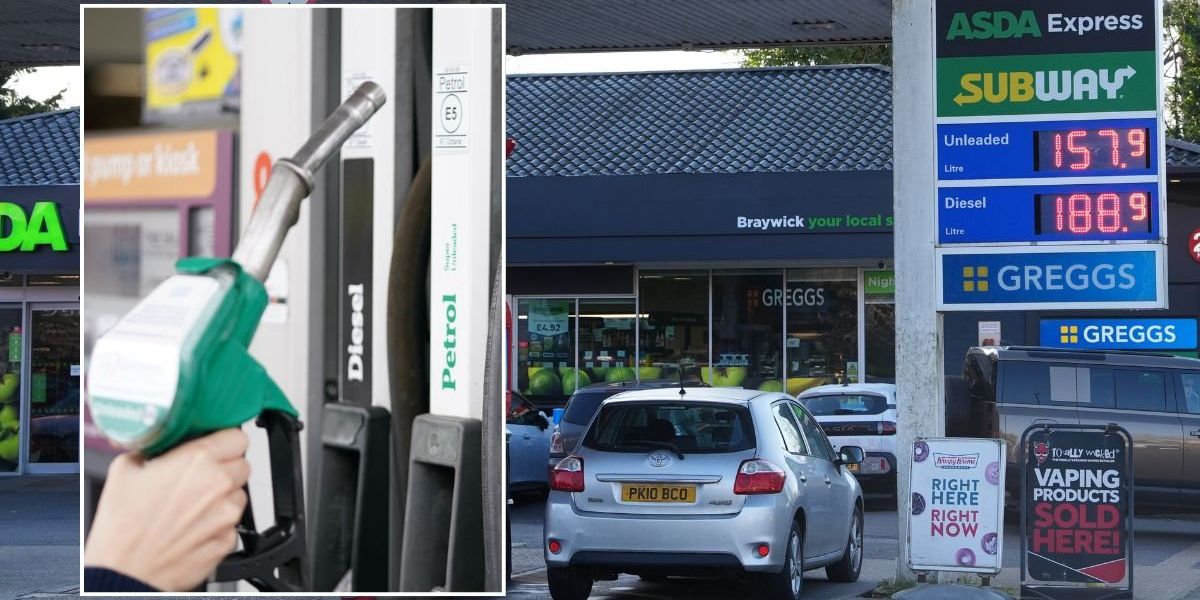
Fuel costs across the UK have hit another grim milestone, with new data showing that petrol and diesel prices have increased by record monthly amounts in March.
Fresh research from RAC Fuel Watch shows that the average price of petrol soared from 132.83p on March 1 to 152.83p on March 31.
This concerning 20p hike surpasses the previous all-time jump of 16.6p in June 2022, when unleaded prices increased from 174.84p to 191.43p.
Diesel drivers were hammered even harder, with a staggering 40p spike, from relatively low costs of 142.38p the day after Iran’s Supreme Leader was killed in an airstrike on Tehran.
Drivers visiting the pumps are now forking out 182.77p per litre on average, with experts warning that these huge price rises could continue, especially if tensions in the Middle East do not subside.
March’s price hike is almost double the previous record jump seen in March 2022, when costs rose from 155.23p to 177.29p.
This was in the immediate aftermath of Russia’s invasion of Ukraine, which prompted the then-Conservative Government to cut the rate of fuel duty by five pence per litre.
Prime Minister Sir Keir Starmer has confirmed that the rate of fuel duty will be kept under review, despite pleas from motorists and industry leaders.
March saw the largest monthly rise in petrol and diesel prices ever
|
PA
Motorists are now paying £84 to fill an average 55-litre family car with petrol, while diesel recently broke the £100 barrier.
Simon Williams, head of policy at the RAC, said: “March has been truly unprecedented – fuel prices have never risen this fast in a single month.
“But while this is the biggest pence-per-litre increase ever in a month, it’s not as great in real terms as those seen during the 1973 oil crisis when the price of a barrel quadrupled.
“The increases drivers have had to endure in March 2026 far exceed those seen in the early days of the war in Ukraine.”
Some petrol stations have reported shortages of fuel amid the ongoing crisis in the Middle East
|
PAPetrol and diesel prices peaked in the summer after Russia’s invasion, when average costs soared to 191.5p per litre for petrol and 199p for diesel.
Labour is planning to reverse the five pence per litre fuel duty cut later this year in a phased approach, despite the soaring prices.
Chancellor Rachel Reeves confirmed in the Autumn Budget that the cut would be reversed by 1p in September, 2p in December and 2p in March 2027.
While the Chancellor did scrap the planned fuel duty increase in line with inflation for 2026/27, the Government will uprate fuel duty rates next April.
Petrol and diesel prices peaked at almost £2 across the UK in the aftermath of the Russian invasion of Ukraine four years ago | PA
RAC research shows that eight in 10 drivers are dependent on their vehicles, making the current fuel price crisis a serious issue for millions of motorists.
“While the monthly rise in a litre of petrol is bad enough, the jump in the cost of diesel is even harder to swallow at 40p a litre – 18p more than the previous monthly record,” Mr Williams said.
Experts have consistently called for drivers to use comparison tools to find the cheapest petrol and diesel in their area.
Estimates from the Government suggested that drivers could save between one and six pence per litre when using the newly-launched Fuel Finder scheme.