
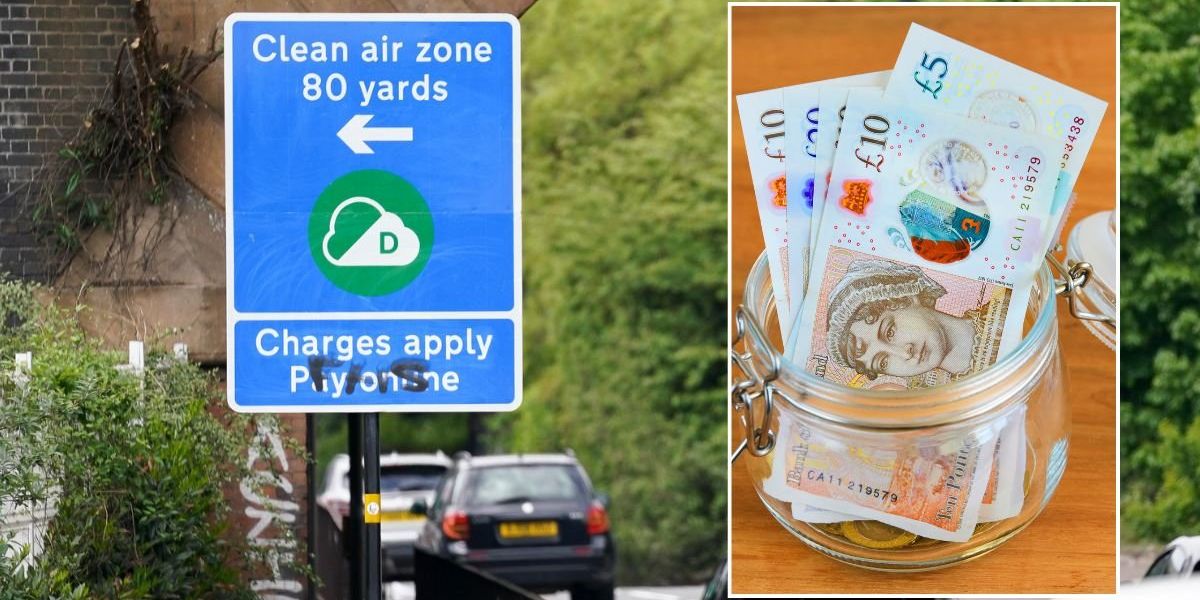
The House of Lords has approved new regulations which will double the fees local authorities pay for processing Clean Air Zone transactions, increasing them from £2 to £4 from September 2026.
Despite a formal regret amendment tabled by Conservative peer Lord Moylan, who argued the measure risked imposing additional costs on drivers already struggling with high fuel prices, the motion passed.
Transport Minister Lord Hendy of Richmond Hill defended the changes as necessary to move towards full cost recovery for the Government’s central payment processing service.
The regulations also extend the charging period from March 2027 to March 2031, acknowledging that some areas will not achieve air pollution compliance targets until the early 2030s.
Seven Clean Air Zones currently operate across England, covering Bath, Birmingham, Bradford, Bristol, Portsmouth, Sheffield, and Tyneside.
The central services website, established in 2021, enables motorists to check whether their vehicle meets emissions standards and pay any required charges.
Ministers argued the fee increase is essential because the previous Government failed to adjust the £2 charge since its introduction in 2020, leaving taxpayers to subsidise the shortfall.
Lord Hendy stated that raising the transaction fee to £4 will achieve an estimated 90 per cent cost recovery over the service’s lifetime from 2020-21 to 2030-31, while the remaining 10 per cent will come from general taxation.
The House of Lords faced opposition from members who argued the new rules could impose more costs on drivers
|
PA/GETTY
Despite this, Lord Moylan characterised the fee increase as “another stealth tax on motorists,” arguing that the Government was attempting to disguise it as a cost recovery measure.
He highlighted Birmingham as a particular concern, where the daily Clean Air Zone charge stands at £8, meaning the £4 processing fee would represent half of what drivers pay.
The Conservative peer dismissed Government assurances that local authorities would not pass costs on to motorists, noting that councils use their surpluses for “desperately needed transport improvements” rather than simply accumulating funds.
He argued the burden falls disproportionately on those least able to afford it, stating that vehicles failing to meet emissions standards are typically older vehicles likely to be owned by people on lower incomes.
The House of Lords approved a new transaction fee rate for paying Clean Air Zone fines
|
PAEarl Russell, speaking for the Liberal Democrats, expressed broad support for Clean Air Zones while raising significant concerns about the quality of the regulations themselves.
He noted that the Secondary Legislation Scrutiny Committee had been forced to intervene because the original Explanatory Memorandum lacked crucial information on cost recovery, transaction data, and the impact on individual councils.
He argued that while the Government claimed there would be no effect on businesses or charities, the real consequences would fall on local authority transport budgets.
The Liberal Democrat peer warned that doubling the central service fee “directly reduces the resources available for local transport investment,” meaning less funding for sustainable transport alternatives.
A number of cities around the UK have now launched a Clean Air Zone | PA
Lord Hendy sought to reassure the House that motorists would be protected from any cost increases, revealing the Government had written to local authorities making clear its expectation that charges should not be passed on.
He identified Birmingham, Bristol, Bradford, and Bath and North East Somerset as the four councils currently generating surpluses from their Clean Air Zone operations, with Bristol’s surplus running to several million pounds annually.
The minister explained that the extension to 2031 had become necessary because the previous Government’s assumption that compliance would be achieved by March 2027 had proved overly optimistic.