
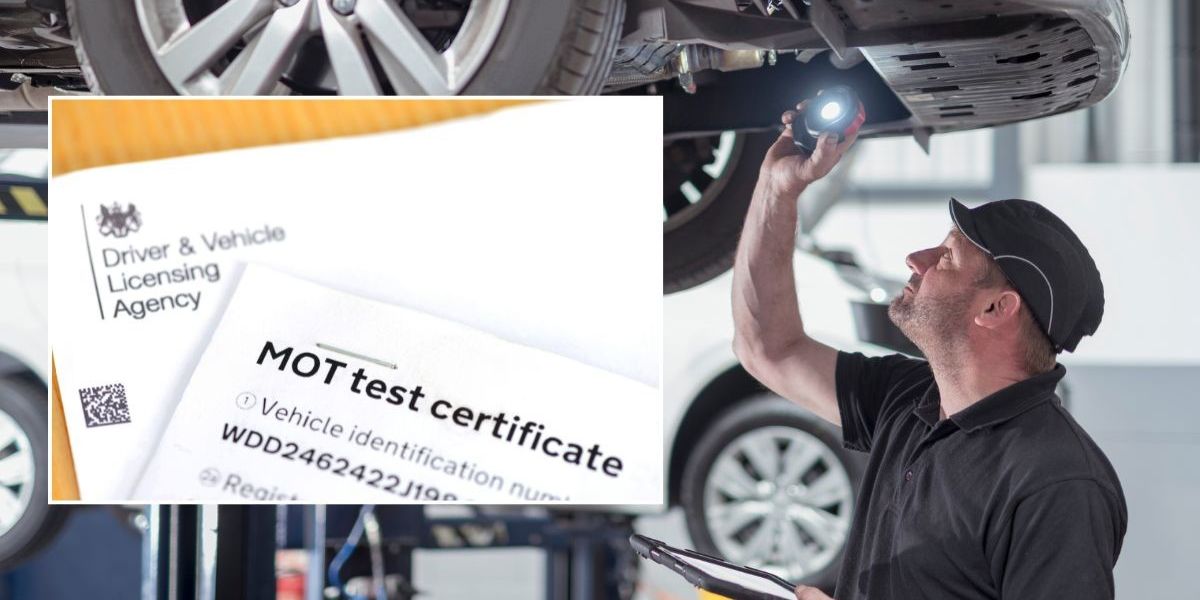
Electric and hybrid drivers have been warned to rethink how they prepare for an MOT after new analysis revealed a significant gap in pass rates between different models.
More than 2.3 million MOT tests were studied and the results showed a 25 per cent difference in success rates between the best and worst-performing vehicles.
Experts have now warned that this highlights the need for a new approach to maintaining electric cars, particularly as they become more popular.
Claire Wills-McKissick, an electric car insurance expert at Tempcover, said drivers must adapt to the changing nature of motoring.
She said: “With the UK’s electrified fleet now reaching 4.6 million vehicles, we are witnessing a permanent shift in how the country drives.
“Understanding the real-world maintenance and long-term testing patterns of electrified models has never been more relevant for the British motorist.”
The research found a clear divide between models when it comes to MOT success.
The Honda Jazz Crosstar recorded the highest pass rate at 97.2 per cent, making it one of the most reliable choices for drivers.
It was followed closely by the Honda CR-V and the Lexus UX, which both achieved pass rates above 96 per cent.
In contrast, the Renault Zoe recorded a pass rate of just 71.4 per cent. While this is close to the national average of around 72 per cent, it is significantly lower than the best-performing models.
This gap suggested that some vehicles are far more likely to pass an MOT than others, and that design and engineering may play a bigger role than many motorists expect.
The instant torque produced by electric motors can increase wear and tear on key components of cars
|
GETTYExperts explained that electric vehicles face different challenges compared to petrol and diesel cars.
One issue is the added weight of battery packs, which can put extra pressure on tyres and suspension.
Another factor is the instant torque produced by electric motors, which can increase wear and tear on key components.
These factors mean that certain parts of an electric car may wear out faster, increasing the risk of faults being identified during an MOT.
Ms Wills-McKissick explained: “Factors such as battery weight and the immediate pulling force of electric motors can place unique stress on vehicles.
“That means drivers need to think differently about maintenance compared to traditional cars.”
Experts detailed how electric cars were more at risk of MOT failures due to suspension problems | PA
Drivers are now being encouraged to take simple steps to improve their chances of passing an MOT.
They are advised not to ignore warning lights, as these can often lead to an automatic failure.
Regular tyre checks are also important, as electric vehicles can wear tyres more quickly due to their weight.
Routine servicing is also recommended, as the quieter nature of EVs can make it harder to notice developing issues.
Ms Wills-McKissick said: “Electrified vehicles are much quieter, which can mask issues that would be obvious in petrol cars. Regular checks can help catch problems early and prevent unexpected failures.”
The study also ranked manufacturers based on overall MOT performance.
Luxury brands Jaguar and Porsche came out on top, both achieving pass rates above 93 per cent.
However, more affordable brands also performed strongly, with Honda and Ford both ranking in the top five.
Electric vehicles can wear tyres more quickly due to their weight
|
REUTERSAll manufacturers included in the study recorded an average pass rate above 80 per cent.
Tesla achieved 86.5 per cent, while Renault recorded the lowest manufacturer pass rate at 83.3 per cent.
The findings come as electric and hybrid vehicles continue to grow in popularity across the UK as part of the Government’s push towards the Zero Emission Vehicle mandate.
There are now 4.6 million electrified vehicles on the road, including nearly 1.9 million fully electric cars.
This means around one in nine vehicles are now powered by electricity or hybrid technology.
“By staying on top of maintenance, drivers can ensure a smoother experience as the UK moves towards a zero-emission future,” Ms Wills-McKissick added.