
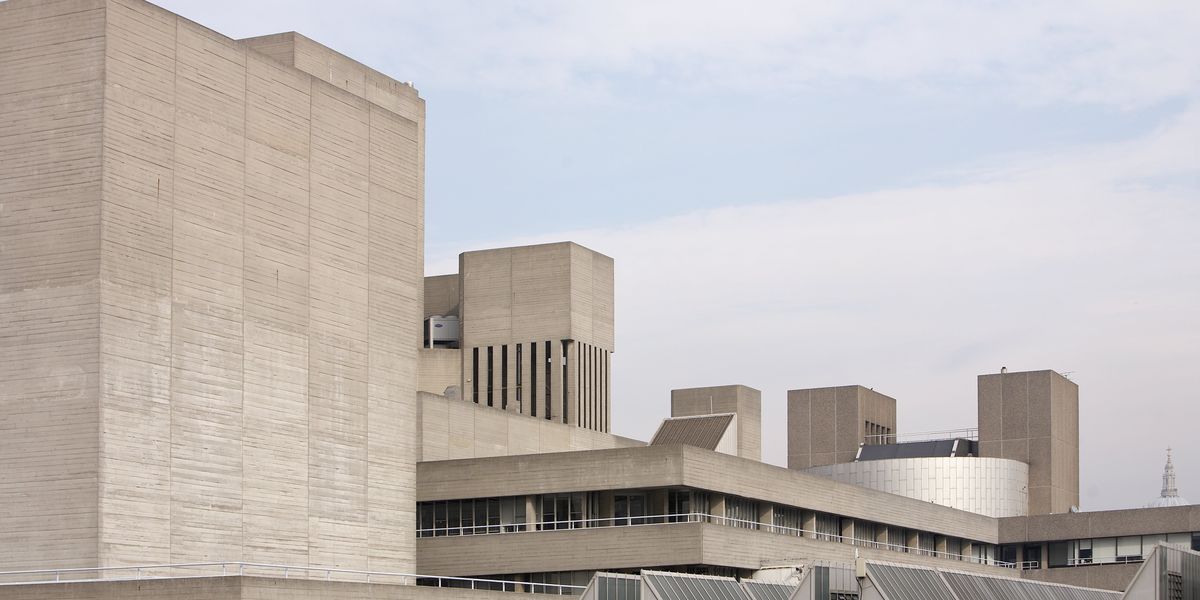
London’s Southbank Centre has secured Grade II listed status from the Department for Culture, Media and Sport, bringing to a close a remarkable 35-year heritage campaign.
The decision represents a major triumph for the Twentieth Century Society and Historic England, who had persistently advocated for the protection of the iconic Brutalist complex.
The arts venue, which sits proudly on the Thames, was famously branded “Britain’s ugliest building” by Daily Mail readers when it opened in October 1967.
Catherine Croft, director of the Twentieth Century Society, said: “The battle has been won and Brutalism has finally come of age.”
The protected designation encompasses the Hayward Gallery, Queen Elizabeth Hall, Purcell Room and the celebrated skatepark undercroft beneath the complex.
Terraced walkways and staircases connecting these structures are also included within the listing.
Grade II listing ensures the distinctive concrete forms, interior layouts and architectural character of the site will be preserved for future generations.
Its neighbour, the Royal Festival Hall, had already received the higher Grade I listing back in 1988.
The Twentieth Century Society and Historic England submitted recommendations for listing on six separate occasions since 1991, with successive culture secretaries rejecting each application until now.
London’s Southbank Centre has secured Grade II listed status from the Department for Culture, Media and Sport, bringing to a close a remarkable 35-year heritage campaign
|
GETTY
Mrs Croft added: “We’re absolutely thrilled that this internationally recognised concrete masterpiece of post-war architecture has finally been accepted as part of our national heritage, some 35 years after the Twentieth Century Society first campaigned for the Southbank Centre to be protected.”
She described the campaign as the society’s longest-running effort in its history.
The complex is widely regarded as among the finest examples of Brutalist architecture globally.
Mrs Croft praised Heritage Minister Baroness Twycross for taking action where her predecessors had declined to do so over several decades.
The complex was designed by a young team of architects from the London County Council, led by Norman Engleback.
The complex is widely regarded as among the finest examples of Brutalist architecture globally
|
GETTY
Her Majesty the Queen officially opened the Hayward Gallery, Purcell Room and Queen Elizabeth Hall in 1967 and 1968.
The buildings featured bold board-marked concrete surfaces, sculptural air conditioning ducts and pyramidal glazing, deliberately contrasting with the smooth Scandinavian-influenced modernism of the adjacent Royal Festival Hall.
Following the abolition of the Greater London Council in 1986, the site faced numerous redevelopment threats.
A 1989 Terry Farrell scheme proposed wrapping the buildings in a postmodern shell, while Richard Rogers’ £70million “Wave” plan in 1994 envisaged a glass roof over the complex. Both proposals were ultimately abandoned.
A spokesman for the Southbank Centre welcomed the decision, saying: “The Grade II listing recognises the architectural and civic importance of the Queen Elizabeth Hall and Hayward Gallery.
The urban landscape also houses areas for skateboarders
|
GETTY
“The listing underlines the need for government investment in our buildings, all of which they own.”
The venue expressed its commitment to collaborating with the government to secure the long-term future of these structures.
The Southbank Centre has requested £30million from the Government to fund infrastructure improvements as it marks its 75th anniversary.
It now hosts an extensive programme of visual arts, theatre, dance, music, literature and poetry events.