
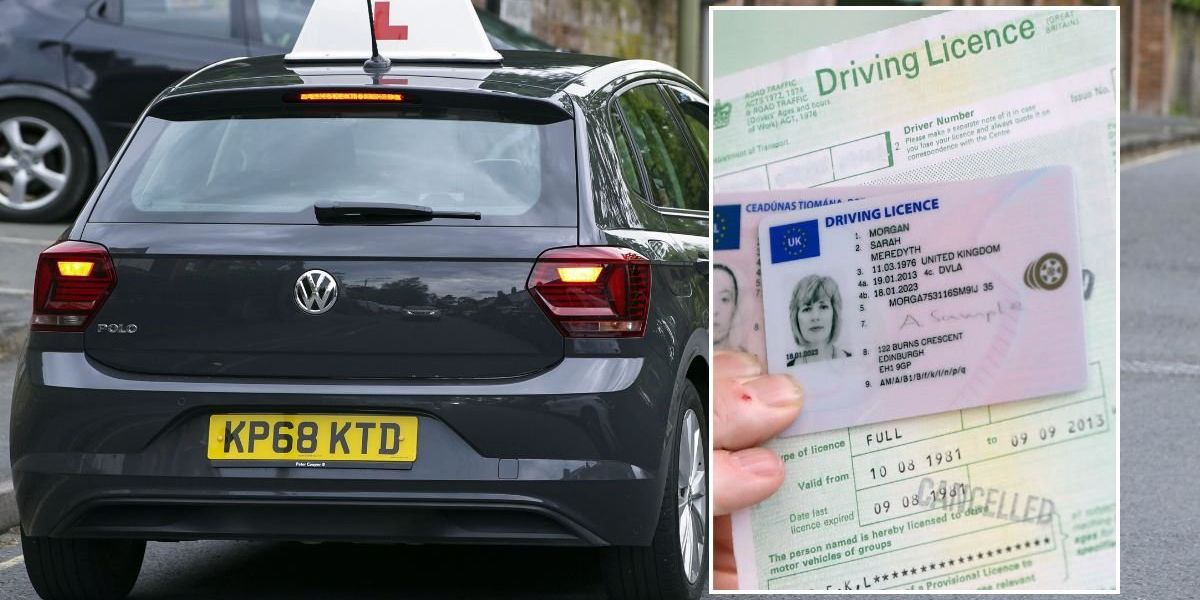
Experts have called on the Government to ensure younger motorists are not adversely affected by sweeping new road rules introduced yesterday.
Labour has launched the first Road Safety Strategy in more than 10 years in a bid to cut the high number of serious injuries and deaths on roads across the UK.
It outlined plans to introduce a minimum three or six-month learning period for learner drivers following a consultation, which has already been launched.
The Road Safety Strategy indicated that drivers aged between 17 and 24 represent just six per cent of licence holders, despite making up 24 per cent of fatal and serious collisions in 2024.
In particular, young males have the highest number of incidents involving a serious injury or death, both as drivers and passengers.
The consultation looks at a minimum amount of learning hours, a mandated learning syllabus and how these measures can be rolled out effectively.
The US state of Kentucky trialled a minimum learning period of six months for 16-year-old drivers and saw an impressive 32 per cent reduction in collisions.
Similarly, the Canadian province of Ontario saw a 16 per cent reduction in the per-driver collision rate, while Quebec saw a 14 per cent reduction in injuries.
Experts have called on the Government to ensure young people are protected by sweeping road safety proposals
|
PA
Ian Mulingani, managing director of Young Driver, said people learning to drive at a younger age will have an advantage when it comes to road safety.
Young Driver has been operating in the UK for more than 15 years and has delivered more than 1.6 million lessons for young people between the ages of nine and 17.
Mr Mulingani highlighted how the scheme was inspired by research from Sweden in the 1990s, which showed that pupils are 80 per cent less likely to have a collision in their first six months on the road.
He added that pupils who engage with training before they can take a test are 78 per cent more likely to pass first time, compared to the national average of 48 per cent.
Young Driver offers driving lessons to children aged between nine and 17
|
YOUNG DRIVER
Mr Mulingani said: “That is why we believe under-17 tuition, carried out in a structured and documented way with qualified instructors, should count towards experience in this consultation.
“The Government needs to think about how this new policy would work in practice, rather than it just becoming a meaningless delay in people being able to take their test, and we would welcome the opportunity to be part of those discussions.”
He emphasised the Government’s Lifelong Learning approach, which could focus on the “development and the delivery of road safety education and training”.
“Getting youngsters behind the wheel gives them a great insight into road safety as a pedestrian or cyclist too, allowing them to better understand things like stopping distances and blind spots,” the expert said.
The consultation into proposals to introduce mandatory requirements for learner drivers before taking their practical test will end on March 31, 2026.
The Road Safety Strategy is also looking to crack down on younger motorists with a consultation on lowering the blood alcohol limit for novice drivers.
A separate consultation proposes lowering the drink-drive limit for novice drivers to 20mg in 100ml of blood, nine micrograms in 100ml of breath, and 27mg of alcohol in 100ml of urine.