
 English
 Français
 Deutsch
 Italiano
 Русский
 Español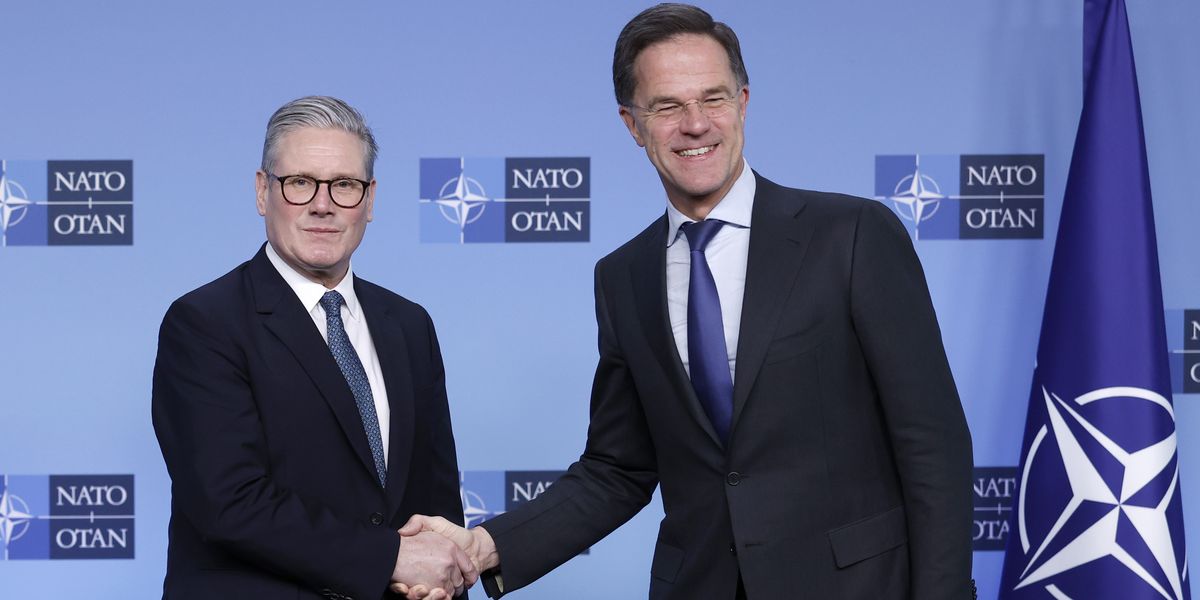
Sir Keir Starmer is set to commit to spending five per cent of British GDP on defence by 2035, but there is currently no plan to fund it.
It comes after weeks of diplomatic pressure from Nato allies and military chiefs amid global conflicts.
Labour’s pledge aligns with Nato’s new spending targets, but comes at a slower pace than key allies, including Poland.
Under the pledge, 3.5 per cent will be put towards hard defence, such as troops and weapons, with the remainder being spent on wider security, such as border protection and cyber defences.
However, a Downing Street spokesman declined to say how the full 3.5 per cent core defence uplift would be funded by 2035, saying only that it would be “reviewed” in 2029.
According to the spokesman, the Prime Minister is set to travel to The Hague later today “against a backdrop of global volatility” citing Israeli and US strikes on Iran, the continued war in Ukraine and Russia’s intensifying aggression.
Starmer said: “This is an opportunity to deepen our commitment to Nato and drive greater investment in the nation’s wider security and resilience.
“After all, economic security is national security, and through this strategy we will bring the whole of society with us.”
Shadow Defence Secretary James Cartlidge told The Sun: “Instead of using smoke and mirrors to inflate defence spending, Labour must get to three per cent this Parliament and back our country’s defence with a fully funded plan.”
FOLLOW BELOW FOR LIVE UPDATES THROUGHOUT THE DAY…
DWP under pressure as Waspi women win key legal protection
Waspi campaigners say they have secured a vital legal safeguard in their bid for a High Court challenge.
The Women Against State Pension Inequality (Waspi) group is seeking a judicial review to force the Government to reconsider its refusal to offer compensation over the handling of state pension age changes that affected millions of women born in the 1950s.
On Monday, Waspi confirmed that a legal cap has been placed on their liability for the Department for Work and Pensions’ (DWP) defence costs.
The DWP has agreed to what’s known as a costs capping order, which limits how much either side would need to pay if they lose. Waspi said this gives them the confidence to press ahead with legal proceedings.
READ MORE HERE
ANALYSIS: Will Nigel Farage’s ‘Robin Hood’ tax make YOU richer or poorer?
Reform UK leader Nigel Farage has unveiled one of his party’s boldest policies yet in what is being described by some analysts as a “Robin Hood tax”, directly taking aim at Chancellor Rachel Reeves’s raid on non-doms.
Last year, Reeves confirmed inheritance tax (IHT) would now be levied on the foreign assets of non-doms, which critics have claimed has led to an exodus of wealth from the UK.
Amid rumours of a looming U-turn, Farage confirmed Reform’s plan to launch a “Britannia Card” to entice wealthier foreigners to move to Britain.
But how does the “Britannia Card” hold up to scrutiny? GB News asked six leading finance experts to give their take on the plans.
FIND OUT WHAT THEY SAID HERE
Keir Starmer faces mega-rebellion over welfare bill
Keir Starmer is facing a rebellion of almost 100 MPs over cuts to welfare
PA
Sir Keir Starmer has been left bracing for a huge backbench rebellion over his plan to cut Britain’s ballooning benefits bill by £5billion.
Almost 100 Labour MPs are believed to have signed an amendment demanding further consultation on Starmer’s welfare proposals.
Rebels have claimed that the amendment, which will be published on Tuesday, does not intend to wreck Labour’s welfare bill.
Treasury Select Committee chair Meg Hillier told The Guardian: “We all want the Labour Government to succeed in getting people back into work and supporting those who can’t.
“We don’t want to defeat the Government but we want the Government to think again.
“We are being asked to vote before consultation with disabled people and before impact assessments.”
READ THE FULL STORY HERE
How are other countries matching Nato demands?
The UK is moving a lot slower than other Nato countries in matching the five per cent commitment.
Germany, under new chancellor Friedrich Merz, has eased constitutional debt limits to fund a €500billion (£427.6billion) rearmament programme and has pledged to reach 3.5 per cent by 2029.
However, Spain, under socialist Prime Minister Pedro Sánchez, has opted out entirely, striking a deal with Nato to keep its defence budget at just above two per cent.
Meanwhile, Poland and the Baltics are already spending four per cent to five per cent of their respective GDP figures.