
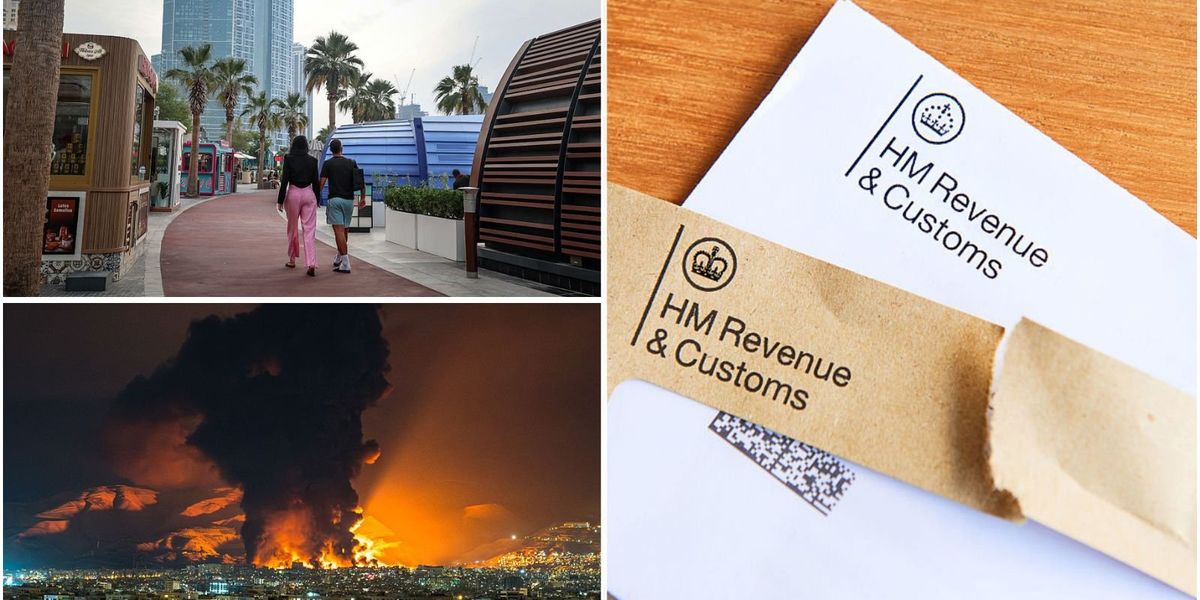
Accountancy firm UHY Hacker Young has issued an urgent appeal for HM Revenue and Customs (HMRC) to provide immediate clarity on tax regulations affecting British nationals compelled to flee Gulf states amid the Iran conflict.
The firm warns that families arranging emergency returns to Britain are already grappling with concerns over potential tax consequences.
According to UK Government sources, approximately 300,000 Britons reside in Gulf nations, with more than 100,000 now having sought repatriation flights.
Sandra Jeevan, the partner and head of Private Client and Trust at UHY Hacker Young, cautions that those returning unexpectedly could find themselves liable for UK taxation on their global earnings and investment gains.
HMRC is being urged to be ‘sympathetic’ to expats
|
GETTY
The issue centres on the Statutory Residence Test, which determines whether an individual’s time spent in Britain triggers UK tax obligations.
Under existing regulations, a person must typically stay outside the country for an entire tax year to keep foreign earnings beyond HMRC’s reach.
Ms Jeevan said: “We are hearing from many families who never intended to return to the UK this year but now have had no choice. They could face exposure to UK tax simply because their emergency return alters their UK residence position.”
She emphasised that those fleeing danger are focused on relocating loved ones safely rather than counting days or navigating complex residency assessments.
A British tourist has been charged by Dubai authorities after ‘filming Iranian missiles’
Donald Trump has said the war is won, but the US now needs to ‘finish the job’ | GETTY
Although HMRC has revised its guidance to recognise that the outbreak of armed conflict may constitute an “exceptional circumstance” for residency purposes, Jeevan noted the provisions remain severely constrained.
She said: “HMRC maintains a very narrow view of what qualifies. Choosing to stay in the UK to be with family after the initial crisis has passed typically does not count as ‘exceptional’.”
Returning expats may additionally face capital gains tax (CGT) exposure if they resume UK residency before completing the minimum period required under temporary non-residence rules.
This particularly affects those who disposed of business interests, shareholdings or overseas assets while abroad, having planned their affairs on the basis of remaining non-resident.
GETTY
The tax landscape has shifted significantly following the abolition of the formerly domiciled individuals concept in April 2025, replaced by a fully residence-based system covering income tax, CGT, and inheritance tax (IHT).
Those returning abruptly this year are urged to examine their residence patterns carefully, particularly where transitional provisions relating to pre-2025 foreign income and gains may apply.
Ms Jeevan added: “People relocating due to conflict simply haven’t had the chance to structure their affairs properly. Many are already dealing with flights, housing, and schooling. Understanding potential tax exposure early can prevent further financial strain.”
2Given the extraordinary circumstances, HMRC should adopt a pragmatic and sympathetic approach. In the meantime, anyone unsure about their UK residence position or exposure under the new regime should seek advice immediately.”