
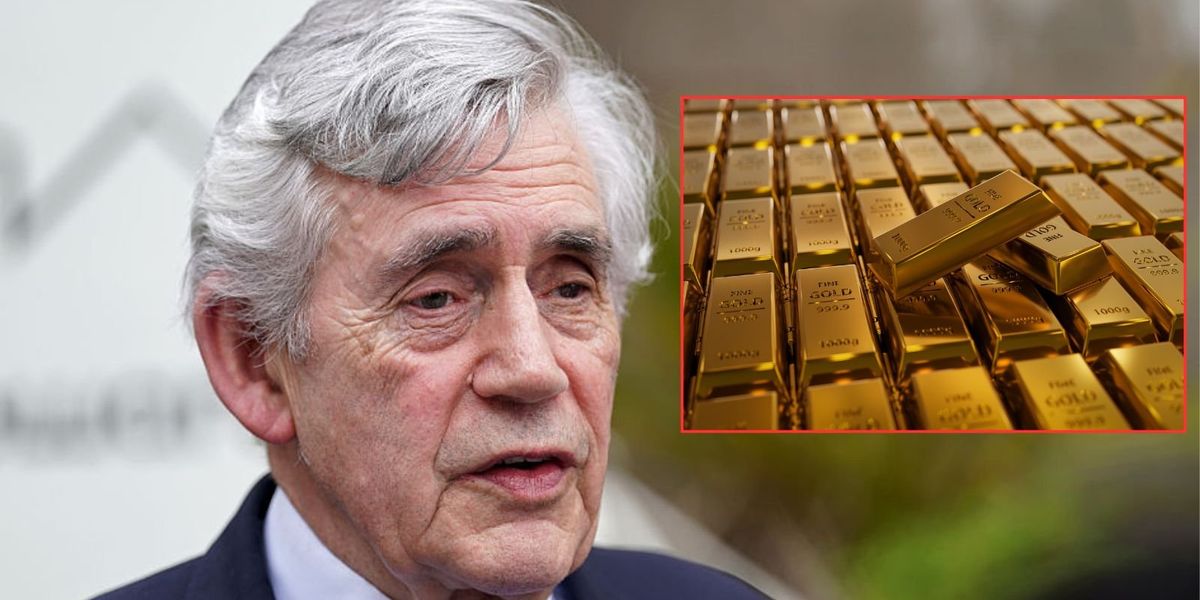
Gordon Brown’s decision to sell more than half of Britain’s gold reserves between 1999 and 2002 has left the country around £48billion worse off, new analysis suggests.
The former Labour Chancellor authorised the disposal at what are now recognised as historically low prices, just months before gold entered a two‑decade surge that has pushed the metal to record highs of around £3,700 per troy ounce this week.
The original sale raised roughly £2billion for the Treasury, equivalent to around £4billion today after inflation. Had the UK retained the gold, those holdings would now be worth about £48billion.
The episode has long been dubbed “Brown’s Bottom” by critics, a reference to the depressed prices at which the gold was sold.
At the time, gold had fallen sharply over the previous 20 years, losing around half its value and fuelling the view that it was no longer a reliable store of wealth.
Mr Brown concluded that holding such a large share of reserves in gold was unjustified and reinvested the proceeds into sovereign bonds, investments that were rolled over in subsequent years.
Analysts now say gold’s long‑term performance has far outstripped the returns generated by those bonds, while the shift increased Britain’s exposure to US government debt and reduced its holdings of a traditional safe‑haven asset.
Shadow Chancellor Sir Mel Stride rejected suggestions that the timing was simply unfortunate.
Former Chancellor sold reserves at historic low before long price surge
|
GETTY
“When Labour sold Britain’s gold at the bottom of the market, that wasn’t bad luck,” the Shadow Chancellor said.
“It was bad leadership,” he added, arguing that the cost of the decision “is still being paid by the British people”.
Callum McGoldrick, of the TaxPayers’ Alliance, called the sale “a staggering act of fiscal mismanagement”, saying it prioritised short‑term cash over long‑term national wealth and demonstrated how poor economic stewardship can have “devastating” consequences for taxpayers.
Meanwhile, Lindsay James, investment strategist at Quilter, said the timing proved especially damaging.
Shadow Chancellor Sir Mel Stride rejected suggestions that the timing was simply unfortunate
|
GETTY
Mr Brown began selling gold within three months of what is now recognised as a 25‑year low, she noted, just before the collapse of the tech bubble and ahead of the global financial crisis.
Gold prices began rising sharply only months after the disposals started.
She warned that the UK is now more exposed to US bonds at a time of rising American indebtedness, a weakening dollar and concerns over US institutions.
Ms James added that gold’s performance in recent years challenges long‑held assumptions about global finance, including the dominance of the dollar and the geopolitical reliability of the US.
The UK was not alone in reducing its gold holdings in the late 1990s and early 2000s.
Many central banks viewed gold as an underperforming asset compared with interest‑bearing investments, prompting the creation of the Central Bank Gold Agreement to coordinate sales and limit market disruption.
Some economists continue to defend Mr Brown’s rationale.
Julian Jessop, economics fellow at the Institute of Economic Affairs, said the decision was understandable given gold’s poor performance at the time and the fact it made up around half of the UK’s official reserves.
He also pointed to the launch of the euro in 1999, which was widely expected to emerge as a major global reserve currency and offered an opportunity to diversify holdings.