
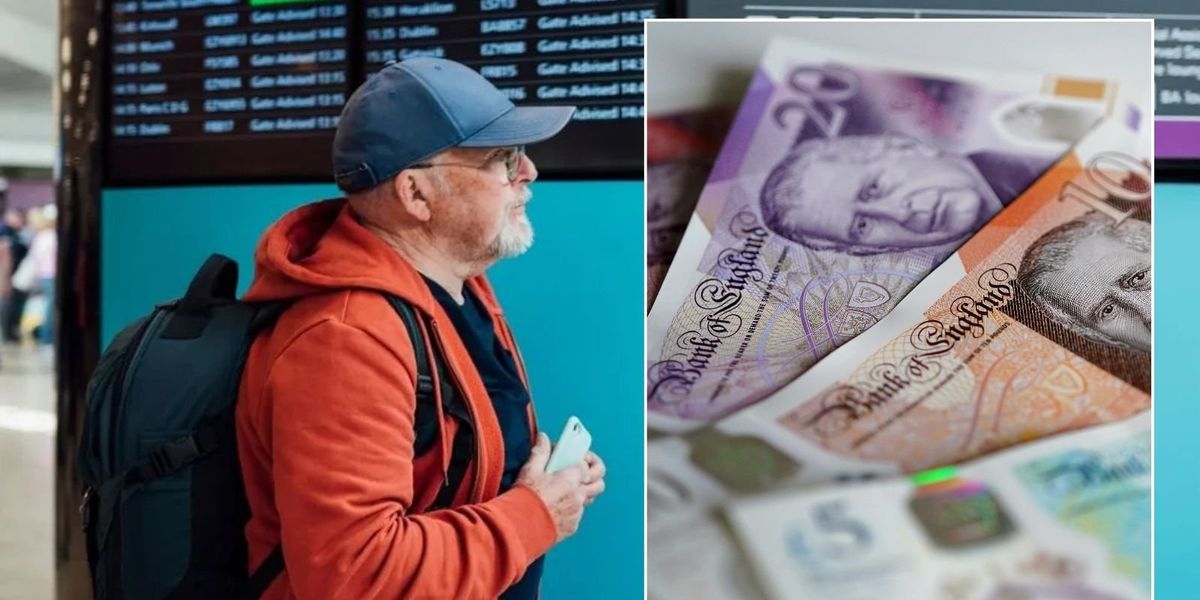
Five European nations are currently providing financial incentives to encourage people to relocate there in 2026, according to a new analysis.
Italy, Spain, Ireland, Greece and Portugal each offer various schemes ranging from direct cash payments and tax reductions to heavily subsidised housing and renovation funding.
“Various European countries and, in some cases, regions within countries offer incentives for people to invest and/or live there,” says Jennifer Stevens, Executive Editor at International Living.
The incentives span from properties costing just £0.85 in Italian villages to grants worth up to £85,000 in certain regions.
Ted Baumann, the report’s author, emphasises that accepting these offers does not automatically confer the right to live in any country—applicants must still secure appropriate visas independently.
Italy has garnered considerable attention for its €1 house schemes, equivalent to roughly £0.85, typically found in rural communities experiencing population decline.
Purchasers must generally complete renovations within a set period and provide a deposit ensuring the work gets done, with additional expenses for planning permissions and engineering assessments.
Beyond these headline-grabbing offers, some Italian regions provide substantially larger support packages.
Authorities in Trentino have made available up to €100,000 (approximately £85,000) towards property purchase and restoration, conditional on the recipient residing there.
Some Italian regions provide substantially larger support packages
|
GETTYMeanwhile, Radicondoli, situated south of Florence, provides grants and subsidies but requires newcomers to commit to a minimum ten-year stay.
“If you settle in specific southern municipalities and regions, Italy will give you a 7% flat tax concession that lasts 10 years,” Baumann says, noting that standard top rates exceed 40 per cent.
Spain operates several municipal and regional programmes offering financial support to newcomers, though these carry specific obligations.
The town of Ponga in Asturias, located in the country’s northwest, provides around €3,000 (roughly £2,550) to people who settle there.
The country’s most significant benefit for expatriates remains tax-related rather than cash-based
|
GETTYDigital nomads can access more substantial support in Extremadura, the central-western region bordering Portugal, where grants reach up to €15,000 (about £12,750).
“You need to be listed on the municipal register as a resident and taxpayer and promise to make it your main home for a minimum period,” Baumann explains.
The country’s most significant benefit for expatriates remains tax-related rather than cash-based.
Known as “Beckham’s Law,” this special regime offers a flat rate on certain employment earnings alongside exemptions on some income generated abroad.
Ireland takes a different approach, focusing its support on property restoration rather than relocation payments.
The national government offers grants reaching €70,000 (approximately £59,500) for refurbishing vacant or derelict properties, with this figure rising to €84,000 (around £71,400) for homes on offshore islands.
“The catch is that you must refurbish it to live in as your principal residence or make it available to rent,” Baumann says, adding that ownership must be in the applicant’s own name.
Greece stands out as one of few nations providing confirmed direct cash payments. The island of Antikythera offers residents a house, land and €500 monthly (about £425) for up to five years.
A separate national programme delivers up to €10,000 (roughly £8,500)—frequently as rent refunds—to teachers, doctors and nurses relocating to depopulating areas.
Greece additionally provides a 7 per cent flat tax rate lasting up to 15 years for new residents.
Households can receive an additional 20 per cent for each dependent who accompanies them
|
GETTYPortugal has established the Emprego Interior Mais programme, which provides eligible applicants with a one-off payment of up to €6,000 (approximately £5,100) to cover relocation expenses when moving to rural areas.
Households can receive an additional 20 per cent for each dependent who accompanies them.
Foreign nationals must first obtain residency, typically through the D8 digital nomad visa, which requires monthly earnings of around €3,500 (about £3,000).
Mr Baumann stresses that none of these European incentives confer residency rights on their own.
“Taking advantage of one of these programs doesn’t get you residency, but it will certainly help. If you combine one of them with an income-based residency status, like a retiree or digital nomad visa, this can be an excellent way to start a life overseas with a bit of extra financial support.”