
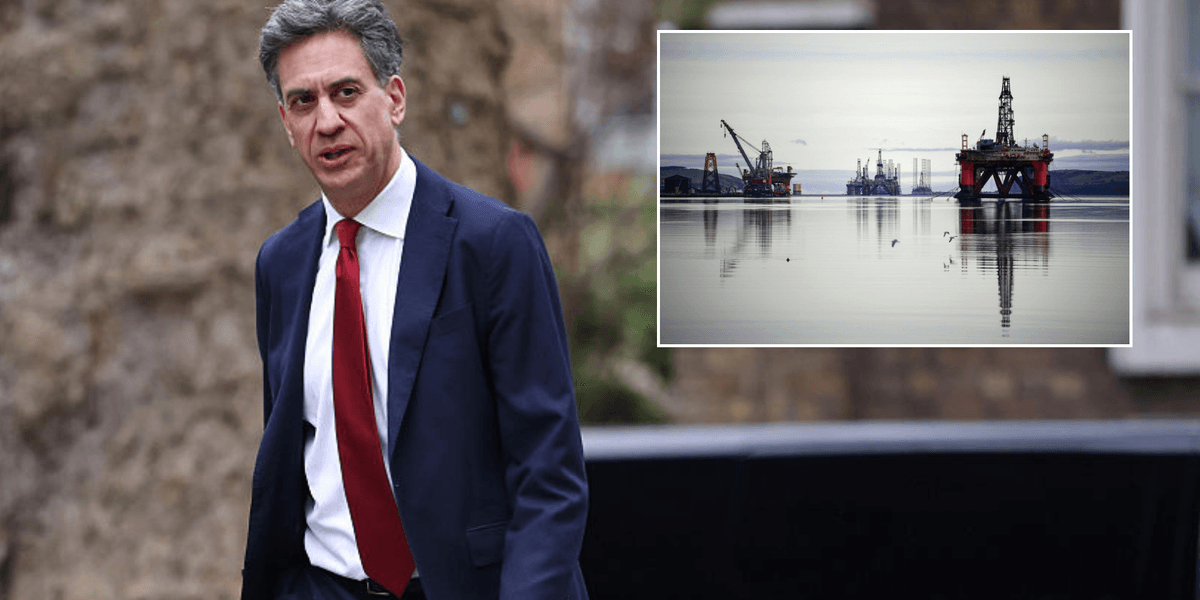
Maximising North Sea production is an “immediate imperative”, energy experts have told Energy Secretary Ed Miliband, as they warned: “We live in dangerous times.”
Professor Nick Butler, a former head of strategy at BP, said an “extended cutoff of supplies” was likely if the war in Iran dragged on. And he said Britain would be particularly vulnerable in a hypothetical future conflict, with the pipelines we rely on to import fuel becoming prime targets for hostile states.
Professor Butler, a visiting professor at King’s College London and former adviser to Prime Minister Gordon Brown, said the Government needed to prepare energy security plans because of the Iran war, including deciding which sectors would get priority in the event of shortages. He said, while not a perfect solution, “we should maximise the production of what we have” in the North Sea.
This would benefit both the economy and the security of the nation, he told a briefing held by Offshore Energies UK. Much of the country’s imported oil and gas comes from Norway, mainly via pipeline.
This could leave the UK exposed in the future, said Professor Butler. He added: “We live in dangerous times. The Prime Minister warned us a few months ago to be ready for a war, and being prepared for a war is not just about troops and warships. I think, in the modern world, it is very much about energy as well.”
He added: “I think the Russian incursions around Norway suggest that it there were to be a conflict, one of the points of attack would be the import lines from Norway, which is our major supplier of imported gas and our second largest supplier of both oil and electricity. I think, in those circumstances, we have to consider that the UK is vulnerable. It’s vulnerable now in the short term, to price changes and to a weakening of the economy from those price changes. But we’re vulnerable in the sense of the physical breakdown of supplies to key areas of the economy.”
Despite our transition to renewables, he predicted the UK would still need to fulfil half of our energy needs through oil or gas in two decades.
Professor Butler said: “If we don’t produce our own, we will be even more dependent on imports from countries which are far from stable, far from reliable, and which have far lower standards of production than we do. So I think it makes absolute sense to maximise the production of whatever supplies we have.”
Energy experts have warned Energy Secretary Ed Miliband
|
GETTY
He said the North Sea was not an “instant or total” solution, but he pointed out it would sustain jobs, generate tax revenue and “give ourselves at least a degree of energy security”.
“I think that that is an imperative, and I hope that the Government is listening,” he said, calling for an end to delays on the Jackdaw and Rosebank sites, which have been licensed for drilling but have been held up by legal challenges. Further licences should be considered in areas of proven reserves, he said.
Professor Butler said if the Strait of Hormuz remained closed for an extended period, a physical shortage of oil and gas was inevitable. This would send prices spiralling.
Some businesses and lower-income families would struggle to pay, he warned. “Either the Government subsidises them or there’s less use,” he said. “Someone around the world will have to use 20 per cent less, and I think some of that could fall on us.”
Sources said North Sea production should be maximised
|
GETTY
He said we could see scenes last encountered in the 2,000 strikes, when thousands of petrol stations ran dry and the country came to a standstill. “The Government has to prioritise certain key sectors and has to think about how it allocates what remains under the existing emergency legislation,” he said. “I hope it doesn’t happen, but I hope the Government are preparing some energy security plans.”
Asked what we could expect if the conflict drew on for another two months, he replied: “I think households are going to see, in those circumstances, a really sharp increase in prices. It’s unavoidable.”
David Whitehouse, CEO of OEUK, said the transition to renewables was the right path to take and one to be proud of. However, he stressed oil and gas would have a part to play for years.
“The issue is not will we use oil and gas, it’s fundamentally where will we get it from,” he said. Proper investment would allow the UK to increase the yield from the North Sea’s mature basin, he added. “And what goes with that is, of course, not just the security from having our own production, but it supports jobs. It supports communities like the one where I live in Aberdeen, and actually it supports that very supply chain that we need not just for oil and gas, but for the broader transition.”
He called for more supportive policy, saying the windfall tax on North Sea oil companies – which brings the total payable to 78 per cent – had “driven away production and investment”. Rachel Fletcher, of Octopus Energy, pointed out the majority of households would be protected from shock rises until July by the Ofgem price cap.
She agreed, while we still need oil and gas, the UK should get it from the North Sea. “But we mustn’t kid ourselves that that is a way of insulating us from the economic shocks associated with disruptions to oil and gas supplies in the Middle East,” she said.
She pointed out the war was a stark reminder of the volatility of the fossil fuel market and highlighted the need to switch to renewables. “I appreciate that’s not an overnight job,” she said. “But as long as we are dependent on fossil fuels, whether homegrown or imported, we will continue to see the price impacts associated with geopolitical instability. And that is why it is absolutely imperative that we move as fast as we can and be even more ambitious in getting off our dependence on fossil fuel.”
A Department for Energy Security and Net Zero spokesman said: “Issuing new licences to explore new fields cannot give us energy security and will not take a penny off bills. Regardless of where it comes from, oil and gas is sold on international markets, which set the price for British billpayers – making us a price taker. The route to energy sovereignty, lower bills and thousands of good jobs in our communities is clean, homegrown power we control.”