
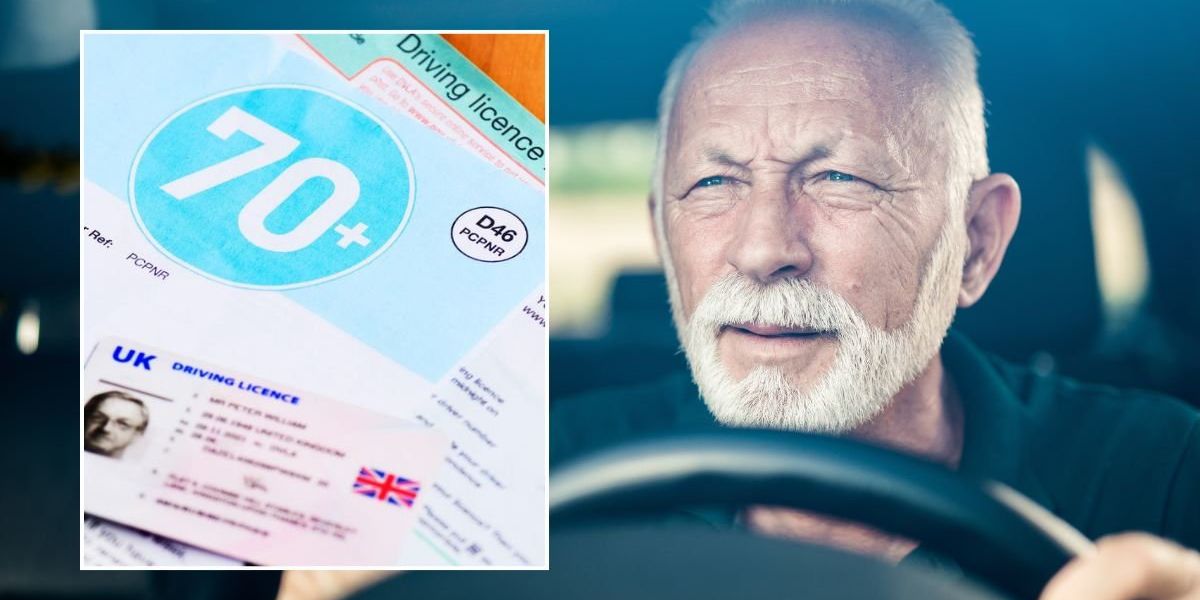
Thousands of drivers are having their licences revoked due to poor eyesight amid calls for elderly motorists to face more stringent vision tests to stay on the road.
New research shows that almost 20,000 driving licences have been taken back as a result of eyesight concerns in the last three years.
The data, obtained through a Freedom of Information request to the DVLA, found that collisions linked to poor eyesight increased by 26 per cent over the past 12 months.
Almost a quarter of drivers noted that they have experienced a near miss as a result of poor visibility or eyesight.
This has become a more common trend in recent years, especially with a greater focus on the safety of older motorists and brighter headlights.
Drivers must be able to read a number plate from 20 metres away, or about the length of five parked cars, to meet the minimum standard of eyesight to get behind the wheel.
Alternatively, drivers can have a visual acuity of at least decimal 0.5 (6/12) measured on the Snellen scale with glasses or contact lenses.
Interestingly, more than 1,000 drivers under the age of 50 had their licences revoked due to poor eyesight last year alone.
Thousands of motorists have had their driving licence revoked because of poor eyesight
|
GETTY
In total, 1,499 motorists failed their driving tests as a result of not meeting vision standards, costing them an estimated £93,000.
Eyesight standards have come under greater scrutiny in the last year after Labour launched the first Road Safety Strategy in more than a decade.
One of the key measures included is to mandate eye tests for elderly drivers over the age of 70, to develop “cognitive testing” for older motorists.
It added that it would continue to work closely with the National Police Chiefs’ Council with the aim of conducting regular roadside eye tests.
Adults are recommended to get an eye test every two years | PA
Matt Crole-Rees, car insurance expert at Confused.com, said: “Good eyesight is essential for safe driving, yet these figures suggest many drivers may not be meeting the legal safety standard.
“It’s important to be aware that eyesight can change gradually, meaning drivers may not realise their vision has worsened, even though small changes can affect how quickly you react and respond on the road.”
Experts consistently urge motorists to ensure they have an eye test every two years, or sooner if they notice any changes in their sight.
If motorists are required to wear glasses or contact lenses to drive, they must do so, or they could risk serious consequences.
LED headlights have been identified as a particular issue for motorists
|
GETTY“Failing to wear required corrective lenses can also invalidate your car insurance, which could have serious consequences if you’re involved in an incident,” Mr Crole-Rees noted.
A concerning 57 per cent of road users said they have experienced glare from LED or brighter headlights when driving, making it one of the most common visibility problems.
Brighter LED headlights have been identified as a growing concern, especially as the lights, which give off a white hue, can be more targeted than an older, more traditional yellow halogen bulb.
The expert concluded: “Drivers who struggle with bright lights, especially at night, may benefit from wearing anti-glare lenses. Taking action early can help avoid fines, penalty points or losing your licence, and most importantly, reduce the risk of being involved in a collision and keep roads safer for everyone.”