
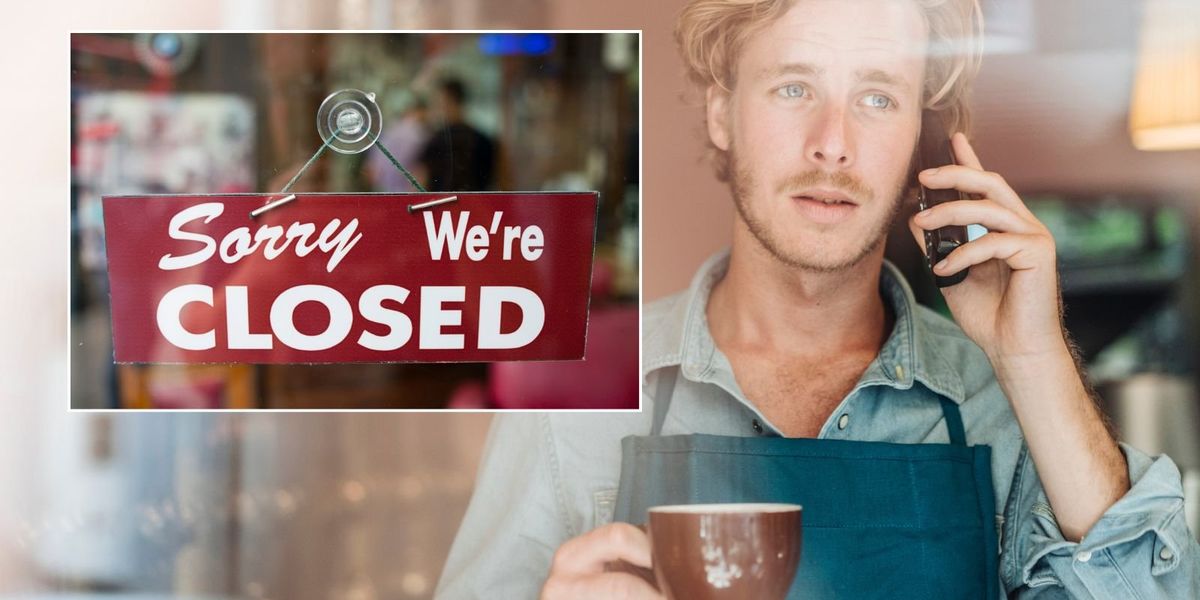
UK small businesses are enduring conditions comparable to or even more severe than those faced during the Covid-19 pandemic, according to a damning new report from Parliament’s Business and Trade Committee.
The influential committee has called for sweeping government reforms to halt rising store closures and deteriorating high streets, including measures to reduce costs, transform the business rates system and tackle the chronic problem of late payments.
Evidence cited in the report from Sage reveals that British small businesses were owed a staggering £112billion in outstanding invoices by the close of 2024, with close to half of all invoices being settled after their due date.
The committee’s findings paint a picture of challenges that are “cumulative, structural and self-reinforcing”, creating conditions that threaten to accelerate the rate of business failures across the country.
Business rates need reform amid high street closures, MPs warn
|
GETTY
Without decisive government intervention, the report warns that ministers risk undermining their own growth agenda.
Late payments emerged as a particularly pressing concern, with the committee noting that payment terms stretching to 60 or even 90 days have become standard practice in certain industries, notably construction.
This means that even when invoices are eventually honoured, small firms are routinely waiting months for money they are owed, placing severe strain on cash flow.
The report also highlighted a troubling pattern of closures affecting Britain’s high streets, with evidence presented to the committee showing that business rates, retail crime and energy costs are hitting physical retailers particularly hard compared to their online competitors.
Business Secretary Peter Kyle
|
GB NewsLiam Byrne, who chairs the committee, said: “SMEs are facing late payments, rising energy costs, increasing crime, a complex tax system and barriers to growth that are compounding rather than easing.”
He stressed that these difficulties are interconnected rather than separate issues, warning: “These pressures are not isolated; together they pose a real risk to business viability, high streets and economic growth.”
Mr Byrne issued a stark warning about the future of Britain’s town centres, stating: “High streets do not die by accident.”
He urged ministers to develop a far more comprehensive strategy for supporting the enterprises that form the backbone of the British economy.
Businesses are still reeling from the Covid-19 pandemic
|
PA“If the Government is serious about growth, it must set out a more coherent and ambitious plan for the businesses that make up so much of the UK economy,” he said.
The committee chair emphasised that small and medium-sized enterprises require urgent attention if the government wishes to prevent further decline across the retail landscape.
Recently, small business owners have shared their experiences of burnout amid a turbulent period for entrepreneurs.
Several warn that traditional advice puts too much responsibility on individuals, while ignoring systems, workplaces and expectations that quietly drive people into burnout.
High street store and bank branch closures are on the rise | PA
Bex Hamilton, the co-founder at Branded Biophilia, told Newspage that “reducing sensory load” is important.
She added: “I’ve experienced burnout myself as a small business owner, carer and single mother, and what surprised me wasn’t the workload but how hard it became to switch off, even when I stopped working.
“I realised I could be resting and still feel physically tense, with my body never fully downshifting. Most burnout advice focuses on the individual, but often ignores the environment. If nothing around you signals safety or calm, burnout becomes inevitable.
“The work I’m doing looks at how reducing sensory load in everyday spaces can allow recovery to happen automatically, without people having to try harder to relax.”