

So, the Government has backtracked on key parts of its plan to tighten the rules for Indefinite Leave to Remain (ILR).
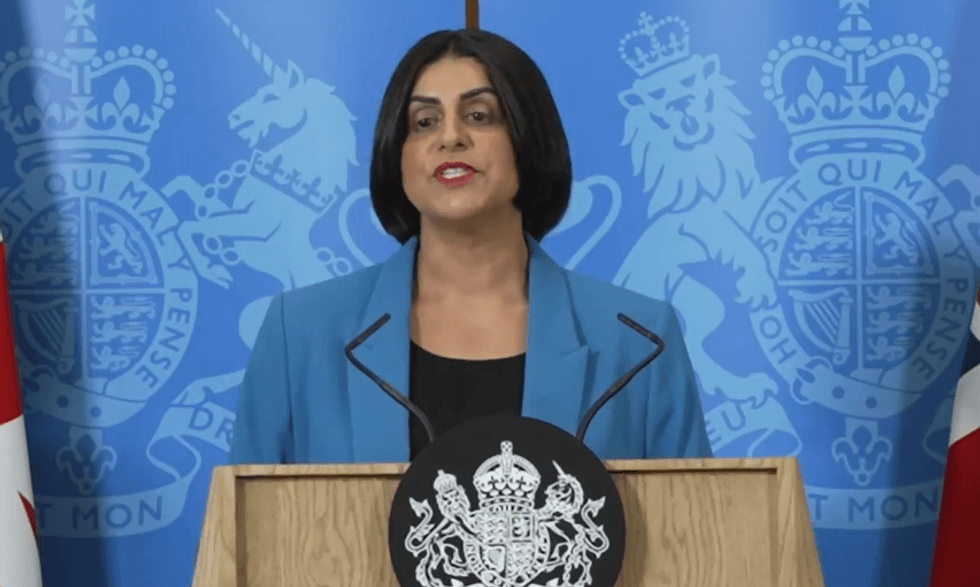
Home Secretary Shabana Mahmood, who has at least shown some understanding of the problems caused, economically and socially, by the phenomenon of mass immigration, has been outmanoeuvred by the open-border utopians inside the Labour Party’s ranks.
The consequences of this volte-face for Labour are easily predictable.
It will appeal to the assortment of progressive activists, metropolitan liberals and cosmopolitan universalists whom the party is desperate to pries away from the Liberal Democrats and Greens.
But in small-town, provincial Britain – the type of places that have suffered most acutely from the immigration chaos over recent years – it will reaffirm the perception Labour really has no desire to control the numbers coming into the country and will persuade many voters in such places that their interests lie instead with Reform UK or even the Tories.
Even now, after all the political ruptures caused by the impact of mass immigration in our communities over the past quarter of a century, and as poll after poll continues to show it as a major concern for voters, many within the Labour Party seem utterly impervious to the suggestion that a tough and rigorous policy is necessary.
Neither do they seem to recognisewhenever the party is seen as being weak on immigration, it results in a loss of support among large swathes of traditional working-class voters.
It is almost as if the movers and shakers inside Labour have adopted a deliberate strategy to build a new electoral base rooted in the fashionable cities and university towns and to abandon any pretence of speaking for those living in the more deprived parts of the country.
How else is it to explain the pressure exerted on the Home Secretary to back down on her eminently sensible proposals?
And how to rationalise the decision to push through a raft of other initiatives which will collectively trigger an increase in the number of foreign nationals residing in Britain – with all the fresh challenges that will present to many hard-pressed communities.
LATEST DEVELOPMENTS
- Charities that lobbied Shabana Mahmood to water down immigration rules received more than £1bn in taxpayers’ cash
- Shabana Mahmood hits back at Andy Burnham in Brexit small boats blame game: ‘We hardly returned anyone!’
- Immigration reforms will save taxpayers billions of pounds from ballooning benefits bill, says Shabana Mahmood
Initiatives such as the opening up of “safe and legal routes”, through which local community groups, universities and employers will be able to sponsor refugees to come to Britain; the resurrection of the UK Resettlement Scheme, through which individuals attempting to flee war and persecution are helped to settle in Britain; the extension of the graduate visa from 18 months to two years; a proposed new Youth Mobility scheme agreement with the EU; and the lowering of visa salary thresholds for certain occupations.
On their own, some of these measures may seem meritorious. However, the cumulative effect, especially when factoring in the climbdown on ILR, may be a sizeable increase in immigration levels.
Throw in – if the Prime Minister gets his way – a return to the European Union for free movement and the numbers are potentially eye-watering.
At a time when nearly a million young British citizens are not in employment, education or training (Neets), it is hard to see any pressing economic case for relaxing immigration and visa rules.
Many on the Left would counter population growth through immigration helps to create extra demand and jobs.
Yet a study carried out by the Cambridge economist Professor Robert Rowthorn showed evidence for this claim to be weak.
“The extra jobs may not appear immediately, and there may be quite a long transition period during which native workers experience unemployment or lower wages,” Prof Rowthorn found.
“Moreover, if there is a continuing inflow of migrants, the labour market may be in constant disequilibrium, with economic growth and new job creation lagging constantly behind the growth in labour supply due to immigration.”
In other words, native workers gain no real economic benefit through large-scale immigration.
And that is to say nothing of the social tensions that come with liberal migration policies.
What effect does the Government imagine another sharp increase in numbers would have in communities already unsettled after being subjected to rapid cultural transformation?
How are tensions likely to be eased when the pressure on infrastructure and local services becomes yet more acute?
What might be the implications for our democracy if, having sent the message time and again that they want immigration to be brought back to a reasonable level, voters witness yet another surge?
Has the Government even considered these questions?
The British public do not ask for much when it comes to immigration. They never have done.
Most native citizens are perfectly decent and tolerant.
They are willing for Britain to give sanctuary to a reasonable number of legitimate refugees and are even open to inviting economic migrants who will genuinely contribute to our country and respect its culture and traditions.
Few have sympathy with demands for “remigration” or wish to get drawn into unproductive debates over ethnicity.
But they want the immigration system to be properly regulated, and numbers to be modest and manageable.
And they want those who entered the country without good cause or who abuse our hospitality to be sent back without delay.
But even though such demands are entirely reasonable, they have been characterised by sections of the elite class as toxic and reactionary.
Hence, the whole issue of immigration is once again a running sore in our politics.
In an interview last week, Andy Burnham could not bring himself to acknowledge that immigration numbers are too high.
That response alone shows that for all his claims to be a Westminster “outsider” and someone in touch with the ordinary man or woman on the street, Burnham is an orthodox member of the liberal political establishment.
He needs to break up with such thinking. And fast. A “Burnhamwave” is the last thing Britain needs right now.
Our Standards: The GB News Editorial Charter