
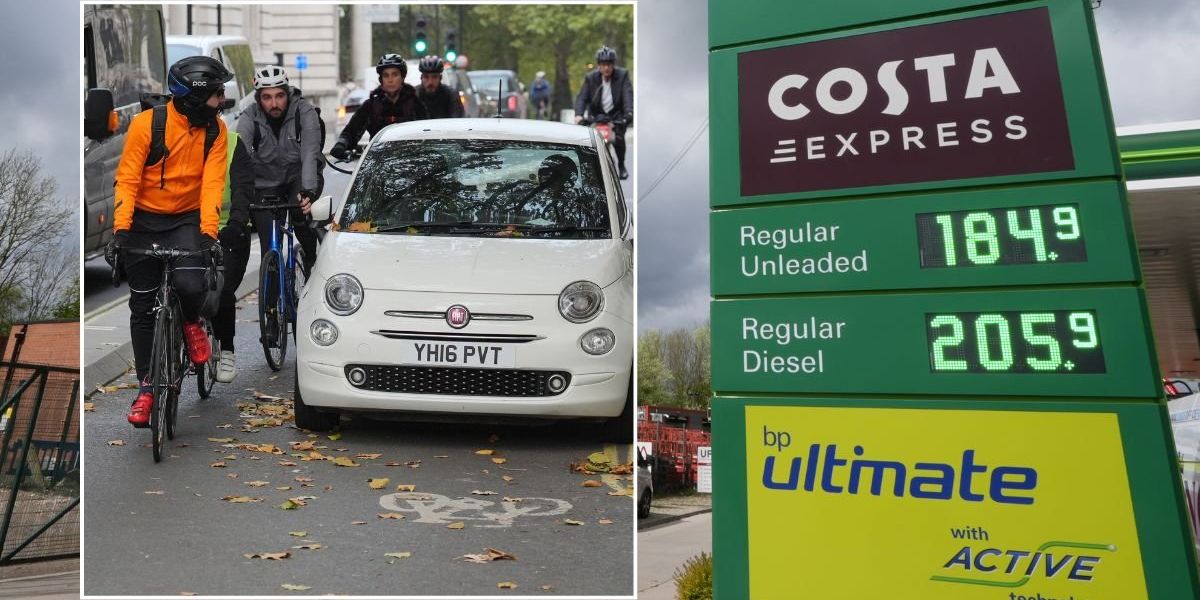
More than a quarter of drivers across the UK are now walking and cycling more in a bid to avoid expensive petrol and diesel prices, new data has shown.
Research from YouGov found that 28 per cent of people were using active travel methods, rather than driving because of soaring fuel prices.
The survey, which was commissioned by Cycling UK, also showed that a further 15 per cent of people were actively considering walking and cycling more often.
Some of the most popular alternatives listed included going out less (27 per cent), using public transport instead of driving (23 per cent) and cutting back elsewhere to pay for fuel (19 per cent).
One in 10 of these drivers even suggested backing the use of car-sharing platforms, which have become more common for commuters after the coronavirus pandemic.
Fuel prices have soared since the war in Iran began at the end of February, with drivers paying near-record prices for petrol and diesel at the pumps.
The latest data from RAC Fuel Watch shows that drivers are paying 157.97p per litre of petrol, while diesel drivers are forking out almost 191p per litre.
While prices have started to fall slightly, uncertainty remains, especially as Iran closes the vital Strait of Hormuz again, impacting the price of oil around the world.
People around the UK walked and cycled more in recent weeks to avoid expensive fuel costs
|
PA/GETTY
In response to the YouGov poll, Cycling UK has called on the Government and local authorities to introduce measures to make it easier for people to walk and cycle.
The charity suggested that this could include financial support for bikes and electric bikes, as well as road safety support.
Sarah Mitchell, chief executive of Cycling UK, explained that people needed to travel in an affordable way, which many are struggling with, given the current price of fuel.
She said: “That includes alternatives to driving, particularly for those who simply won’t be able to keep up with rising costs.
Cycling UK has called for additional measures to support active travel
|
PA“It protects people who would otherwise be exposed to rising fuel costs when a crisis like this hits, and allows people to continue making their everyday journeys.”
At the beginning of the Middle East conflict on February 28, drivers were paying an average of 132.83p for petrol and 142.38p for diesel.
At the peak of the fuel price crisis, costs at the pump soared to 158p for petrol and 191.5p for diesel, a rise of 19.2 per cent and 34.5 per cent respectively.
Many are hopeful that easing tensions will lead to further price drops, especially as the US and Iran continue peace talks.
Petrol and diesel prices peaked at almost £2 across the UK in the aftermath of the Russian invasion of Ukraine in 2022
|
PARAC head of policy Simon Williams said: “After 46 days of rising prices, the cost of both petrol and diesel across the country has finally begun to drop very slightly.
“Wholesale prices are still lower, so we’re hopeful there will be further reductions amounting to several pence a litre in the coming days.
“After record rises, drivers will be relieved to finally see prices going the other way.”
He noted that the current prices were a “glimmer of light at the end of the tunnel”, but warned that the UK was still “a long way” from prices seen at the start of the war.