
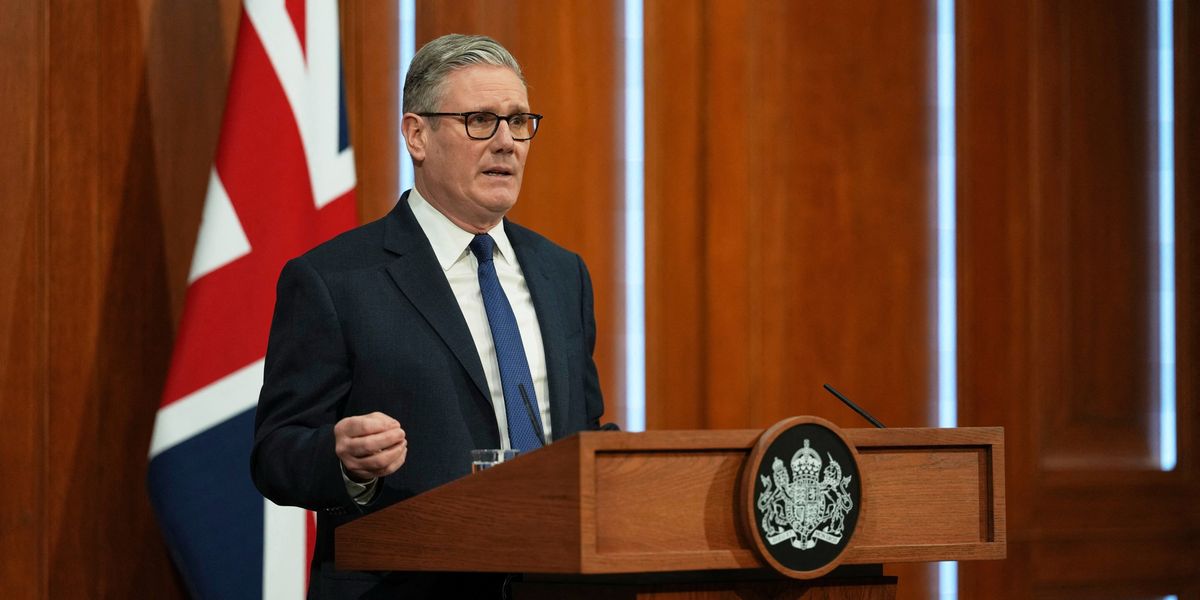
Sir Keir Starmer has pushed for closer ties with the EU as he warned that the ongoing war in Iran will have an impact on “the future of country”.
Speaking from Downing Street, the Prime Minister sought to calm public anxiety over escalating oil and fuel costs triggered by Donald Trump’s military campaign against Tehran.
“It is now clear that the impact of this war will affect the future of our country,” he stated.
Despite the gravity of the situation, Sir Keir expressed confidence in Britain’s resilience, insisting the nation is “well-placed to weather” the crisis regardless of its intensity.
He outlined a strategy to emerge “stronger and more secure nation” from the turmoil.
The Prime Minister also revealed plans for a summit with European Union member states within the coming weeks, aimed at strengthening ties with the bloc while maintaining Labour’s commitment not to rejoin the single market.
Donald Trump claimed on Wednesday via his Truth Social platform that Iran had requested a ceasefire, though Tehran’s foreign ministry dismissed these assertions as “false and baseless”.
The US President stated he would only entertain peace talks once the Strait of Hormuz is reopened, writing: “Until then, we are blasting Iran into oblivion or, as they say, back to the stone ages.”
Sir Keir Starmer has issued a stark message to the country this morning
|
REUTERS
Mr Trump has repeatedly criticised allied nations for declining to participate in the US-Israeli bombing campaign, at one point telling Britain and other partners to “go get your own oil”.
In an interview with the Daily Telegraph, the Republican President suggested he was contemplating withdrawing America from Nato, describing the defence alliance as a “paper tiger”.
He also took aim at the Prime Minister directly, claiming: “All Starmer wants is costly windmills that are driving your energy prices through the roof.”
When questioned about Trump’s remarks on Wednesday, Sir Keir maintained he would continue acting in Britain’s national interest “whatever the pressure on me and others, whatever the noise”.
The Republican President suggested he was contemplating withdrawing America from Nato
|
REUTERS
The UK is spearheading diplomatic efforts to restore shipping access through the Strait of Hormuz, the crucial oil and gas route that Iran has largely blocked to exports.
Foreign Secretary Yvette Cooper will convene an international gathering on Thursday to examine “all viable diplomatic and political measures” for reopening the waterway, following 35 nations signing a statement pledging support for safe passage initiatives.
Military planners will subsequently assess how to render the strait “accessible and safe” once hostilities cease, though deploying Royal Navy vessels to patrol the route is not anticipated.
Britain is simultaneously advancing its pursuit of strengthened European ties as relations with Washington grow increasingly fraught over Mr Trump’s persistent criticism of allies who refused to join the military operation.
Petrol and diesel prices have soared to their highest rates in more than two years | GETTY
The economic toll on British households has been severe, with the RAC reporting diesel prices at forecourts reached 184.2p per litre on Wednesday, representing a 29 per cent increase since the conflict began on February 28.
Petrol costs have climbed 16 per cent to 153.7p per litre, prompting the AA to recommend motorists reduce their speed by 10 per cent to improve fuel efficiency.
Fuel duty remains frozen until September, with the scheduled increase now under review given the elevated prices.
Chancellor Rachel Reeves cautioned against excessive intervention, telling the BBC: “If I promised that I could alleviate every price increase for every person, I wouldn’t be telling the truth, because all that you will be doing if you do that is pushing up inflation, interest rates and taxes in the future.”
RAF Akrotiri has been a hub on the island
|
GETTYOvernight, RAF Regiment gunners intercepted more than 10 Iranian drones,
Meanwhile, Typhoon and F-35 jets alongside Wildcat helicopters maintained defensive operations across Cyprus, Jordan, Bahrain, Qatar and the UAE.
Approximately 1,000 British military personnel are stationed throughout the region.