
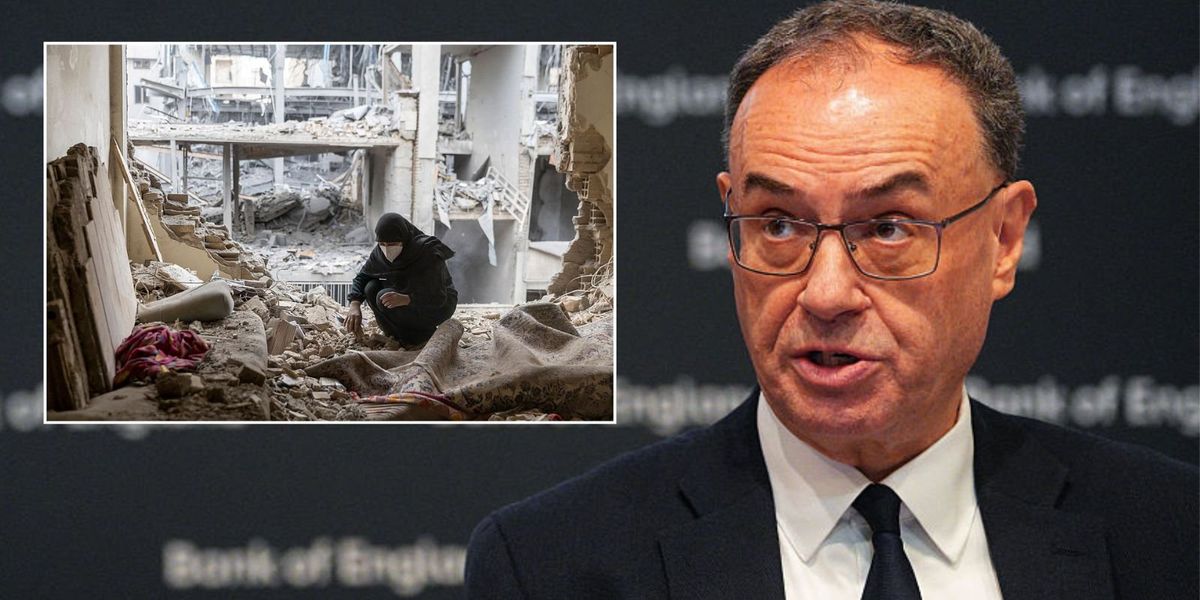
The Bank of England has held interest rates at 3.75 per cent as turmoil in the Middle East drives a sharp shift in market expectations.
Financial markets have rapidly repriced the outlook for borrowing costs, with traders now anticipating multiple rate increases in the coming months.
Governor Andrew Bailey aimed to hit the two per cent base rate target by this spring before the war.
City money markets are pricing in two quarter-point rises that would push rates to 4.25 per cent by December, according to Reuters data.
The move marks a significant reversal in sentiment after investors had previously expected interest rate cuts.
Only weeks ago, markets had been forecasting two reductions rather than increases.
The central bank signalled it could be forced to raise borrowing costs as energy price shocks linked to the conflict risk driving inflation higher.
Before the latest decision, traders had already priced in a single rate increase for 2026.
Markets are now expecting an initial rise to four per cent by June, followed by a further increase later in the year.
Bank of England holds rates as markets bet on hikes after Middle East turmoil
|
GETTY
A second hike is being priced in by September, although expectations remain volatile as the situation develops.
The change in outlook follows a revised inflation forecast from the Bank, which now expects prices to rise by around 3 per cent in the second quarter, compared to an earlier estimate of 2.1 per cent.
Policymakers also warned of potential “second-round effects in wage and price-setting”, where higher energy costs could lead to increased wage demands and further price rises.
The Bank said the conflict in the Middle East has already caused significant increases in global energy and commodity prices.
These increases are expected to feed through to household bills and business costs in the near term.
Andrew Bailey aimed to hit the two per cent target by this Spring before the war
|
GETTYThe central bank warned CPI inflation is likely to rise further as a result of the shock. Before the escalation, domestic inflation and wage pressures had been easing.
The Bank now believes the conflict could push UK inflation above three per cent. Officials also highlighted the risk of a wage-price spiral, in which higher living costs drive pay demands that in turn fuel further inflation.
Andrew Bailey said: “I would caution against reaching any strong conclusions about us raising interest rates. Today we’ve given a very clear message. The right place to be is on hold.”
Energy markets have seen sharp volatility following the escalation in the region.
UK and European gas prices rose by 15 per cent after strikes on energy infrastructure.
QatarEnergy said damage had affected facilities responsible for 17 per cent of its LNG export capacity, with repairs expected to take between three and five years.
Brent crude prices rose as much as 10 per cent before settling at around $110 per barrel, representing a daily increase of 3.3 per cent.
The developments are expected to lead to higher household energy bills in the UK over the coming months.