
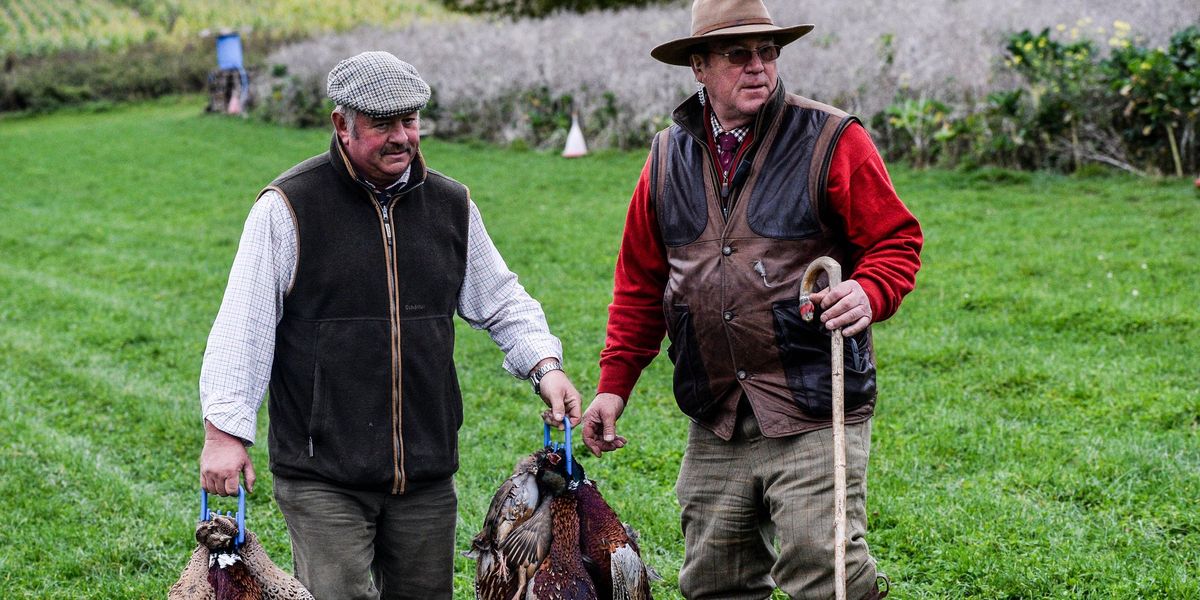
Labour is planning a crackdown on the 1,000-year-old rural practice of pheasant shooting.
In a document detailing Labour’s new “land use” strategy, published Wednesday, the Government said it would consider implementing a ban on “licensing” game-bird shooting alongside restrictions on releasing pheasants and partridges.
The Government has indicated it wishes to restrict the land given to game shooting in England, which it says comprises “a substantial area” of land.
Minister are also moving towards a ban on trail hunting and have imposed inheritance tax on family farms, repeatedly sparking the wrath of Britain’s farming community.
Tim Bonner, the chief executive of the Countryside Alliance, said shooting provides £3.3billion to the economy and contributes to “some of the most marginal communities in rural Britain”.
Britain is considered one of the foremost game shooting destinations on Earth, with tourists travelling from all over to shoot pheasant, grouse, and partridge across its fields and moors.
The practice has taken place in Britain since the 16th century, albeit on a smaller scale.
Game hunting expanded in the mid-19th century when the breech loading shotgun was invented.
Pheasant shooting was popularised in the mid 19th century and has been done annually ever since
|
GETTY
Shooting provides 26,000 full-time jobs, almost all of which are in rural areas, the British Association of Shooting and Conservation says.
The grouse season begins on August 12, known as the Glorious Twelfth.
The Game and Wildlife Conservation Trust has said shooting benefits the environment by providing feed for wild birds and songbirds, and by controlling fox populations.
Labour also plans to cover half a million acres of England in solar panels and wind turbines.
Environment Secretary Emma Reynolds said the plan was necessary to reach current net-zero targets
|
GETY
Ten of thousands of acres of arable land would be used for energy production, with 1 per cent of all land dedicated to renewables.
Emma Reynolds, environment minister, said the move was necessary in order to reach net zero targets, with the land given over to renewable energy by 2050.
Some nine per cent of farmland will be given to rewilding, creating heathland, and restoring peatland habitats to aid in carbon capture from the atmosphere.
She said the plan set out a “coherent national vision” backed by the most “advanced spatial analysis ever undertaken”.
Richard Tice said the land plan proposal was ‘not a good idea’
|
GETTY
Responding to the plans, Reform UK’s Richard Tice told The Telegraph: “This is not a good idea. We should be maximising food production, not subsidising productive land to sit idle.”
There are proposals to place solar panels above crops, in a system known as “agrovoltaics”.
The farming practice requires solar panels to be placed at least 11 feet above land and are 30 per cent more expensive to install.
While the land plan is just a proposal, it says ministers plan to “address the issues raised in the consultation” by 2030, meaning new rules and legislation will follow.
Another 4,000 acres will be given to “urban expansion”, to deal with the growing population.