
A significant Roman archaeological discovery has been recently unveiled in Lincolnshire during building renovations.
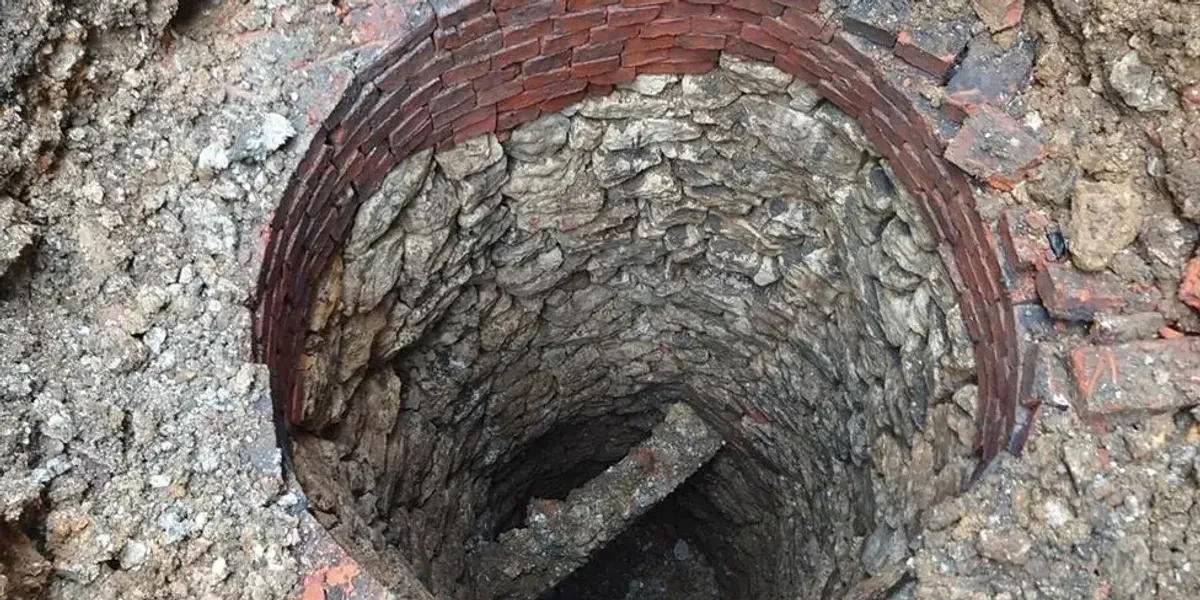
In Caistor, a community trust stumbled upon an ancient well bearing later Georgian wall panels and timber work, believed to date to the 17th Century.
The find offers fresh glimpses into the empire’s presence across the British Isles, from its military strongholds in the east to its most northerly defensive frontier in Scotland.
The Caister and District Community Trust made the unexpected find while restoring a former shop premises in Market Place.
Paul Kirkby, representing the trust, described the moment of discovery: “We found some cappings over what clearly is a Roman well that had been modified at a later date with Georgian brickwork.”
While the Georgian timber work still displays visible tool marks on its wooden beams, unfortunately, financial constraints prevent immediate restoration of the well.
“It has been capped off again, but hopefully it’s something that we can raise money for in the future and make it a real feature,” Mr Kirkby explained.
The community-owned organisation is seeking an additional £25,000 towards the £4.4million renovation project.
In Caistor, a community trust stumbled upon an ancient well bearing later Georgian wall panels and timber work, believed to date to the 17th Century
|
CAISTER AND DISTRICT COMMUNITY TRUST
The building in which the well was found is said to date back to the Georgian period and also incorporates Victorian structures.
Meanwhile, in the back gardens of residential properties in Bearsden, East Dunbartonshire, archaeologists have identified the remains of a Roman fortlet alongside probable fragments of the Antonine Wall.
The Bearsden fortlet came to light in 2017 during archaeological investigations conducted ahead of a planned development, with the initial excavation revealing stone foundations of a turf rampart beneath three neighbouring gardens.
Historic Environment Scotland subsequently commissioned further research, which uncovered a ditch containing peat deposits, timber and plant material.
Wooden beams still display visible marks of Georgian tools
|
CAISTER AND DISTRICT COMMUNITY TRUST
A geophysical survey then detected stone structures believed to be surviving sections of the Antonine Wall itself.
Guard archaeologist Maureen Kilpatrick, who directed the project, noted: “This fortlet lay on an area of high ground right next to the Antonine Wall. It had commanding views over the landscape, particularly to the north, which was beyond Roman control.”
Radiocarbon dating of wood recovered from the fortlet’s ditch places its construction between AD 127 and 247, aligning with the Antonine Wall’s operational period.
The wall itself, erected after AD 142 on Emperor Antoninus Pius’s orders, stretched approximately 37 miles from Bo’ness to Old Kilpatrick, effectively dividing Scotland between conquered and unconquered Britons.
Unlike its stone-built predecessor, Hadrian’s Wall, this northern barrier comprised turf upon a stone foundation, though it was abandoned within two decades.
Caistor’s Roman connections run equally deep, with the town’s very name derived from the Latin castra, meaning camp, while remnants of Roman walls remain visible beside the churchyard.