
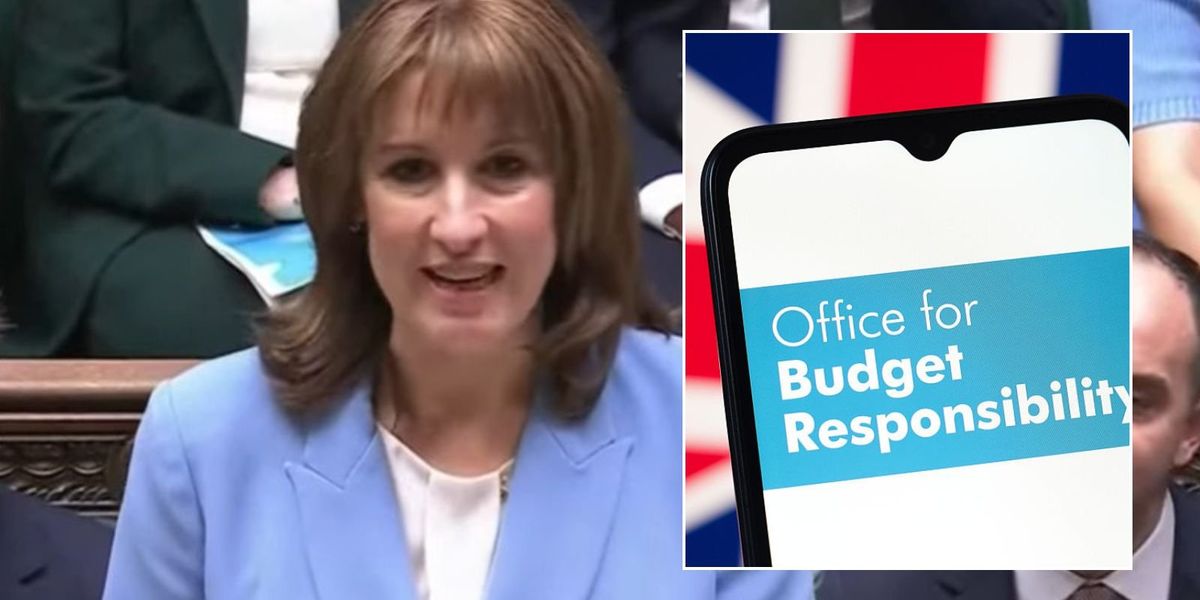
The Office for Budget Responsibility (OBR) has downgraded gross domestic product (GDP) growth to 1.1 per cent, down from a 1.4 per cent projection, in a blow to Chancellor Rachel Reeves’s plan to revitialise the British economy.
As well as this, the UK’s fiscal watchdog has pojected UK public sector borrowing is projected to ease, and inflation will fall to in 2026.
Furthermore, the OBR forecasts GDP growth will jump to 1.6 per cent in 2027, up from last year’s forecasts, and remain at this level the following year.
Speaking to the House of Commons, the Chancellor provided a fiscal update on the state of the economy, but analysts are concerned that today’s outlook is outdated in the wake of the US-Iran war in the Middle East.
The Chancellor delivering her Spring Statement
|
GETTY
She said: “Today, the new forecasts from the OBR confirm that our plan is the right one: inflation is down, borrowing is down, living standards are up, and the economy is growing.
“This Government has restored economic stability. The previous Government let inflation skyrocket to over 11 per cent, stoked interest rates to 15-year highs, and delivered the first Parliament on record where people were poorer at the end than they were at the start.
“I recognise the impact that had on families. We promised change at the election, and I understand the responsibility on me to deliver that change. I know that the question people will ask themselves at the next general election is this: are me and my family better off? I am determined that the answer will be yes.”
Notably, the OBR highlighted that GDP per capita is set to grow more than was expected in their last assessment, with growth of 5.6 per cent expected over this Parliament.
According to the Chancellor, Britons are forecast to be over £1,000 a year better off by the next General Election in 2029, when taking inflation into account.
President Donald Trump and Israel’s decision to launch a military strike on the Islamic Republic has seen the Ayatollah Khamenei killed, the Strait of Hormuz shipping route closed, and key gas and oil rigs in the region targeted.
Energy prices have surged in response, with economists warning inflation is likely to spike as a result.
Latest official data found UK public sector net borrowing in the financial year to January 2026 came to £112.1billion, around £14.6 billion less than in the same period a year earlier.
The OBR is the UK’s fiscal watchdog
|
GETTYBorrowing is set to fall in late 2025–26, driven by higher tax receipts, lower interest costs, and slower benefit growth | OBR
January itself delivered a record £30.4billion surplus, the highest for that month since records began, driven by strong receipts and beating the OBR’s prior forecast by around £6.3billion
THIS IS A BREAKING NEWS STORY…MORE TO FOLLOW
Donald Trump has said he is ‘sad’ to see the decline in the UK-US relationship | GETTY