
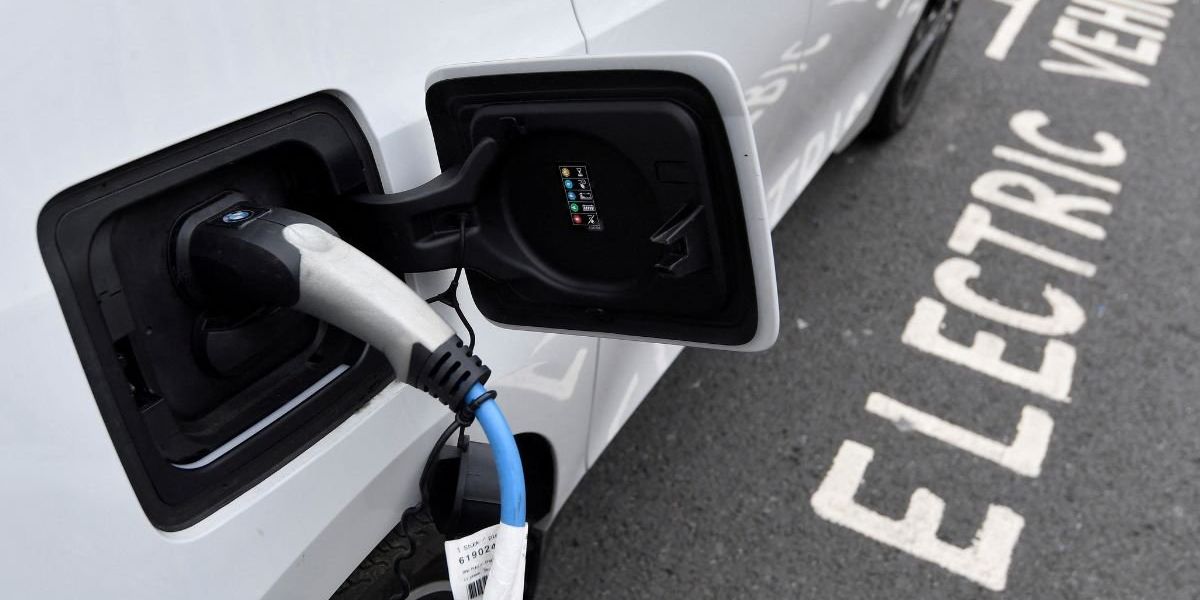
A major new study has resulted in the development of a new battery that could double the battery range of EVs.
Researchers from Nankai University in Tianjin, China, have developed a new high-energy-density lithium battery that could be used in electric vehicles.
The study, entitled “Hydrofluorocarbon electrolytes for energy-dense and low-temperature batteries”, was published last week.
It found that lithium battery electrolytes designed a series of new fluorinated hydrocarbon solvent molecules, allowing the battery to remain stable under different temperatures.
The researchers explained that lithium batteries react with oxygen, meaning they usually cannot work below temperatures of -50C.
These batteries also require solvents in large quantities, meaning it can be difficult to reduce their size.
Under typical conditions, they would function near a theoretical limit of 350 watt-hours per kilogram.
The newly researched battery can achieve energy densities “greater than 700wh per kg at room temperature.
The new breakthrough could see electric vehicles travel 1,000km on a single charge
|
REUTERS
Researchers also tested the new batteries in temperatures well below freezing, recording results of nearly 400wh per kg at a staggering -50C.
Speaking to state broadcaster CCTV, researchers said the development could “double the capacity of existing lithium batteries without increasing their size or weight”.
Similarly, Chen Jun, lead author of the study from Nankai University, highlighted the benefits it could have on electric vehicles.
“Electric vehicles with a current range of 500km could travel more than 1,000km on a single charge using our batteries,” he said.
The researchers at Nankai University tested the battery under freezing temperatures
|
NANKAI UNIVERSITY
Professor Zhao Qing, from Nankai University, said: “An electrolyte needs to release ions fast and also enable quick charge transfer, but those two things usually conflict. Fluorine’s weaker pull on lithium helps resolve that.”
It is hoped that the new battery technology could eliminate range anxiety and fears around battery life for those who are hesitant to switch to electric vehicles.
Some manufacturers are already testing the viability of solid-state batteries, which promise average ranges of around 800km.
Toyota has previously promised to roll out vehicles with solid-state batteries that would have a range of 745 miles and charging in just 10 minutes.
Toyota said it would look to roll out solid-state batteries in the coming years
|
TOYOTAThe Japanese manufacturer said it expected its electric vehicles to have solid-state batteries by 2027-28, with the estimated range being double the range of its current batch of electric vehicles.
Stellantis is also looking to introduce these batteries to a “demonstration” fleet this year, with its groundbreaking FEST (Factorial Electrolyte System Technology) batteries.
The major manufacturer, which owns the likes of Vauxhall, Fiat and Peugeot, could fast-charge from 15 per cent to 90 per cent in just 18 minutes.
Ned Curic, chief engineering and technology officer at Stellantis, said: “This breakthrough puts us at the forefront of the solid-state revolution, but we are not stopping there.
“We continue working together to push the boundaries and deliver even more advanced solutions, bringing us closer to lighter, more efficient batteries that reduce costs for our customers.”