
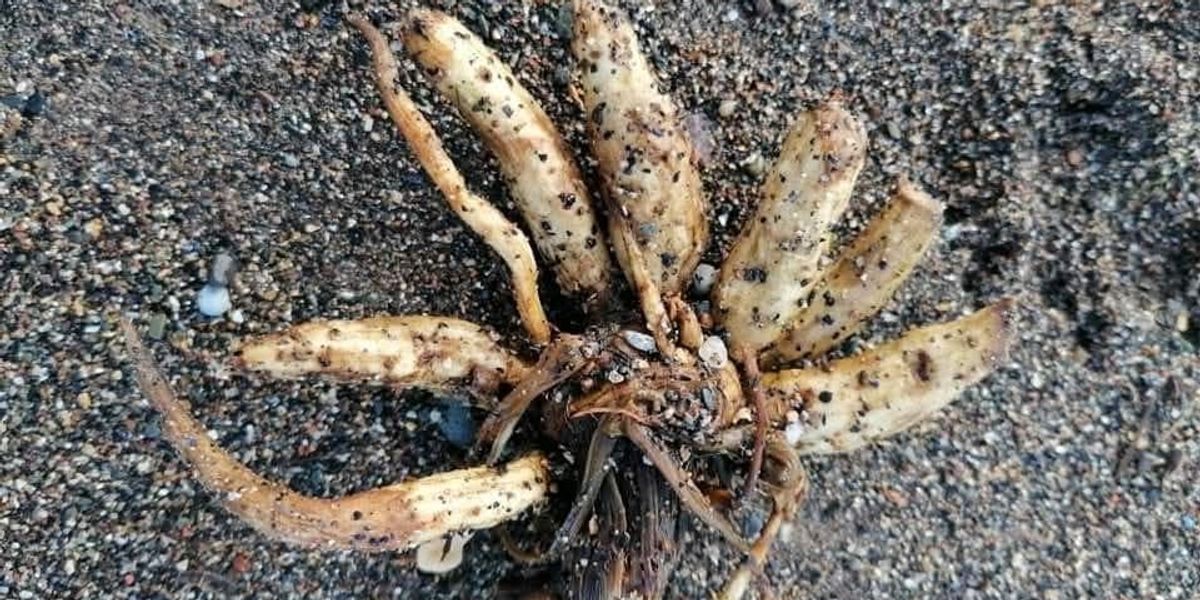
Beachgoers along a stretch of Cumbrian coastline have been urged to exercise extreme caution after a deadly plant began appearing on local shores.
Millom Coastguard Rescue Team, which covers the West Cumbrian coast and South Lakes area, posted an alert on Facebook warning visitors about the hazardous discovery.
The team confirmed that Hemlock Water Dropwort, commonly referred to as Dead Man’s Fingers, has been spotted washed up on beaches in Arnside.
The coastguard wrote: “Please be aware that we have received reports of a highly poisonous plant being washed up on local beaches.”
They added: “So far there have been confirmed sightings between Drigg and Parton.”
The plant is considered one of the most poisonous species found anywhere in Britain and poses a lethal threat to both people and animals.
The coastguard warned: “Even a small portion can prove fatal to humans by attacking the nervous system.”
They continued: “It is also fatal to animals. The plant has a highly poisonous root that looks, and smells, like Parsnip.”
The plant can be poisonous
|
Millom Coastguard Rescue Team
Ingesting the toxin can result in death within just a couple of hours.
The poison works by causing severe muscle contractions throughout the body, ultimately leading to asphyxiation.
Westmorland and Furness Council has also issued guidance, noting that the toxic plant bears a strong resemblance to parsnip and urging residents to remain alert to the dangers of wild poisonous plants growing across the UK.
Recent stormy conditions are believed to be responsible for uprooting the plants from their usual habitat along the shoreline.
Hemlock Water Dropwort’s flower and leaf shape is reminiscent of parsley | WIKIMEDIA COMMONS
The coastguard stated: “It is highly likely that this is happening due to the aftermath of recent stormy weather.”
While the roots and tubers of Hemlock Water Dropwort typically remain buried beneath the surface, turbulent weather can dislodge them and leave them exposed on beaches.
Westmorland and Furness Council has separately confirmed that the plant’s roots have been discovered at Arnside, warning that changing tides and weather patterns could see the dangerous vegetation appear on additional beaches and shores throughout the region.
The council advised members of the public to avoid any contact with the plant should they encounter it and to ensure pets are kept well away from affected areas.
The plant features bright green leaves with triangular, pinnate divisions and produces small white flowers arranged in umbrella-like clusters when in bloom.
Its hollow, grooved stem releases a yellow staining liquid when cut, and the foliage is frequently confused with members of the parsley family.
The plant’s poison has a macabre historical legacy, it causes facial muscles to contort into a grimace, inspiring the sinister smile seen in Jack Nicholson’s portrayal of the Joker in the 1989 Batman film.
The coastguard urged: “We advise people, especially with children and animals, to stay vigilant, avoid this plant and take extra care when visiting the beach.”