
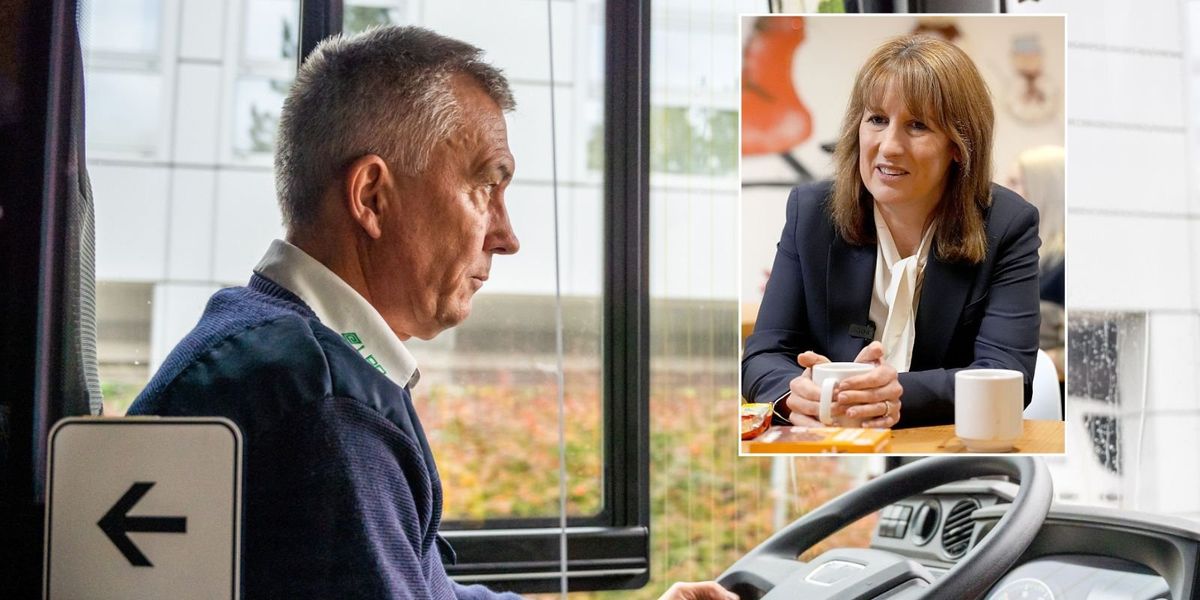
Chancellor Rachel Reeves has been urged to introduce tax incentives to encourage potential workers in their sixties to return to employment.
In a recent report, the House of Lords Economic Affairs Committee warned that Britain remains “alarmingly unprepared” for the demographic pressures created by an ageing population.
The report, titled Preparing for an Ageing Society, called on ministers to set out a clear strategy to help people in their mid-fifties to mid-sixties remain in work or re-enter the labour market.
Peers said boosting participation among older workers would deliver the most significant improvement to the public finances.
The committee said: “The greatest improvement in fiscal outlook will instead come from encouraging and incentivising those in their mid-50s to mid-60s to remain in or return to work”.
The report also recommended removing so-called “cliff edges” in public service pension schemes that may discourage people from continuing to work.
The current demographic projections present a serious challenge for Britain’s long-term fiscal sustainability, they warned.
By 2074, people aged 65 and over are expected to make up more than a quarter of the population.
The report said this shift would fundamentally change the country’s old-age dependency ratio.
The committee warned that within five decades the number of people at or above state pension age could be close to matching the size of the working-age population.
This would place significant pressure on those in work, who would be funding an expanding state pension system.
Tax incentives could encourage potential workers in their sixties to return to employment
|
GETTY
The report cautioned against further increases to the state pension age, which is currently 66 and is due to rise to 68 by 2046.
Peers said additional increases would likely cause financial hardship for people approaching retirement while delivering limited gains in workforce participation.
Britain’s labour market has struggled in recent years, as unemployment has risen steadily since reaching a low of 3.6 per cent in 2022.
Skyrocketing state pension age – will you be affected? | GB News
The committee said it had previously warned that 565,000 fewer people were economically active compared with pre-pandemic levels.
The number of over-50s claiming benefits reached almost two million in August, research from the Centre for Social Justice found.
This represented a 43 per cent increase from the 1.4 million recorded shortly before the March 2020 lockdown.
The Chancellor’s £26billion National Insurance increase last year was cited as an additional pressure on employers.
The committee said the rise came at a time when redundancy levels were already increasing.
Peers said this had intensified competition for jobs as vacancies became scarcer.
The report pointed to international examples where governments have used tax incentives to encourage older people to stay in work.
Germany is expected to introduce its “aktivrente” scheme as early as January.
Under the proposals, pensioners who continue working beyond the state retirement age of 66 would receive tax reductions of up to 45 per cent.
Denmark was highlighted as an example of a policy already delivering results.
After introducing a tax-free payment of 48,555 Danish kroner, equivalent to about £5,676, for people working 1,560 hours in their first year beyond retirement age, more than 100,000 workers aged over 67 returned to employment.
This represented a six per cent increase on the previous year.
Several European countries are also raising retirement ages.
Slovenia is gradually increasing its retirement age from 60 to 62 by 2035.
Denmark will require workers to reach 70 before accessing the state pension from 2040.
Dr Andrea Barry, work deputy director at the Centre for Ageing Better, which contributed to the Lords report, said tax incentives alone would not solve the challenges facing older workers.
Pensioner spending looks set to soar
|
OBR/CoPilot
“Tax breaks alone won’t solve the challenges facing older workers, but can help in creating incentives to ensure people who keep working aren’t penalised.”
She called for a broader Government review of tax and pension rules.
“A wholesale government review is needed to remove the ‘cliff edges’ in tax and pension rules that push people out of work too soon”.
She added that incentives should sit alongside wider efforts to tackle age discrimination and promote age-friendly workplaces.
However, concerns were raised about the effectiveness of similar policies overseas.
Susanna Adelhardt, chair of the German Actuarial Association, questioned whether Germany’s proposed scheme would deliver value for money.
She said it “risks being an inefficient use of public funds” because highly motivated workers need little encouragement and those with inadequate pensions may see limited benefit.