
British BulletinBritish Bulletin
  • Home
  • News
  • Politics
  • Business
  • Entertainment
  • Lifestyle
  • Health
  • Sports
  • Tech & Science
  • Travel
  • Spotlight
  • More
    • Press Release
What's On

Popular road closing today as 100,000 drivers face daily traffic chaos for one month

20 March 2026

Chopper’s Political Podcast episode 96 – Kemi Badenoch

20 March 2026

Lewis Crocker: ‘So much to gain from Paro fight’, says Belfast’s IBF welterweight champion

20 March 2026

Man Utd manager Michael Carrick does not know when injured Matthijs De Ligt will return

20 March 2026

Essex Police stops using facial recognition tech after it spots more black people than other ethnicities

20 March 2026
Facebook X (Twitter) Instagram
Web Stories
Facebook X (Twitter) Instagram
British Bulletin
Subscribe
  • Home
  • News
  • Politics
  • Business
  • Entertainment
  • Lifestyle
  • Health
  • Sports
  • Tech & Science
  • Travel
  • Spotlight
  • More
    • Press Release
British BulletinBritish Bulletin
Home ยป ‘Incredibly rare’ 1000-year-old carving of face discovered in Fife
News

‘Incredibly rare’ 1000-year-old carving of face discovered in Fife

By britishbulletin.com21 September 20253 Mins Read
‘Incredibly rare’ 1000-year-old carving of face discovered in Fife
Share
Facebook Twitter LinkedIn Pinterest Email

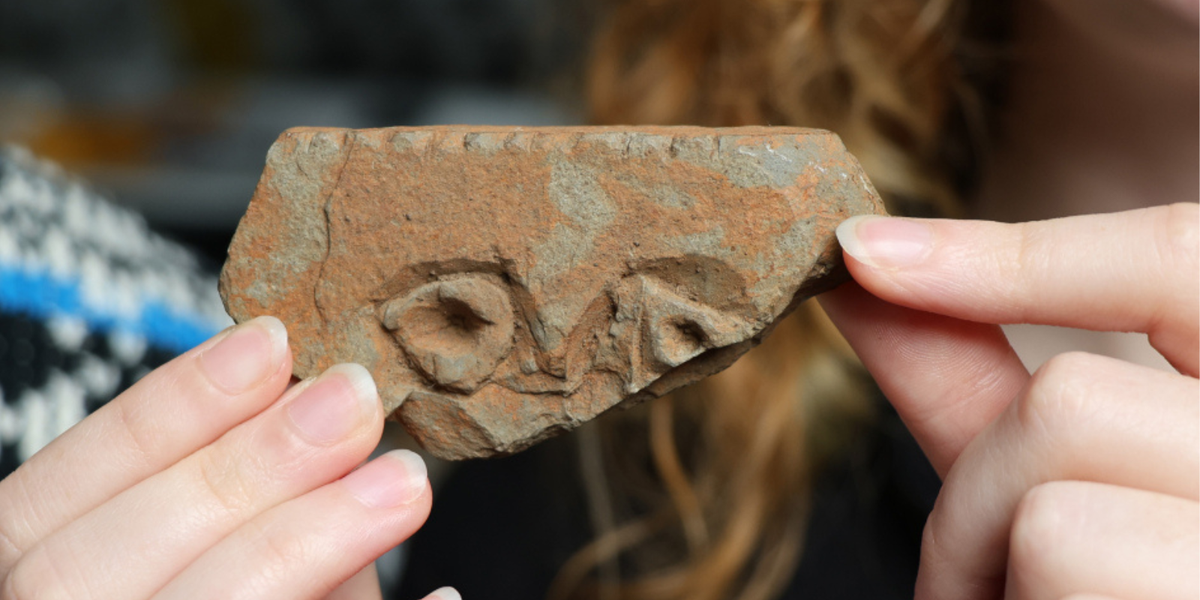
A carving has been unearthed in Scotland which archaeologists believe could depict the face of a person who lived in the area more than 1,000-years-ago.

Jodie Allan, a third-year archaeology student from the University of Aberdeen, made the discovery while volunteering at an dig at East Lomond in Fife.

Originally thinking it was a 10-12cm piece of slag which she had sieved from the soil near the major hillfort the team was excavating, Ms Allan realised it was a detailed carving upon closer inspection.

She consulted with Professor Gordon Noble, also from the University of Aberdeen, who is co-leading the dig alongside Joe Fitzpatrick of the Falkland Stewardship Trust.

Professor Noble, who has been working at the site near the Falkland Estate for four years, told her it could be a Pictish piece showing two eyes, a nose and a hairline.

Ms Allan said: “I had no idea I was holding anything significant but I took a closer look because of its size and because the colour – a sort of oxidised coppery green – caught my eye.

“I showed it to Professor Noble who took one look at the stone and his reaction told me it was something special – with what appears to be a carved face on it.”

The carving appears to show two eyes, a nose and a hairline

|

UNIVERSITY OF ABERDEEN

According to Professor Noble, this latest find adds to the growing evidence that East Lomond was once an important Pictish settlement.

He said: “We need to get this fully analysed but it appears to be a carving of a face, and resembles some of the human faces you see in early medieval manuscripts.

“It is incredible rare to have a representation of a human face in this time period.

“We’ll have to look at all the parallels, but if it really is a human face it’s nice to think it could be a rudimentary portrait of a local Picts who lived in East Lomond.”

ARCHAEOLOGY BREAKTHROUGHS – READ MORE:

Professor Gordon Noble believed that the carving found by Jodie Allan shows a face

|

UNIVERSITY OF ABERDEEN

Professor Noble added: “The discovery could offer new insights into how Picts understood themselves and represented their own identities through crafting and stone carving.

“The face suggests that Pictish people here were making more expedient carvings, perhaps something for family members living at the site rather than public display like the more famous Pictish symbol stones.”

The carving was found in a building which has been dated back to between the 5th and 7th Century AD.

Mr Fitzpatrick said: “Everything points to this being a wealthy settlement connected to the wider world and we are finding a good number of complete objects within the context of stone and turf buildings – which is unusual for the Pictish period.”

The ancient Picts are believed to have inhabited Scotland from the late until Iron Age until the 10th Century AD.

Most historians agree the name “Picts” comes from the Latin term “Picti” which means “painted people”.

It is believed this name was given to them by Romans who observed the tattoos and body painting which was common among the tribes.

Share. Facebook Twitter Pinterest LinkedIn Tumblr Email

Keep Reading

Popular road closing today as 100,000 drivers face daily traffic chaos for one month

Essex Police stops using facial recognition tech after it spots more black people than other ethnicities

UK weather: Temperature rollercoaster as chilly nights follow warm days | UK News

Iran war unleashes ‘world energy shock’ and ‘King of the coast’ | UK News

Super League: Wigan Warriors 23-22 York Knights – Wigan extend 100% winning start | Manchester News

Why Labour’s Brexit focus has shifted from Leavers to Remainers | UK News

Gail’s article quietly edited after fury and protests at ‘antisemitic’ content

Premier League Darts 2026 results: Luke Littler stuns Gerwyn Price after two 170 finishes | Manchester News

Sauna ordered to close after neighbours complained naked users visible from nearby homes

Editors Picks

Chopper’s Political Podcast episode 96 – Kemi Badenoch

20 March 2026

Lewis Crocker: ‘So much to gain from Paro fight’, says Belfast’s IBF welterweight champion

20 March 2026

Man Utd manager Michael Carrick does not know when injured Matthijs De Ligt will return

20 March 2026

Essex Police stops using facial recognition tech after it spots more black people than other ethnicities

20 March 2026

Subscribe to News

Get the latest Brittan News and Updates directly to your inbox.

Latest News

Football gossip: Guimaraes, Rashford, Romero, Kolo Muani, Salah, Sancho, Tielemans,

20 March 2026

Keir Starmer scrambles to deny migration U-turn rumours amid left-wing fury

20 March 2026

UK weather: Temperature rollercoaster as chilly nights follow warm days | UK News

20 March 2026
Facebook X (Twitter) Pinterest TikTok Instagram
© 2026 British Bulletin. All Rights Reserved.
  • Privacy Policy
  • Terms
  • Advertise
  • Contact

Type above and press Enter to search. Press Esc to cancel.