



The American economy expanded at an annualised rate of just 0.7 per cent during the final three months of 2025, according to revised figures released by the US Commerce Department.
The updated data represents a sharp downgrade from the Government’s earlier estimate of 1.4 per cent published last month.
The fourth-quarter performance also marked a significant slowdown from the 4.4 per cent growth recorded in the third quarter of 2025.
Economists had widely expected the revised figures to show stronger economic activity rather than a weaker result.
Data published by the Bureau of Economic Analysis indicates the world’s largest economy ended 2025 in a weaker position than previously believed.
Donald Trump had previously said at the World Economic Forum Annual Meeting in January that US economic growth was “exploding”, making the revised figures an awkward development for the White House.
Economists said the 43-day US Government shutdown last autumn had a significant impact on economic output during the quarter.
Federal spending and investment fell at a 16.7 per cent annual rate during the period.
That decline alone reduced overall economic growth by 1.16 percentage points.
Analysts said the contraction in Government activity accounted for a large share of the quarter’s disappointing performance.
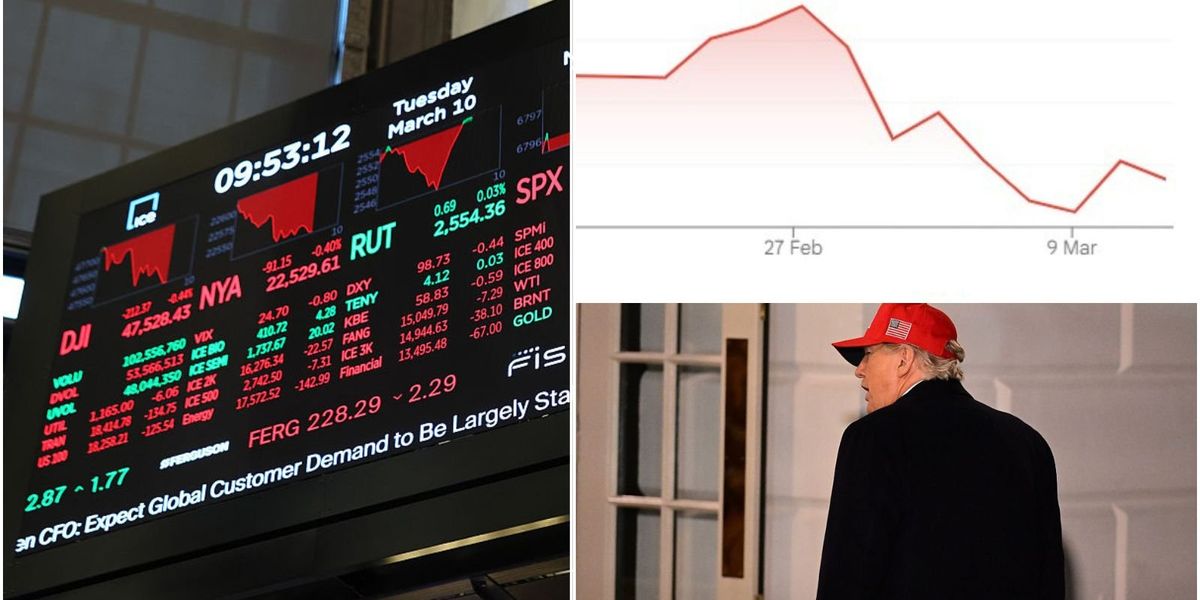
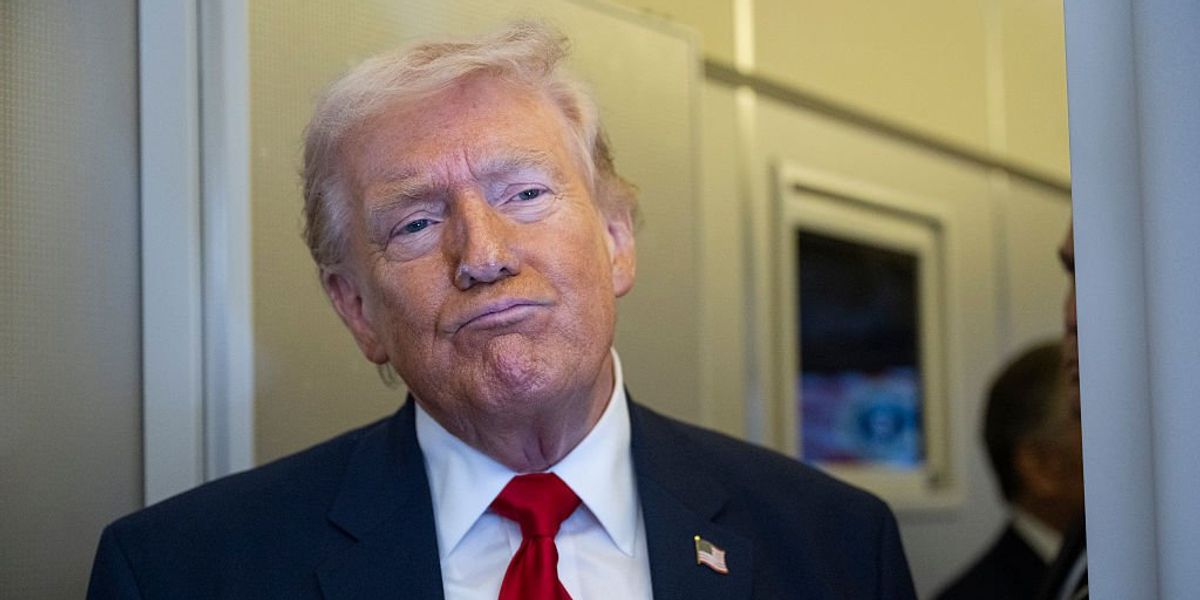
Q4’s growth figures are difficult to reconcile with the President’s “exploding” economy claims
|
GETTY
The shutdown also had wider consequences for the broader economy beyond the immediate drop in public spending.
Economists said the prolonged closure disrupted normal operations across multiple sectors, contributing to slower economic activity.
Officials said the figures illustrate the extent to which the political standoff weighed on economic performance in the final quarter of the year.
A final estimate for fourth-quarter growth covering the October to December period is due to be released on April 9.
However, many economists now expect little improvement from the latest revised estimate.
Consumer spending, which accounts for the largest share of US economic activity, also slowed during the quarter.
Household spending increased at a two per cent annual rate.
The Senate shutdown stemmed from a bitter standoff over funding the Department of Homeland Security
|
GETTY
That figure was lower than the 3.5 per cent pace recorded in the third quarter and below the government’s earlier estimate of 2.4 per cent.
Spending on healthcare services proved weaker than previously calculated in the revised figures.
Business investment outside the housing sector increased at a 2.2 per cent annual rate during the period.
This marked a slowdown from the 3.2 per cent rate recorded in the previous quarter.
It also came in below the government’s initial estimate of 3.7 per cent growth.
Investment in the manufacturing sector was among the areas that performed more weakly than initially projected.
Exports also declined during the quarter.
Overseas sales fell at a 3.3 per cent annual rate, a steeper drop than previously reported in the first estimate.
Economists said intellectual property charges contributed to the downward revision in trade data.
A closely watched measure of underlying economic strength also indicated slower momentum.
The indicator, which includes consumer spending and private investment while excluding more volatile components, rose at a 1.9 per cent annual rate.
This represented a decline from the 2.9 per cent growth recorded earlier in the year.
The latest economic figures come as the US labour market has also shown signs of weakness.
Recent labour market data shows companies, non-profit organisations and government agencies cut 92,000 jobs last month.
Hiring throughout 2025 remained subdued compared with previous years.
Employers added fewer than 10,000 jobs per month on average during the year.
Economists said this represents the weakest pace of hiring outside recession periods since 2002.
The deadlock was driven largely by disputes over immigration enforcement and DHS policy, which repeatedly blocked attempts to reopen the agency
|
GETTY
Rising energy prices have also added uncertainty to the outlook for the US economy.
The conflict with Iran has pushed oil and gas prices higher, raising concerns about additional inflationary pressure and slower economic growth.
For the full year of 2025, the US economy expanded by 2.1 per cent.
Although the figure represents solid growth overall, it was slightly below the earlier estimate of 2.2 per cent.
Annual growth was also lower than the 2.8 per cent recorded in 2024.
Looking ahead, some forecasters expect economic activity to improve in early 2026.
The Federal Reserve Bank of Atlanta GDPNow forecasting model currently estimates that the US economy could grow by 2.7 per cent in the first quarter of 2026.
Economists said this projection suggests the economy could rebound following the weaker performance recorded in the final quarter of last year.