







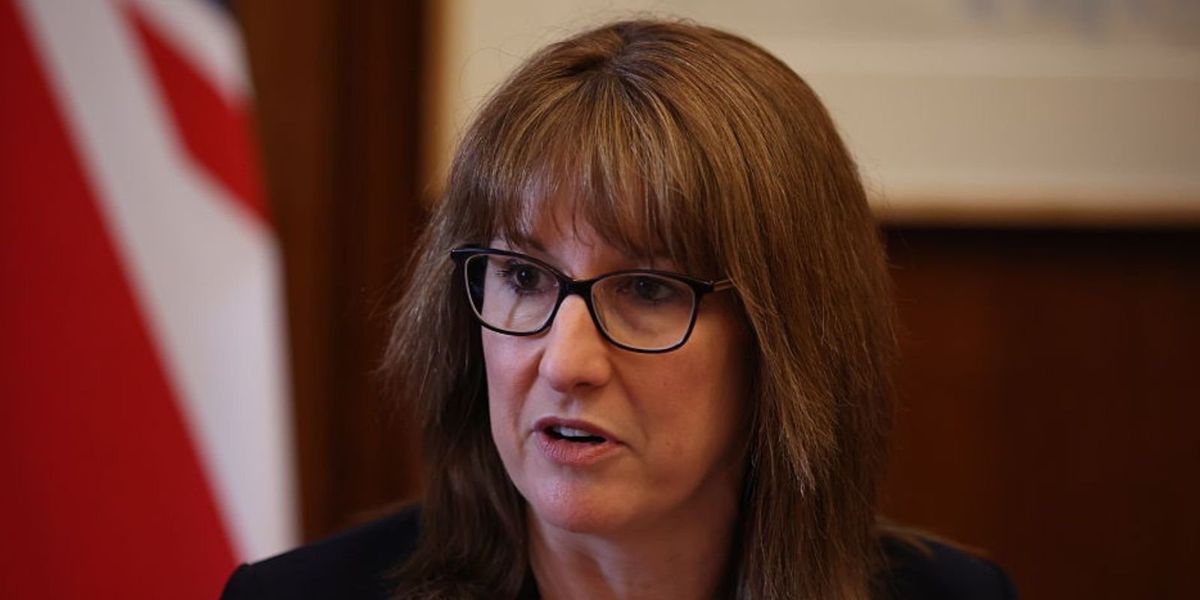
Britain has reached “peak taxation” under Chancellor Rachel Reeves, with officials in Washington warning that further increases could do more harm than good.
They believe pushing taxes higher risks slowing economic growth and reducing productivity.
The International Monetary Fund said last week that tax revenues are set to rise sharply, increasing by 4.5 percentage points of national income between 2024 and 2031.
This would take the overall tax burden to above 40 per cent, the highest level seen since the Second World War.
Senior figures monitoring the UK economy say the current approach has gone too far, warning there is little room left to raise taxes without damaging the economy.
Since taking office in July 2024, Labour has introduced around £75billion in new taxes on businesses and households.
This makes Britain the country with the largest tax increase among the G7, with France ranking second.
Officials monitoring the UK economy believe the current tax approach has gone too far and is now holding back growth. They argue that the way taxes are structured and collected is making it harder for businesses to expand and for the economy to perform strongly.
Rachel Reeves under pressure
|
GETTY
As a result, the Government’s goal of turning Britain into the fastest-growing economy in the G7 is becoming increasingly unrealistic, according to these officials.
The International Monetary Fund has cut its UK growth forecast for 2026 to 0.8 per cent, down from 1.3 per cent, marking the biggest downgrade among G7 countries. Its latest outlook suggests Britain is now set to underperform compared to other major developed economies.
Particular concern has been raised over frozen income tax thresholds, which are pulling more people into higher tax bands. Those earning between £100,000 and £125,140 face an effective tax rate of around 60 per cent, even though the official top rate is 45 per cent.
Concerns about the UK’s tax burden are also being echoed by business leaders, who warn the impact is already being felt across the economy.
Concerns about the UK’s tax burden are also being echoed by business leaders, who warn the impact is already being felt across the economy
|
GETTYRain Newton-Smith, chief executive of the CBI and a former IMF economist warns that elevated energy costs and heavy tax burdens are putting UK firms at a serious disadvantage.
“Policy costs are making our businesses uncompetitive and vulnerable in a crisis,” she says.
Industrial electricity prices in Britain run approximately 60 per cent higher than in other advanced economies.
This disparity is also deterring overseas investment. US technology giant OpenAI recently paused plans for a British data centre, citing prohibitive energy costs as the reason.
“We cannot tax our way to growth,” Ms Newton-Smith states.
Thousands of wealthy individuals flee to lower tax jurisdictions including Italy, Monaco and Dubai
|
GETTYSome experts fear Britain is now experiencing a “Laffer Curve” effect, where excessive taxation discourages work and enterprise, ultimately reducing overall tax receipts.
The theory, developed by Californian economist Arthur Laffer and embraced by President Ronald Reagan in the 1980s, appears to be playing out as thousands of wealthy individuals flee to lower tax jurisdictions including Italy, Monaco and Dubai.
Washington officials now consider the Chancellor’s tax policies an unacceptable burden.
Should the Government wish to increase spending on areas such as defence, it would need to cut expenditure elsewhere rather than contemplate further tax rises, they believe.


