



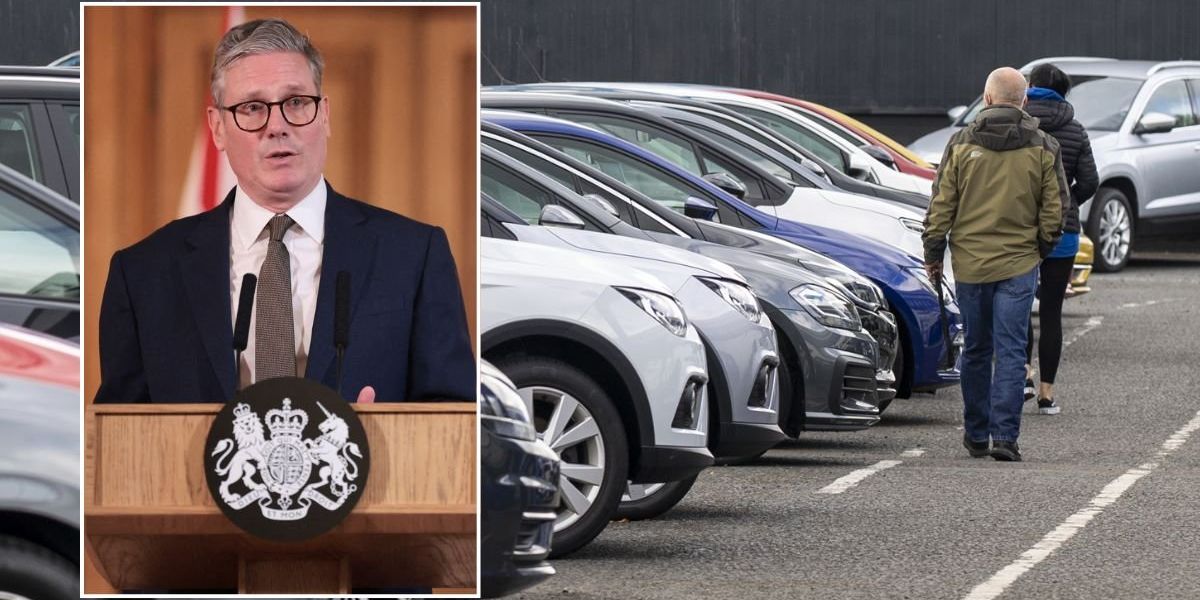
New analysis suggests that drivers may have to fork out an additional £1,800 for the average family car if the Prime Minister realigns the UK with the European Union.
Sir Keir Starmer told Parliament that the benefits of a relationship with the EU are “simply too big to ignore” as the Government hints at a better alliance with Europe.
Reports suggest that the Labour Government could use powers to align with EU rules by default, especially around the single market.
Using the so-called “Henry VIII” rules, the Government would be able to amend Acts of Parliament by order, without scrutiny from MPs.
One of the key changes that could be introduced is the Euro 7 emissions standards, which would have a huge impact on the sale of new petrol and diesel vehicles.
The rules would see further restrictions placed on exhaust emissions and pollution from tyres and brake pads.
The Department for Transport launched a consultation into accepting the Euro 7 standards for cars, vans, trucks, buses and coaches.
Under current proposals, Euro 7 would be introduced for light-duty vehicles from November 29, 2026, and heavy-duty vehicles from May 29, 2028.
Experts have warned that it could be more expensive to produce and buy cars
|
PA/GETTY
Labour is proposing to update the minimum emission standard for new light and heavy-duty vehicles in England, Scotland and Wales to the Euro 7 standard, in line with the EU.
However, independent analysis from Frontier Economics for the European Automobile Manufacturers’ Association warned that production for brands would be more expensive.
It suggested that a five per cent increase would be passed down to the cost of buying the average family car, which would cost around £34,000.
This could add around £1,800 to the cost of manufacturing a new petrol or diesel car, as well as more than £10,000 to a diesel lorry.
Keir Starmer’s new EU relationship pledge has been criticised by some MPs as
|
GETTYIt comes at a time when petrol and diesel prices are soaring as a result of the Iran war, further adding to the burden of the cost of motoring.
While the latest data from RAC Fuel Watch indicates that price hikes are slowing, drivers are still paying 158p for a litre of petrol and 191.5p for diesel.
Tensions around the Strait of Hormuz continue to impact the price of Brent crude oil, which is passed on to costs paid by motorists at the pumps.
In response to the Euro 7 regulations being introduced in the UK, Shadow Transport Secretary Richard Holden blasted Labour for burdening drivers “with a brand new and totally unnecessary cost”.
Euro emissions standards were introduced in 1992 | PA
He told The Telegraph: “Drivers are facing huge costs and challenges already – whether through anti-driver measures, rocketing fuel prices or charge after charge.
“Labour should not be aligning with these EU rules. We have no vote in these regulations, yet this weak Labour Government is choosing to impose them anyway.”
The Euro 7 consultation is open to drivers and organisations across the UK, with it set to close at 11.45pm on May 25, 2026.


