



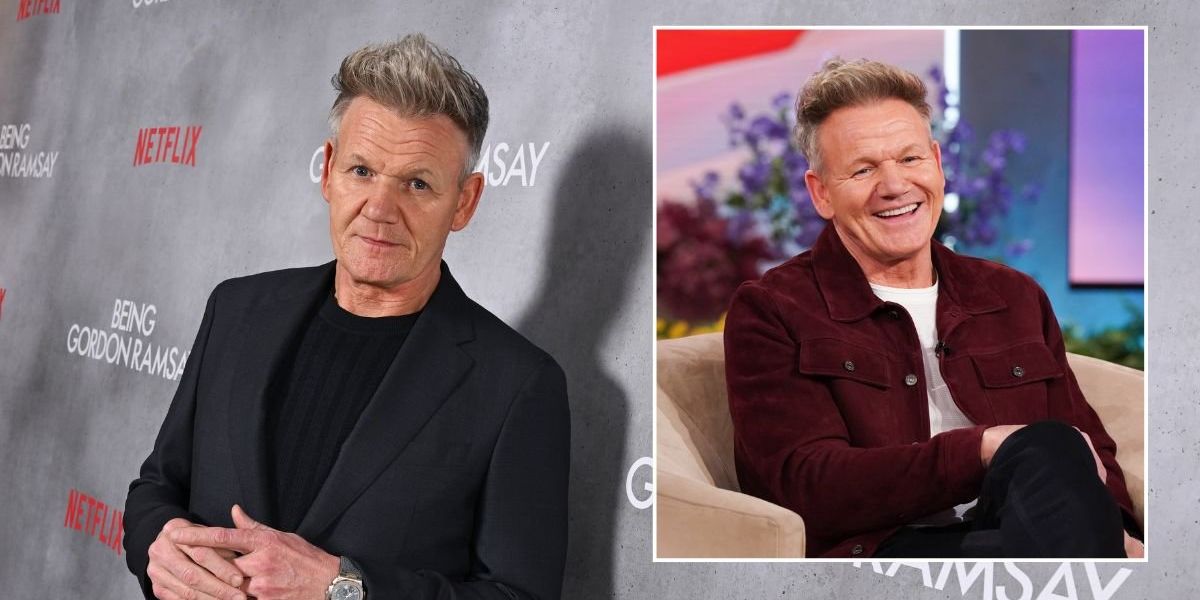
Celebrity chef Gordon Ramsay recently decided to face diners with an unusual 20 per cent service charge in a US-style restaurant choice.
Mr Ramsay, 59, is understood to have enforced the charge on his Christmas and New Year menus at London’s Lucky Cat last year.
Small writing at the bottom of the menu announced the additional expense, reading: “A 20 per cent discretionary service charge will be added to your bill,” The Independent reports.
Mr Ramsay normally charges a 15 per cent service charge at his other establishments, and opened the Asian-inspired restaurant in 2019.
Mr Ramsay normally charges a 15 per cent service charge at his other establishments
|
GETTY
Regular menus at Lucky Cat also specify a 15 per cent charge, with the higher cost applied only to festive menus at the moment.
Both costs are higher than the standard 10 or 12.5 per cent service charge added by most UK establishments.
This includes Mr Ramsay’s former mentor Marco Pierre White, who adds a 12.5 per cent charge at his English Chophouse in Whitechapel.
Other prestigious restaurants sticking to the standard amount include Raymond Blanc’s Brasserie Blanc and Heston Blumenthal’s Fat Duck.
The higher cost typically reflects restaurant culture in the US
|
GETTY
The higher cost typically reflects tipping culture in the US, where those working as servers are generally paid less and rely on tips for the majority of their pay.
Niaz Caan, who runs Paro in Covent Garden, also charges a 12.5 per cent service charge, and argued against enforcing a 20 per cent charge.
The Independent reports him stating “I think 12.5 per cent is okay, but the minute you start going 15,16, 20, I think it’s very exorbitant.”
However, he added: “If it’s on New Year’s Eve, then maybe there’s a reason to do it.”
The chef went on to add he has been noticing more mandatory service charges in UK restaurants, but doesn’t believe a complete US-style payment system would come make it on this side of the pond.
“I know the culture in America, even in high-wage states like New York, the tipping culture is still quite ludicrous,” he continued.
“I don’t think the UK will ever get there because it’s based on different cultures altogether.”
The topic has attracted attention on social media, with many slamming Mr Ramsay’s decision.
One wrote on X: “Tipping is just a way for business owners to get away with paying low wages. There should be no tipping, people working in the sector should be paid correctly.”
Another asked: “Why not just have a standard price that is transparent and do away with service charges and tipping?”
“There’s no guarantee that the service charge would go to the employees and not straight into Gordon’s very large back pocket. If you’ve had good service, give a tip. The amount shouldn’t be specified by adding service charge to a bill,” a third argued.
Someone else penned: “Sorry but I refuse to tip, this is the UK, not the US. I always refuse to pay any service charge & ask if it to removed from bill.”
“Can’t be legally enforced.. just refuse to pay,” another suggested.
A different social media user shared: “A restaurant outside of London wouldn’t get away with a standard 20% tip.”
However, one noted: “Quite a few are now doing this as I think people don’t tip anymore (younger generation) the Ivy in Edinburgh has a 20% even street chain mall slop are adding 10% and up.” (sic)
GB News has approached Mr Ramsay’s representatives for a comment on reports.


