




London’s benchmark index fell sharply on Tuesday as escalating military conflict in the Middle East unsettled global investors and pushed energy prices higher.
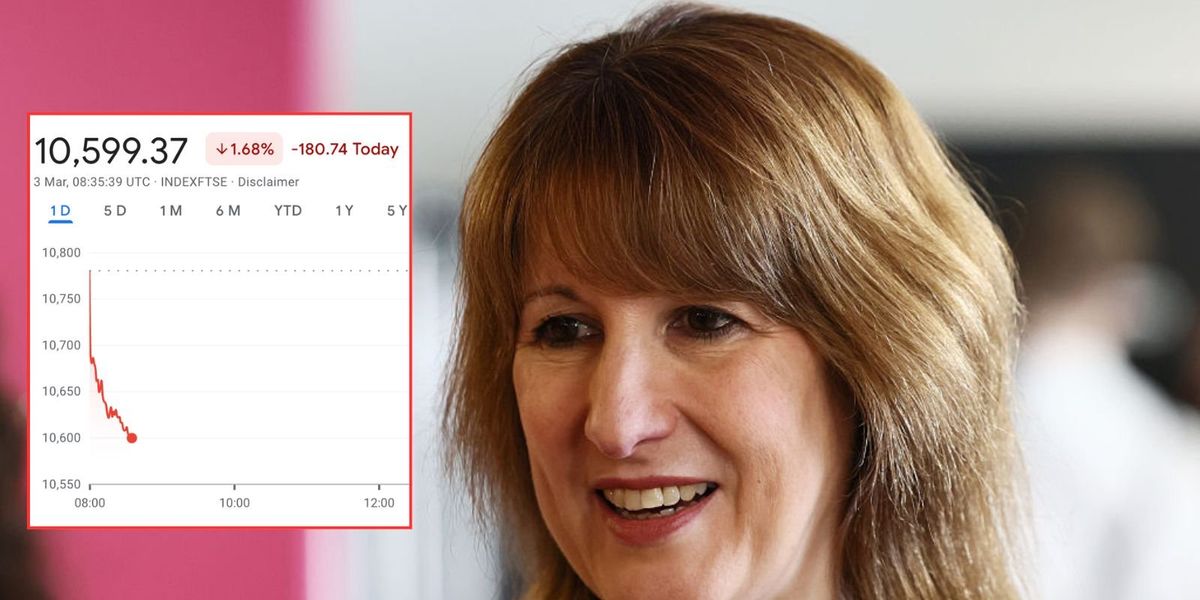
The Ftse 100 dropped over 200 points to 10,560, extending losses from the previous session as the United States and Israel’s campaign against Iran entered its fourth day.
Oil markets reacted strongly to the intensifying tensions, with Brent crude climbing above $80 per barrel for the first time since January 2025 amid disruption to key infrastructure in the region.
The international benchmark reached $81.16 per barrel, marking a four per cent gain on the day and its highest level since July 2024.
The Strait of Hormuz, which carries around one fifth of global oil supplies, has effectively been brought to a standstill, heightening concerns about supply constraints.
Further pressure on markets followed reports that Saudi Arabia’s largest refinery temporarily halted operations after sustaining damage in a drone attack.
Derren Nathan, head of equity research at Hargreaves Lansdown, said: “Until clarity emerges around the likely duration of this conflict, tension in the Middle East is likely to overshadow forecasts of a supply-glut in the market.”
Coal prices rose by eight per cent after QatarEnergy suspended liquefied natural gas production due to attacks on its facilities.
London’s benchmark index fell sharply on Tuesday
|
GETTY
European natural gas prices also moved higher as disruption to global energy flows rippled across commodity markets.
Energy majors were among the few gainers in London trading.
Shares in Shell rose by 12p to 3,144p, while BP advanced 8.6p to 496.5p.
Mr Nathan said: “Sentiment towards BP and Shell has strengthened significantly off the back of oil price spikes.”
He added that neither company operates production facilities in Iran, although both face potential bottlenecks linked to disruption in the Strait of Hormuz.
BP’s operations in Iraq and Abu Dhabi could be affected by prolonged instability, while Shell’s liquefied natural gas facilities in Qatar and the United Arab Emirates face similar exposure.
Mr Nathan noted that both companies’ trading divisions could benefit from heightened volatility, with Shell’s balance sheet placing it in a comparatively stronger position should disruption persist.
Defence stocks also registered gains, contrasting with broader weakness across the market.
Financial shares were among the hardest hit as investors reduced exposure to economically sensitive sectors.
Barclays fell three per cent to 424.95p, while Prudential plc declined more than four per cent.
Lloyds Banking Group slipped two per cent and HSBC shed 29.6p during the session.
Mining stocks also came under pressure, with Anglo American and Antofagasta each falling three per cent.
The Ftse 250 underperformed the blue chip index, declining 1.4 per cent, as mid-cap stocks reflected broader risk aversion.
Inchcape led the mid-cap fallers with an eight per cent drop.
Across the Atlantic, United States futures indicated a weaker open following a largely flat session on Wall Street.
Consumer-focused stocks came under pressure amid concerns that higher commodity prices could reignite inflationary pressures.
Gold traded near $5,300 per ounce, remaining close to record highs as investors sought safe-haven assets.