



The European Parliament has suspended its ratification of the transatlantic trade agreement reached at Donald Trump’s Scottish golf resort last summer, citing ongoing demands by the US president to acquire Greenland.
The decision was announced in Strasbourg on Wednesday by Bernd Lange, chair of the Parliament’s International Trade Committee.
Mr Lange said lawmakers had been left with “no alternative but to suspend work on the two Turnberry legislative proposals”.
The German MEP said implementation efforts would remain frozen until the United States chose to “re-engage on a path of cooperation rather than confrontation”.
Mr Lange accused Washington of threatening “the territorial integrity and sovereignty of an EU member state”.
He said the European Parliament had an “unshakable commitment to the sovereignty and territorial integrity of Denmark and Greenland”.
Manfred Weber, a senior German parliamentarian, confirmed that “approval is not possible at this stage”.
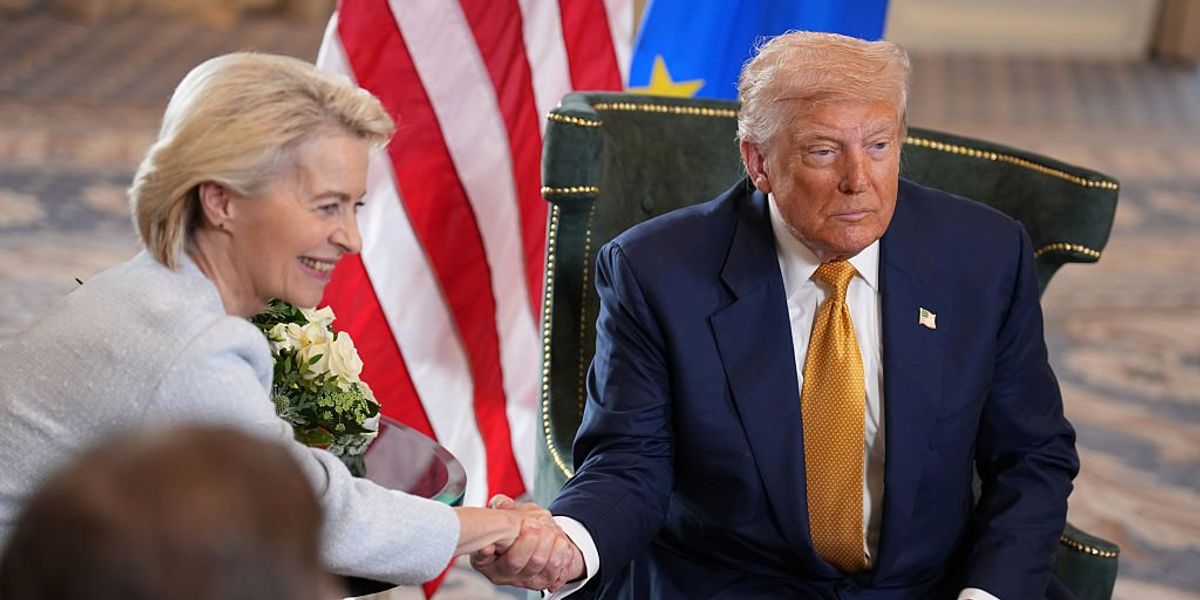
The agreement, known as the Turnberry deal, was struck during talks hosted at Trump’s resort in Scotland last summer.
Speaking at the World Economic Forum in Davos, Donald Trump repeated his ambition to take control of Greenland while attempting to reassure allies that military force would not be used.
EU halts US trade deal after Donald Trump Greenland demands
|
GETTY
Mr Trump said: “I don’t have to use force, I don’t want to use force, I won’t use force.”
Despite the assurances, he called for “immediate negotiations” with Copenhagen over the future of the strategically important territory.
The US president has repeatedly argued that Greenland is vital to American and global security interests.
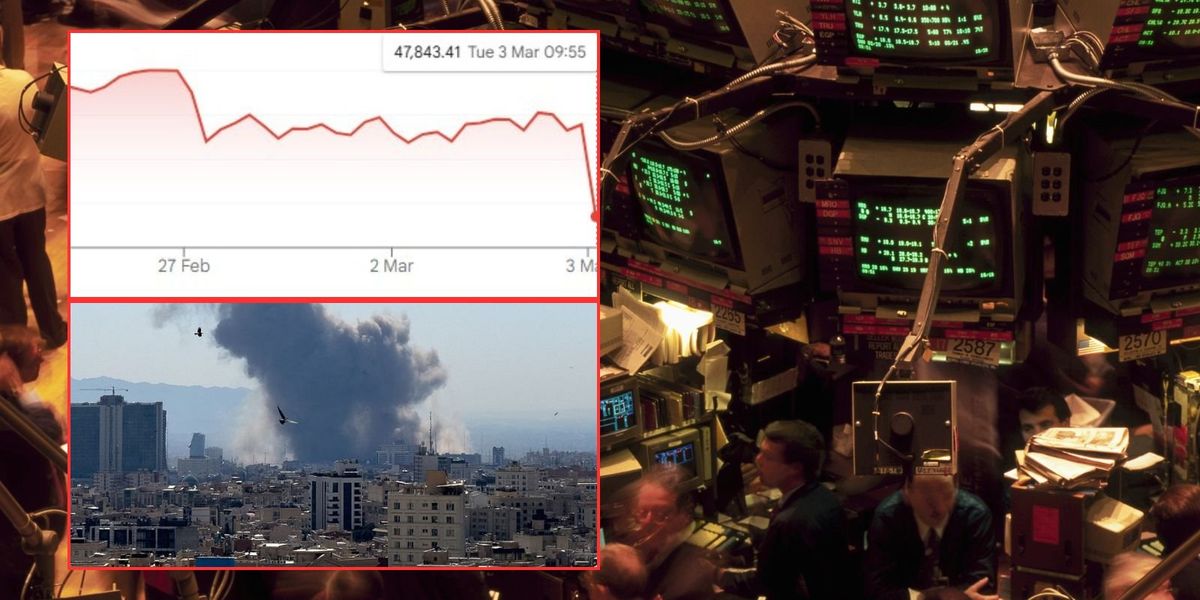
Financial markets reacted positively to his comments ruling out military action.
After European stock markets recorded consecutive days of losses, Wednesday brought a measure of relief for investors.
Major US indices opened higher on Wednesday, with the Dow Jones, S&P 500 and Nasdaq each rising by around one per cent in early trading. In London, the FTSE 100 edged up by roughly 0.25 per cent.
The market reaction came as tensions between Brussels and Washington deepened.
Speaking at a press conference after the European Parliament confirmed it would halt progress on the Turnberry trade agreement, Bernd Lange said there would be “no possibility for compromise” while American tariff threats remained in place.
Mr Lange confirmed that lawmakers were now weighing whether to trigger the EU’s “anti‑coercion instrument”, a mechanism often described as the bloc’s “trade bazooka”.
If activated, it would allow Brussels to impose wide‑ranging retaliatory measures against the United States. A decision is expected on Monday.
French President Emmanuel Macron is among the European leaders urging the Commission to examine its options as the dispute escalates.
European officials have warned that any escalation of the current dispute risks significant consequences for the global economy
|
GETTY
The EU has previously identified around €93billion worth of American goods that could be targeted with tariffs.
The list was drawn up in response to Donald Trump’s “Liberation Day” tariffs announced last April.
That package was suspended while negotiations over the Turnberry agreement continued, but the pause expires on February 6.
Unless extended, EU tariffs would automatically take effect the following day.
US Treasury Secretary Scott Bessent warned European leaders against retaliating. Speaking in Davos, he urged Brussels to remain calm, saying: “I tell everyone, sit back. Take a deep breath. Do not retaliate.” He also called on EU officials to “have an open mind”.
Emmanuel Macron is among the European leaders urging the Commission to examine its options
|
GETTY
Washington has previously expressed frustration at the pace of European progress on ratifying the Turnberry deal, with disagreements over technology regulation and metals tariffs still unresolved.
The United States and the twenty‑seven‑nation European Union remain the world’s largest bilateral trading partners.
Goods and services worth more than €1.6trillion were exchanged in 2024, representing almost a third of global trade.
European officials have warned that any escalation of the current dispute risks significant consequences for the global economy.