

A south London Labour council is under fire over claims it had “frozen” residents’ council tax.
The council’s top brass used leaflets and social media videos to boast it had frozen the tax for 2026-27.
While the “core” element of council tax had not risen, an added social care precept meant an extra payment was needed.
The precept was set at two per cent of the previous year’s council tax charges from the council.
Combined with an increase to the Greater London Assembly precept, set by City Hall, residents’ overall bills will actually increase by 2.4 per cent.
Labour took control of the council in 2022, ending 44 years of Conservative rule, but polling suggests they have a serious fight on their hands if they are to retain power.
Lord Udny-Lister and Sir Paul Beresford, two former Conservative leaders of the council, questioned the use of the term “frozen” in a letter to the UK Statistics Authority.
Penny Young, interim chair of the statistics board, explained that the term was “likely to be understood as the total council tax bill staying the same” and therefore the language used “does not meet the supporting understanding standard within the standards for public use and has the potential to mislead those whose council bills are affected”.
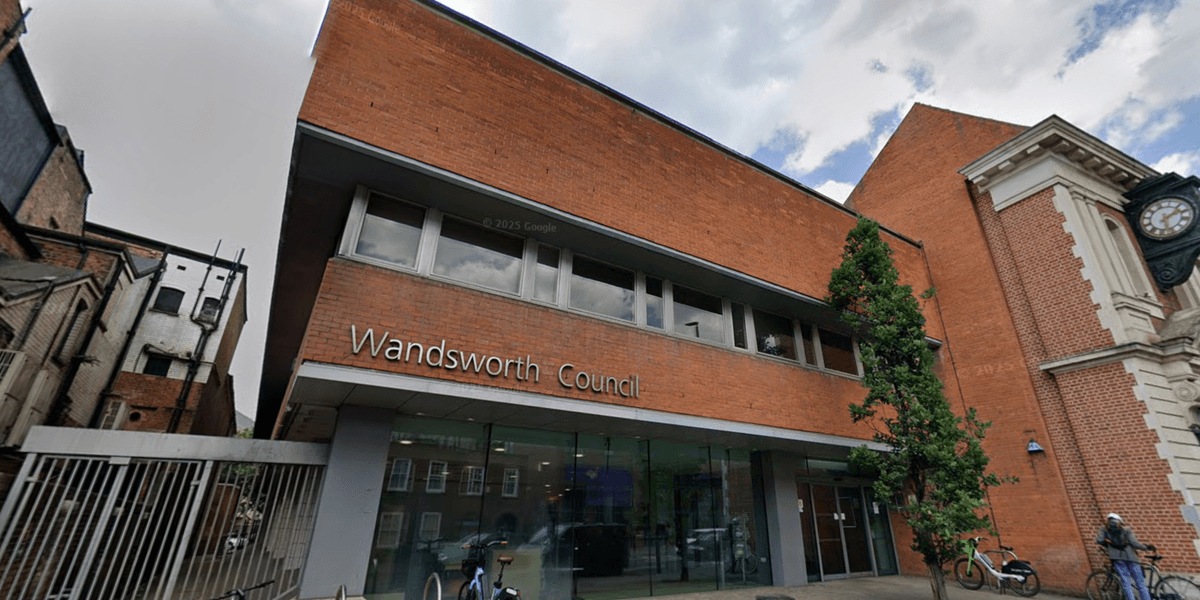
The local council is under fire
|
GOOGLE MAPS
Ms Young said she would be writing to Wandsworth council to make sure “statistics, data and wider analysis are communicated transparently, and with integrity, clarity and accuracy”.
Councils are not forced to follow the body’s standards, but they are “strongly encouraged to do so”.
While the council’s language has been criticised, the increases are lower than in much of London.
Most local authorities have proposed or approved 4.99 per cent total increases in council tax, the largest number available without triggering a local referendum.
Wandsworth Council told GB News: “We have looked at the detail provided from the UK Statistics Authority.
“In what is an incredibly busy information environment, we endeavour to make all our communications accessible to a diversity of residents which requires both shorter and longer form communication.
“We have made it clear in all our communications that the main element is frozen. However, we will reflect on the UK Statistics Authority’s observations and take forward any learning in future communications.”